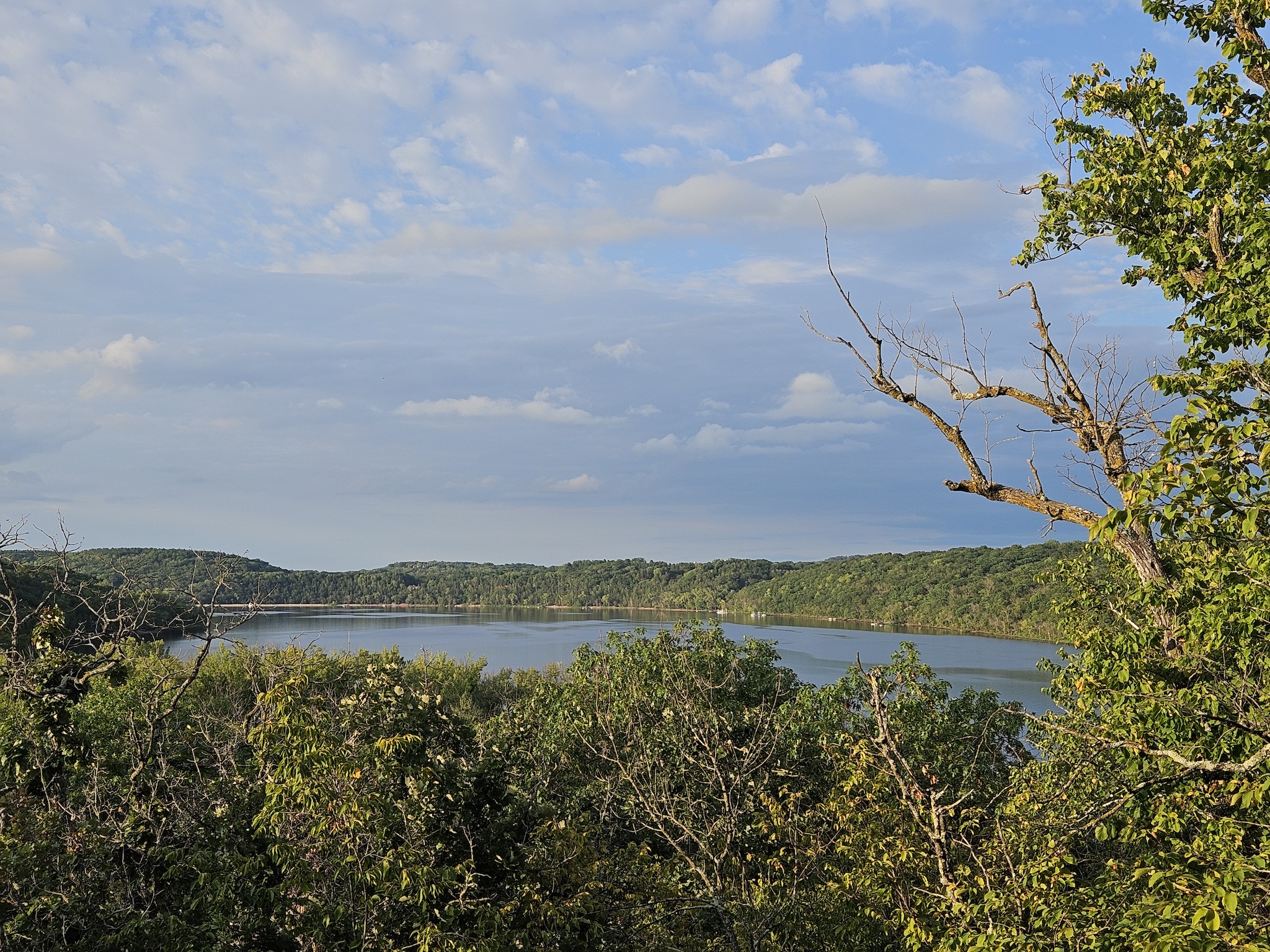
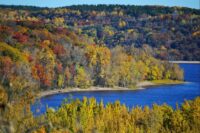
View of the St. Croix River from Afton State Park overlook. (Greg Seitz/St. Croix 360)
Events and Announcements:
Fossil Fast Facts, September 12, 1-3 p.m. at the Visitor Center: This fun nature table will explore Minnesota’s fossil world and teach you about some of the common fossils found here. Drop by and learn some fun fossil facts!
Owl Prowl, September 12 7-8 p.m. at the Visitor Center: We often hear them calling in the dark of night, but most of us are unfamiliar with the elusive creatures known as owls. At this program, you will learn how to identify the owls of Afton State Park by their calls and appearance. After the presentation, we’ll call the owls. This program is guaranteed to be a “hoot” for all ages! Meet at the Visitor Center and come prepared to step outside for a short while after the presentation, you may need a light.
Astronomy
On Sunday the 13th look for the planet Venus to the left of the Moon in the west after sunset. And on Monday the 14th Venus will be to the right of the Moon. The days are growing noticeably shorter through this month; from the 1st to the 30th we will lose about an hour of daylight.
Birds
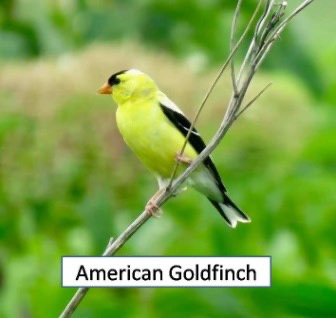
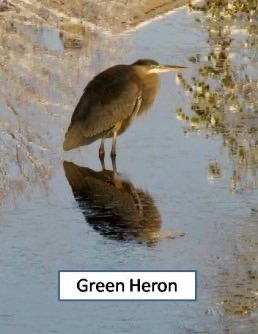
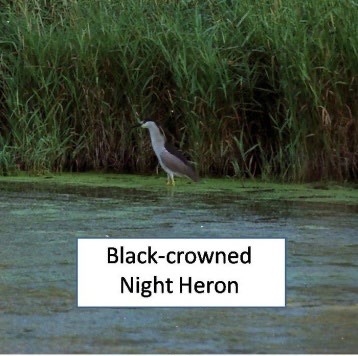
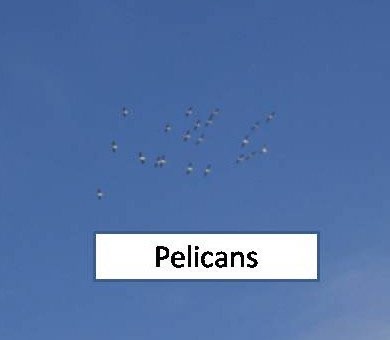
American Goldfinches feed on the seed heads of coneflowers and bee balm plants. This is a good time of year to look for Green Herons and Black-Crowned Night Herons along the edges of waterways. And Pelicans are moving through, migrating south. When they are in flight you can recognize them by their white bodies and the black on the leading edges of their wings and on what are called their “primary” feathers, which are the ones at the ends of their wings. The pigment melanin in the black feathers makes those feathers stronger and more resistant to abrasion. White Pelicans have the second biggest wingspan of any bird in North America, behind the California Condor. The Pelicans passing through our area will probably spend the winter along the coast of the Gulf of Mexico.
Mammals
Deer are completing the transition to their winter gray coats, as you can see on the individual in the first and second photos. Deer, like cows, are ruminants. After they eat they regurgitate their food and chew it again to make it easier to digest. The deer in the first photo is probably ruminating. While the antlers of male deer are growing they are covered with a fuzzy substance called “velvet” that helps transport blood into the antlers, which are organs. After the antlers finish growing the bucks rub the velvet off of them and the antlers harden. By this time of year buck deer have grown antlers and rubbed the velvet off of them, leaving bloody scrapes on trees. Antler growth in deer and related species is one of the few examples of organ regeneration among mammals.
Amphibians and reptiles
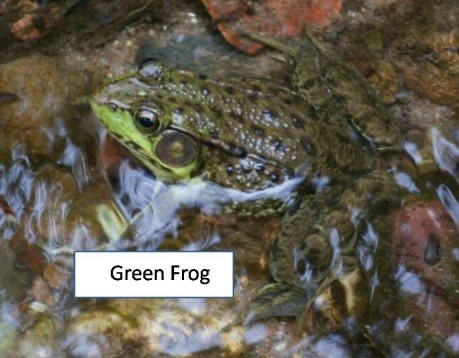
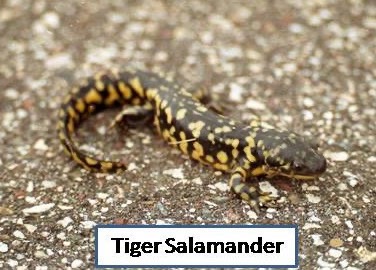
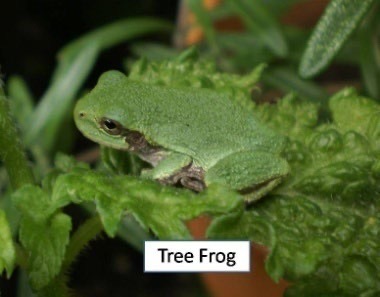
You may still see frogs and toads out and about, but they are not the only amphibians at Afton. On cool fall mornings after it rains, watch for tiger salamanders moving south of the park to spend the winter in abandoned tunnels and burrows below the frostline. If you see them on 70th street, try not to run them over! That’s where this photo was taken.
Insects
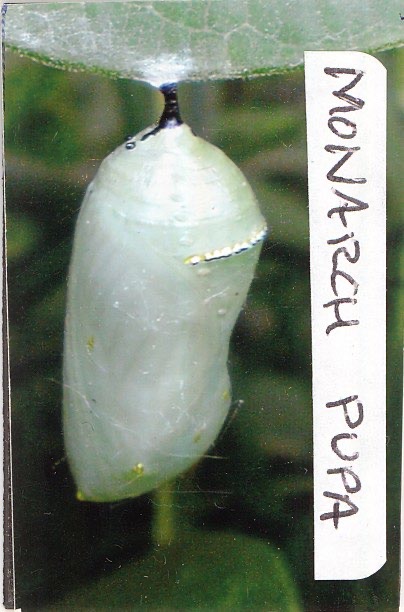
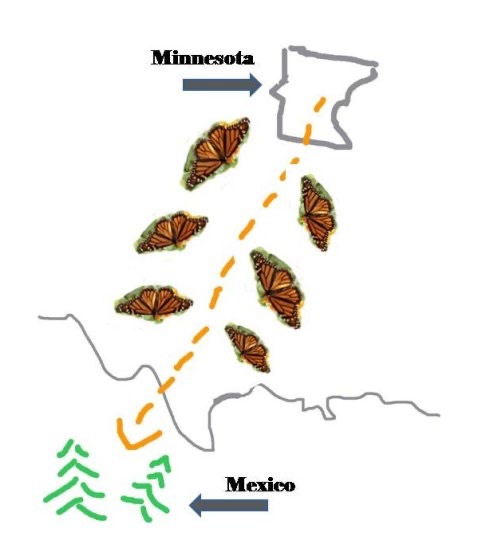
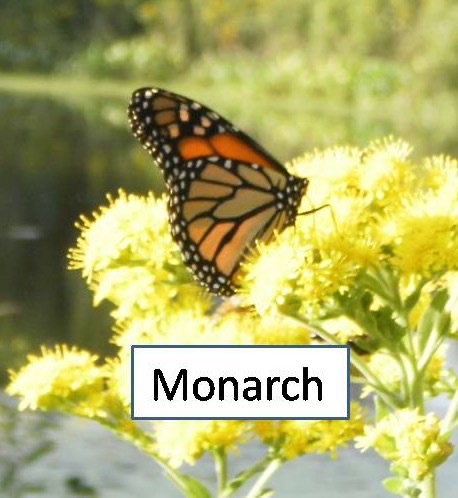
Look for Monarch butterflies passing through, going south. The Monarchs that emerged from their chrysalises in August were in “reproductive diapause”, which means that they weren’t fully developed and won’t be able to mate and lay eggs until next spring when they are on their way north from their overwintering sites in Mexico. This adaptation allows them to conserve energy for their long journey south. How did they know to emerge in reproductive diapause? Scientists think that the developing butterfly inside the pupa is aware of both the length of day, and the age of the milkweed plant to which the pupa is attached, and that these two things signal it to stay in diapause. The butterflies that emerge in August will travel thousands of miles to Mexico and spend the winter in large colonies clustered on Oyamel fir trees. After they leave Mexico to head north these individuals will mature. They’ll mate and lay eggs somewhere along the way, maybe in Texas, and it will be their grandchildren or great-grandchildren who will arrive in Minnesota next spring.
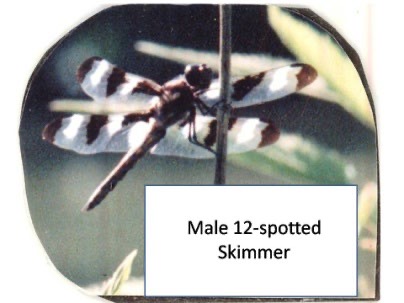
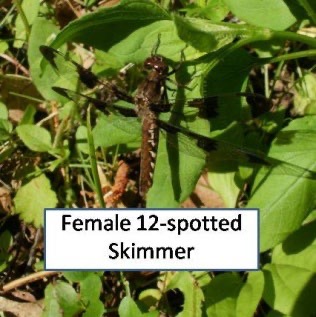
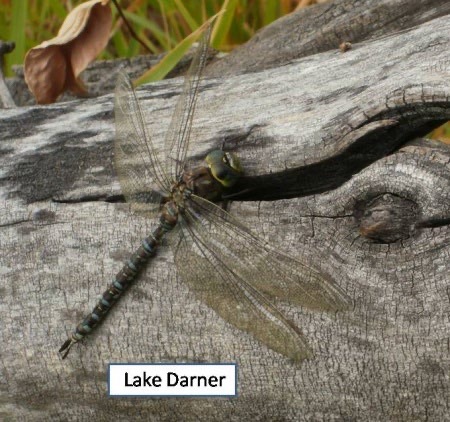
Some of the dragonflies still on the wing in late September are the Lake Darner, and the Twelve-spotted Skimmer. The Twelve-spotted Skimmer takes its name from the number of black spots on its wings. The males also have white spots, while the females do not.
Fungi
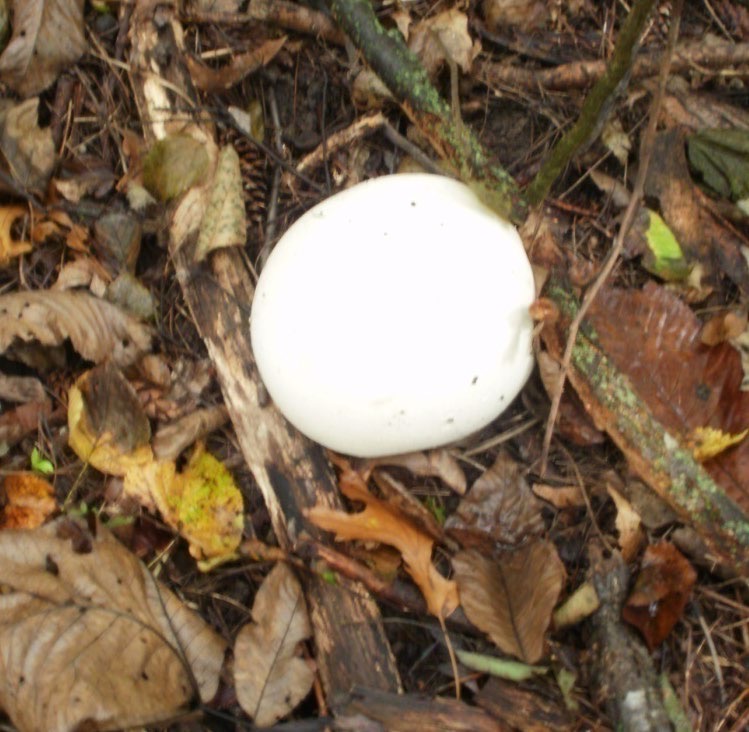
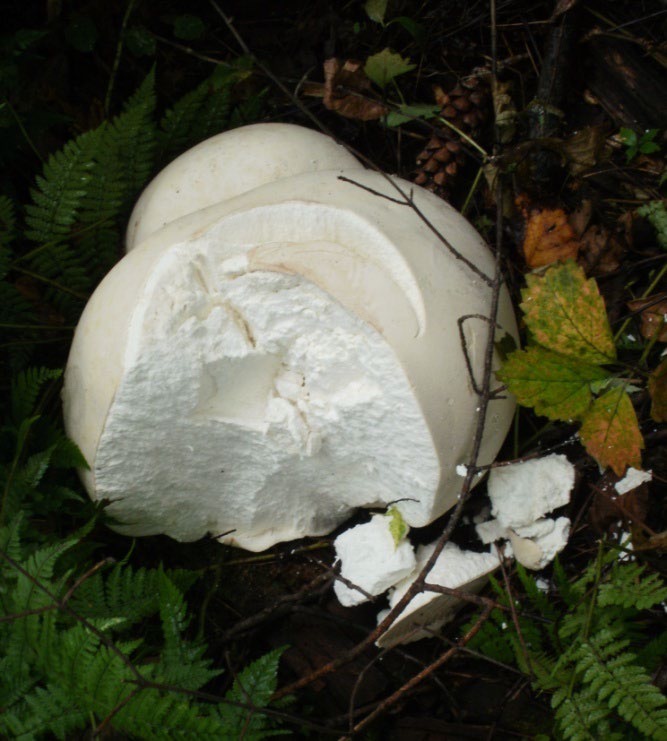
We are nearing the end of the season for Giant Puffballs. As you might guess, the Giant Puffball is big, with reports of individuals up to five feet long and over 50 pounds! They are more commonly the size of a softball or maybe a soccer ball. When they are young they have a creamy white exterior and interior. The Giant Puffball doesn’t have a stem, but is attached to its underground mycelium by what’s called a mycelial cord. As they get older, the surface cracks into plates that drop away, exposing millions of yellow to olive-brown spores. Whenever anything touches the Puffball, the spores puff out in a tiny cloud to be carried by the wind, and that’s how they got the name “puffball”. Giant Puffballs prefer rich soil, and you may see them in meadows or along the edges of streams.
Plants
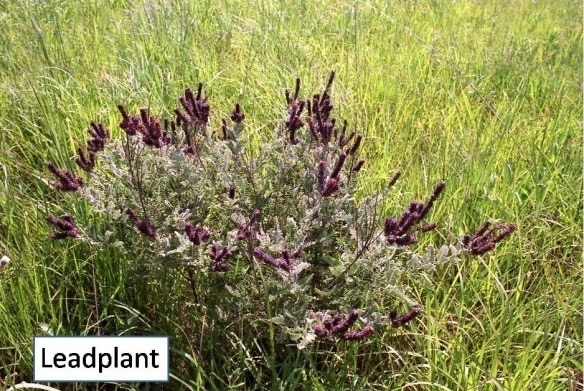
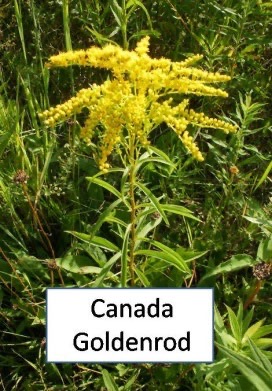
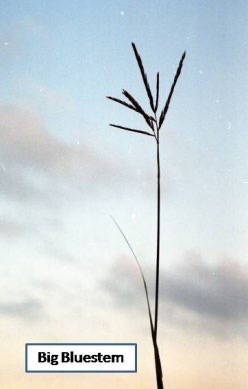
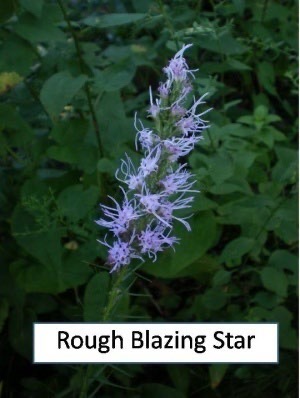
Visitors report seeing Big Bluestem on the prairie, along with still-blooming Rough Blazing Star, Goldenrod, and Leadplant.
Weather observations
Here are some weather observations for this week from past years.
Friday, September 11
2023: cloudy and in the 60s, with light rain in the evening; 2016: a breezy day with high temperature near 80°
Saturday, September 12
2023: clouds early, some sun in afternoon; 2015: 50s in the morning, with a high near 70°. This is the time of year we typically start experiencing lows in the 50s
Sunday, September 13
2025: partly cloudy, 80s; 2021: clouds through the day, temperature in the 70s; 2014: overnight low in the 30s, warming into the 60s
Monday, September 14
2025: hot and sticky, mid 80s; 2016: high 40s in the morning, rising into the 60s
Tuesday, September 15
2025: rain early, then hot and muggy, low 80s; 2023: Rain overnight, ending around 8:00; 2022: Hazy sunshine in the 80s. Record low of 36° in 1964, 2007, and 2011
Wednesday, September 16
2023: high 50s in the morning and foggy; 2021: 60s early, rising into the 80s; 2013: temperature in the 60s with an inch of rain
Thursday, September 17
2021: morning thunderstorm with many downed trees; 2015: Record rainfall of 2.37”;
Image credits
All photos and images used by permission.
Copyright Nina Manzi, except:
Gary Sater: American Goldfinch, Green Heron, First Whitetail Deer
John Watson, Trail Camera: Buck deer in velvet, Whitetail Buck
St. Croix 360 offers commenting to support productive discussion. We don’t allow name-calling, personal attacks, or misinformation. This discussion may be heavily moderated and we reserve the right to block nonconstructive comments. Please: Be kind, give others the benefit of the doubt, read the article closely, check your assumptions, and stay curious. Thank you!
“Opinion is really the lowest form of human knowledge. It requires no accountability, no understanding.” – Bill Bullard
Whoops! There was an error and we couldn't process your subscription. Please reload the page and try again.
By clicking subscribe, you agree to share your email address with St. Croix 360 and Mailchimp to receive emails from St. Croix 360. We will never share your information with anyone else.





Comment