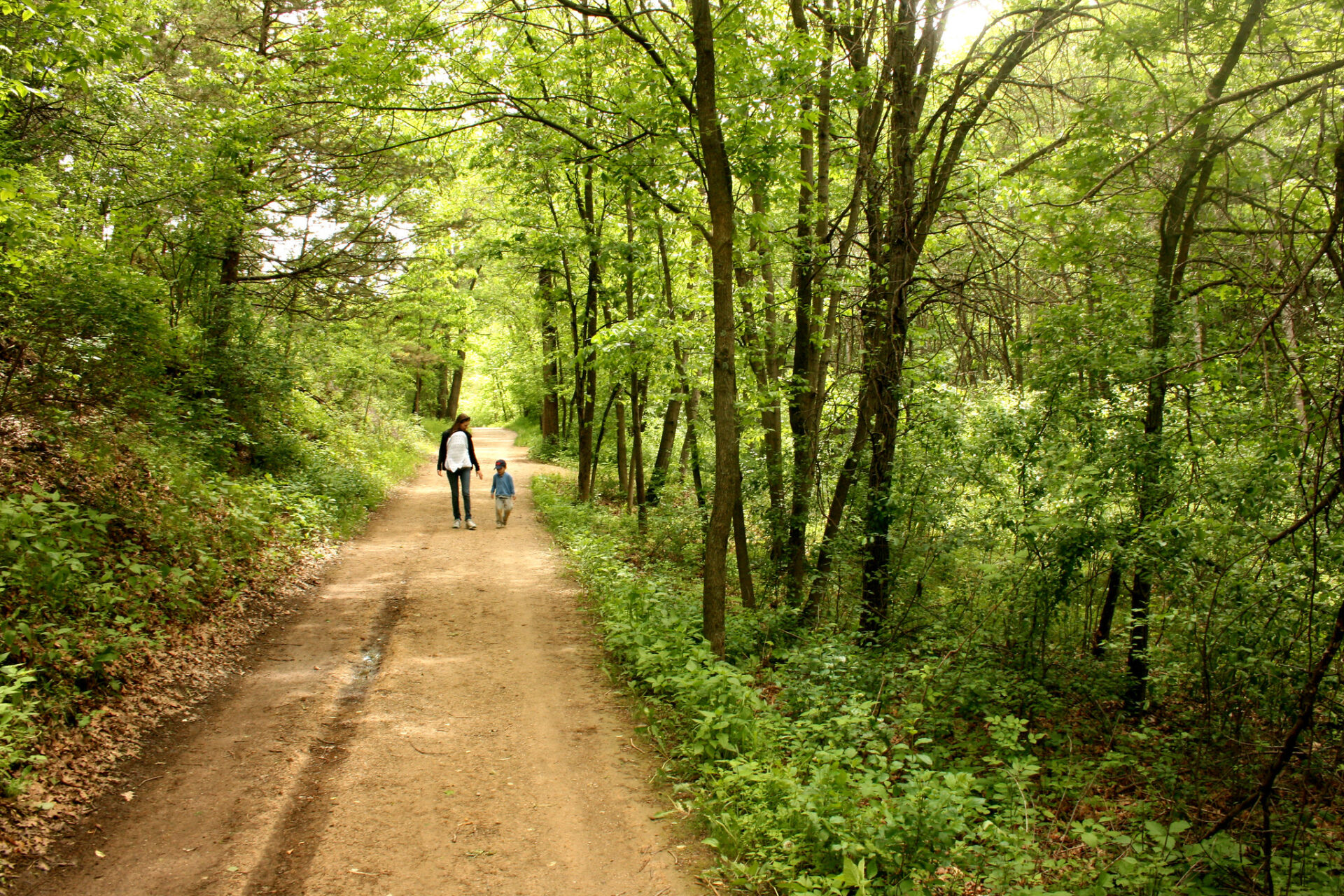
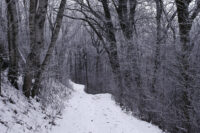
The goats have been moved from the entrance ravine and now are adjacent to the horse trail near the main parking area.
It has been a lovely, but dry spring. If you are coming out to camp or picnic please monitor your campfires closely, keep water close, and fully extinguish fires and coals when you are done.
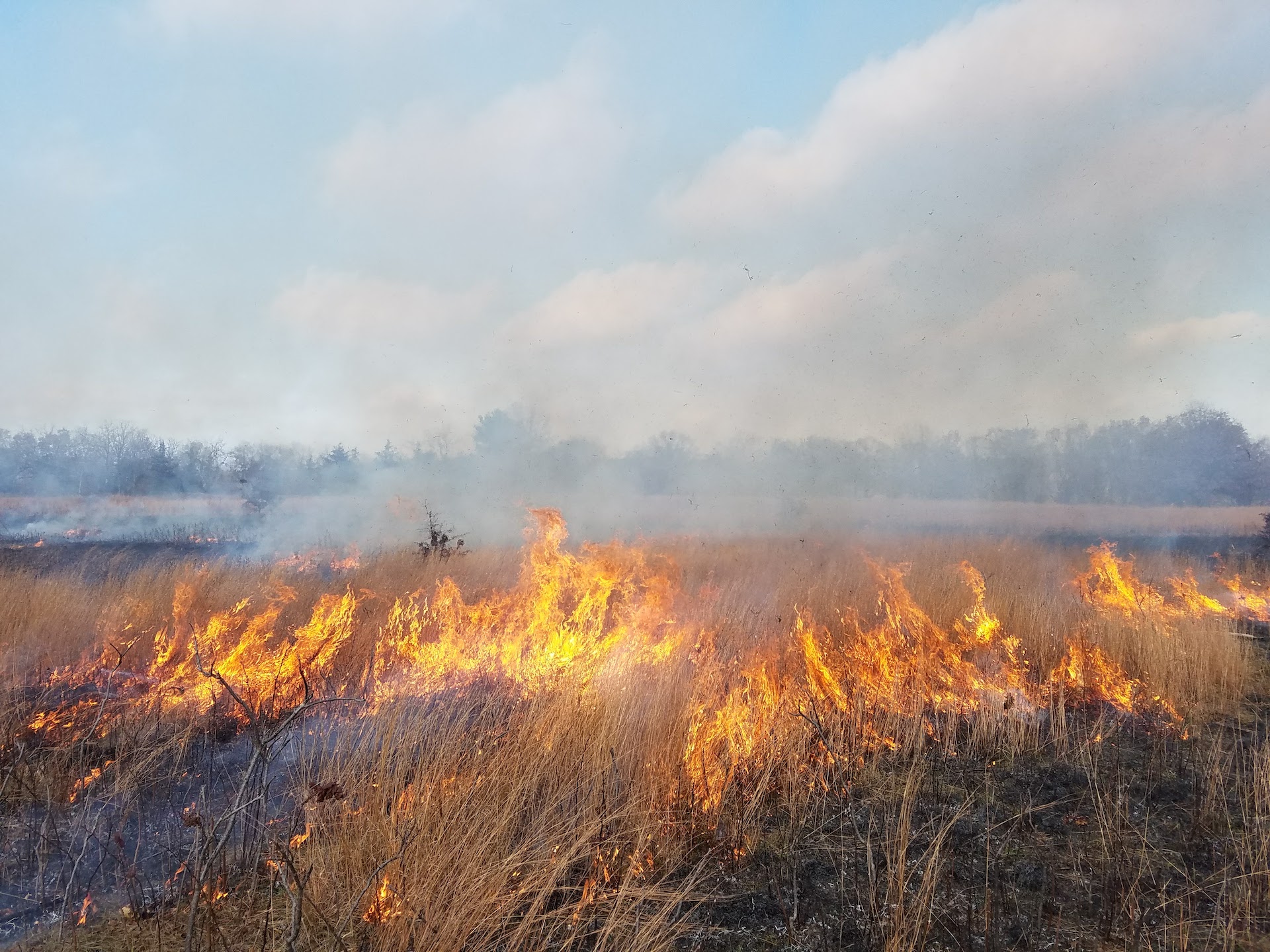
We did a prescribed burn at the entrance to the park. It should green up fast!
Meet Minnesota’s Mammals! Ever wonder about the mammals that call Minnesota home? Drop by the naturalist table in the Visitor Center between 9 and 11 a.m. on May 16 to learn more about them, their adaptations, and how to identify them. Examine their fur and skulls to explore the wonderful world of mammals.
Astronomy
On Monday the 18th look for the planet Venus near the Moon. On the 19th the Moon will be in between Venus and Jupiter, and on Wednesday the 20th Jupiter will be below the Moon.
Birds
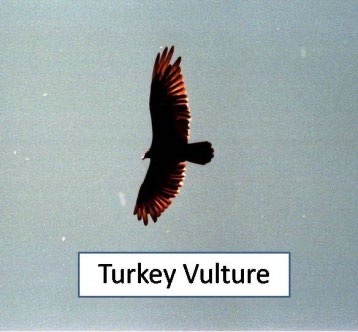
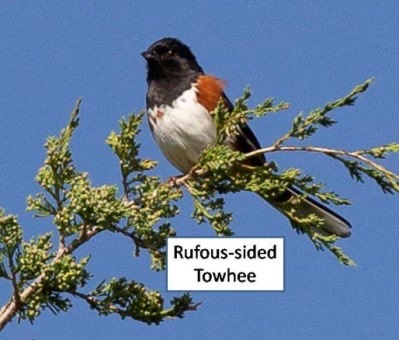
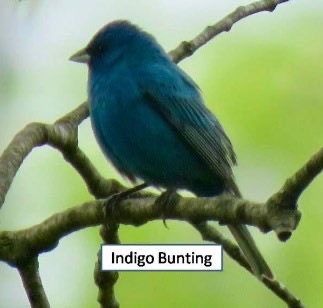
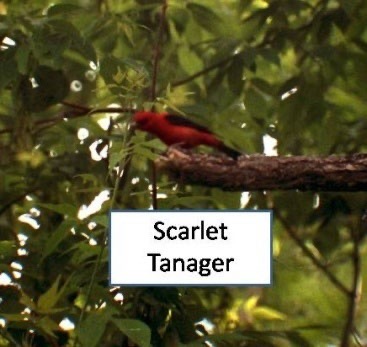
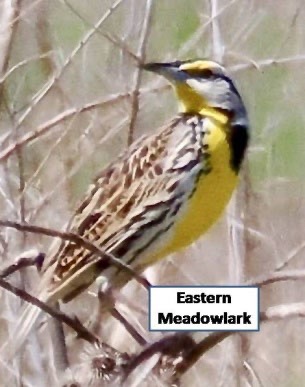
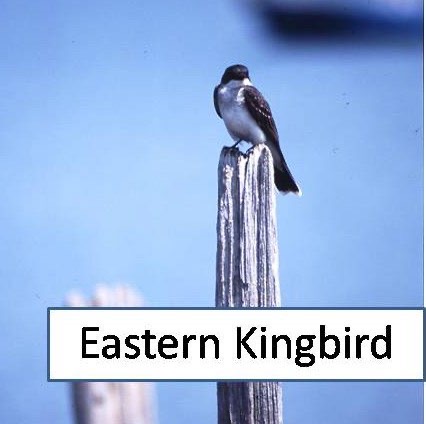
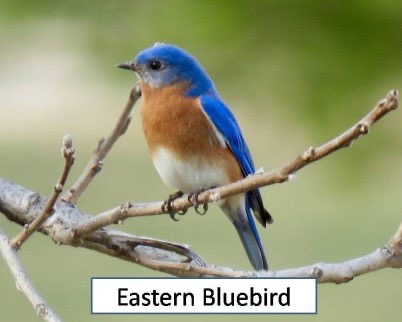
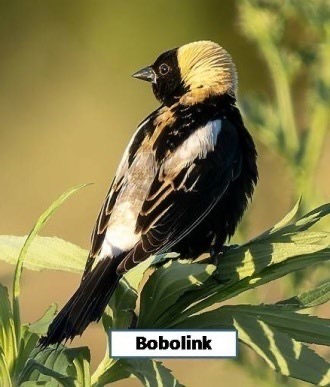
Anywhere you are at Afton look up to see Turkey Vultures soaring overhead. Look for Rufous- sided Towhees on Eastern Redcedar trees, Indigo Buntings and Scarlet Tanagers in the woods, and on the prairie look for Eastern Bluebirds, Eastern Kingbirds, Eastern Meadowlarks, and Bobolinks. Turkey Vultures in our part of the country don’t go very far away in the winter, only to the southeastern U.S., which is part of the reason we see them return so early in the spring. Rufous-sided towhees also only go as far south as they have to, usually to the southern United States. Indigo Buntings and Scarlet Tanagers return a little later, having traveled farther south. The Tanagers go all the way to South America, as do some of the Buntings, while other Buntings spend the winter in Central America, the Caribbean, or southern Mexico. Eastern Bluebirds spend the winter in the southeastern U.S. or Mexico. Eastern Meadowlarks go to the same areas as Bluebirds, though some go farther south into the Caribbean, Central America, and northern South America, as do Eastern Kingbird. Kingbirds give up insect-eating and form social flocks as they forage on fruit. Bobolinks go all the way the grasslands east of the Andes Mountains in Brazil, Paraguay, northern Argentina and Bolivia.
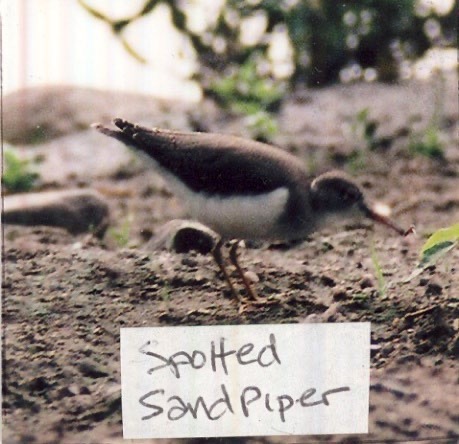
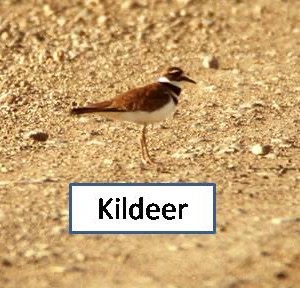
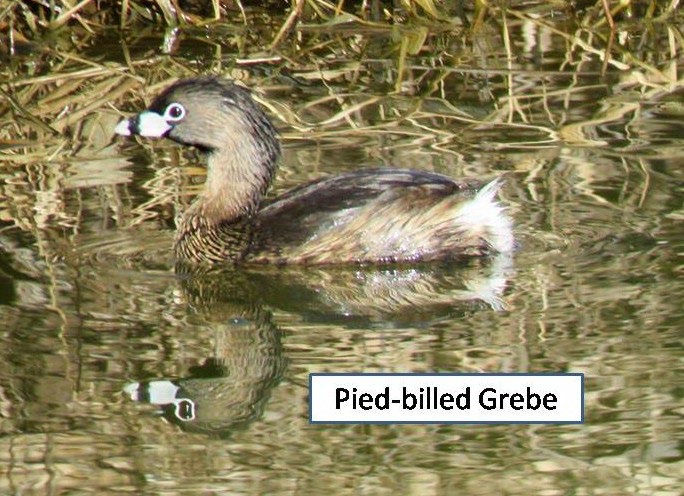
You may see Kildeer, Spotted Sandpipers, and Pied-Bill Grebes along Trout Brook or the edges of the St. Croix. Kildeer build their nests on their ground, and the parent birds will pretend to have a broken wing and flutter away from the nest to trick predators into following them. Spotted Sandpipers practice sexual role reversal. The females have large territories and mate with several males, each of whom has a smaller territory within the female’s territory. The males care for the eggs and young birds. And Pied- bill Grebes get their name from an old meaning of the world “Pied”, which is “having two or more colors”. You can see in the photo that the grebe clearly has two colors on its bill!
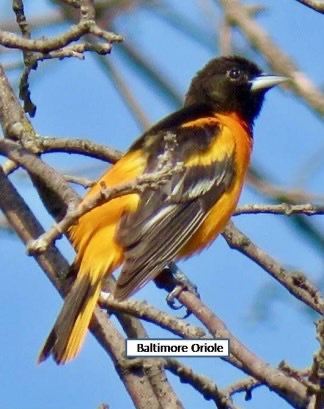
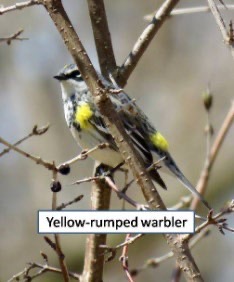
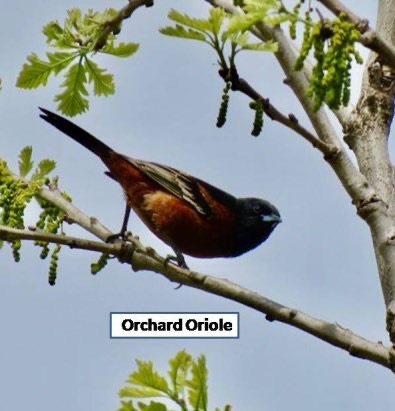
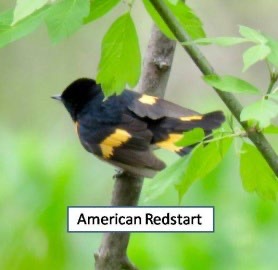
Keep watching for colorful warblers — you’re most likely to see them in the woods, busy catching insects. Some may stay in our area all summer while others go farther north into Canada to breed (and eat insects that hatch in the summer). Yellow-rumped Warblers spent the winter in Mexico and Central America, and some American Redstarts went as far as northern South America. If you’re really lucky you’ll see an Orchard Oriole. They’re considered to be uncommon at Afton; you’re much more likely to see their relative the Baltimore Oriole.
Insects
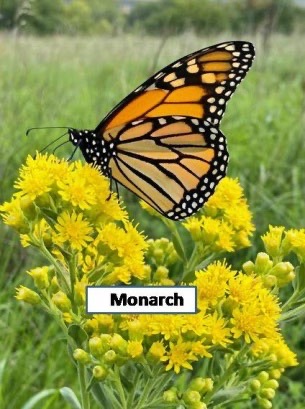
The Monarchs may be here! Mid-May is when we usually start seeing Monarchs in Minnesota. The Monarchs that arrive at Afton are the grandchildren or even the great-grandchildren of those who left last fall to fly south to Mexico. In the winter of 2023-2024 the colony was the second smallest ever, only occupying 2.2 acres, possibly due to drought in the Midwest in the summer of 2023. The size of the overwintering colony doubled to about 4.4 acres in the winter of 2024-2025, and further increased to 7.24 acres in the winter of 2025-2026. A U.S. football field is about 1.3 acres, so last year all the Monarchs from the middle part of North America overwintered in an area a little smaller than six football fields.
Monarchs are a member of a family of butterflies called the “brush-footed butterflies”. When you see one perched, it may look like it only has four legs! That’s because the front pair of legs are very short. Those short front legs are covered with little bristles, which is what gives them the name of “brushfoots”.
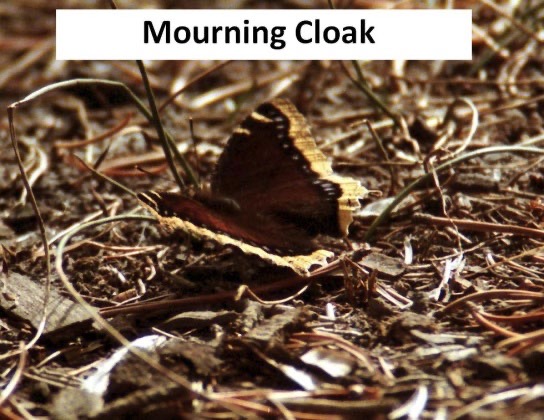
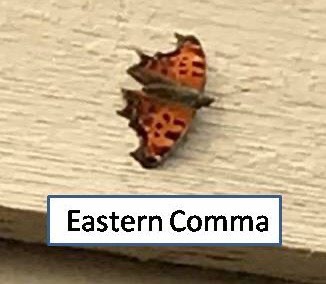
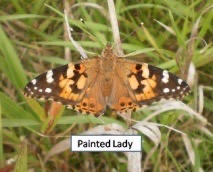
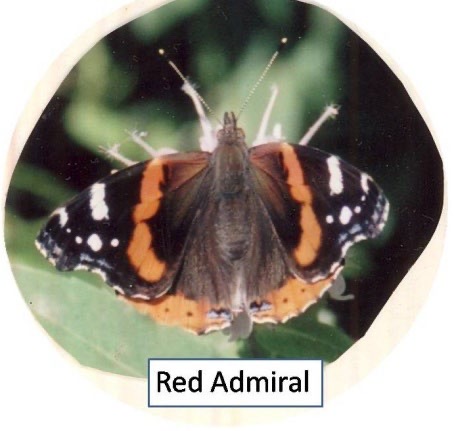
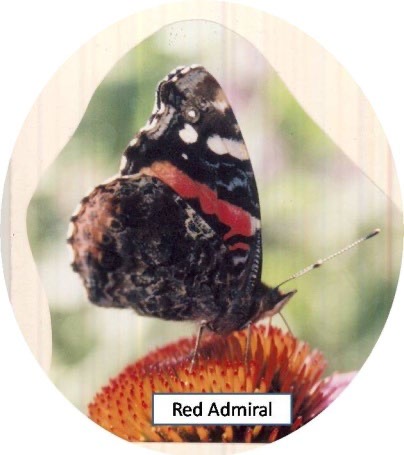
Mourning Cloaks and Eastern Commas, both of which overwinter as adults, are also Brushfoots, and so are Painted Ladies and Red Admirals, both of which migrated to the southern U.S. last fall. In the spring broods of Painted Ladies and Red Admirals successively work their way farther and farther north. In the photo of the perched Red Admiral, you can see that it appears to only have four legs. The small brushfooted front legs aren’t visible.
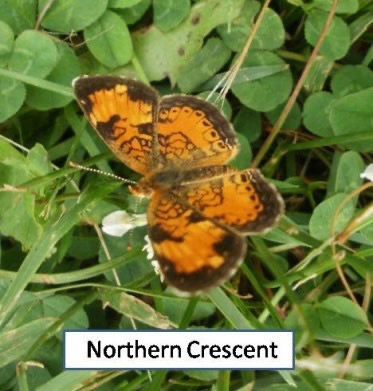
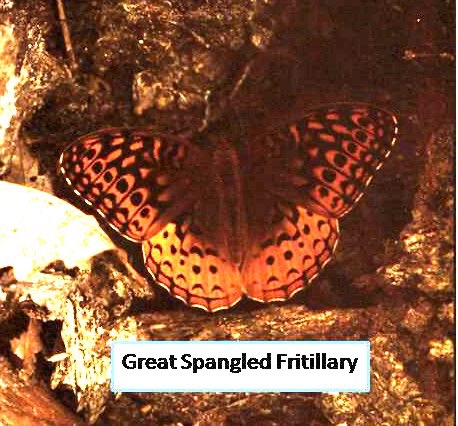
And that’s not all! The Fritillaries, Crescents, and Tortoiseshells are also Brushfoots. Some you might see at Afton include the Great Spangled Fritillary, the Regal Fritillary, the Northern Crescent, and the Milbert’s Tortoiseshell.
Reptiles
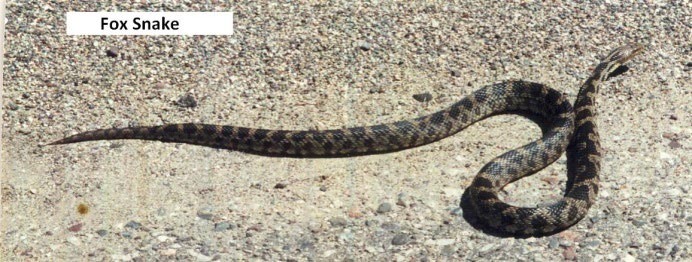
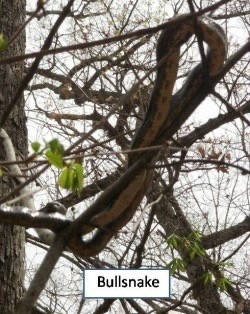
Two large snakes you might see at Afton are the Bullsnake, sometimes called the Gopher Snake, and the Western Fox Snake. The Bullsnake and Fox Snake look very much alike. Both have black or brown blotches across the length of their bodies. The Bullsnake has a more yellowish background color, while the Fox Snake has a more reddish background color. And the Fox Snake has a solid brown or reddish-brown colored head with a rounded nose, while the Bullsnake’s head is yellow with dark markings and a pointed nose. Bullsnakes can reach six feet in length, making them the longest snake in Minnesota, while Fox Snakes are typically a little shorter, up to around five feet. Both Fox Snakes and Bullsnakes are constrictors, killing their prey by wrapping around it and squeezing. If threatened, both species may shake their tails and pretend to be rattlesnakes. And both species may on occasion climb trees!
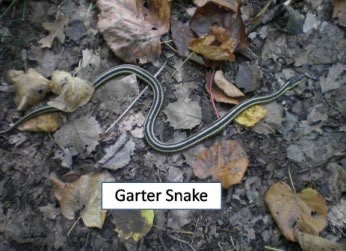
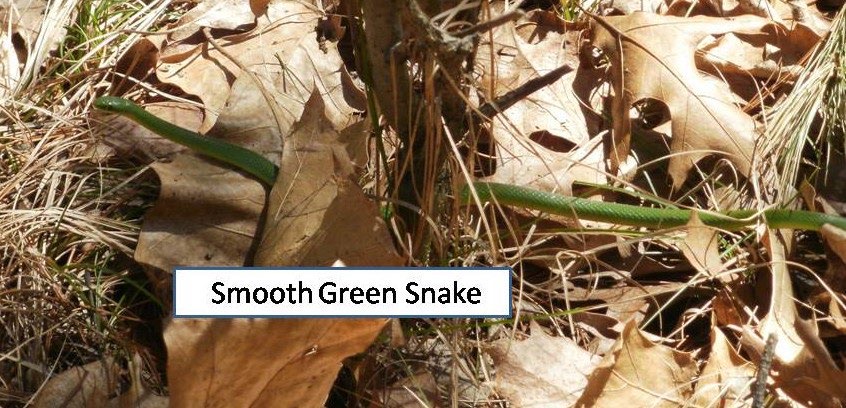
Two smaller snakes you might see at Afton are Garter Snakes and Smooth Green Snakes. They are much smaller than Fox and Bullsnakes. Garter snakes are generally about three feet long or less, and they have longitudinal yellow stripes, not blotches. Garter Snakes are not constrictors, but instead use a mild venom to immobilize their prey (small mammals, insects, frogs and earthworms). Smooth Green Snakes are the only snakes in Minnesota that are completely green. They are smaller than garter snakes, usually one to two feet long, and they are the only Minnesota snake that feeds almost exclusively on insects. They are sometimes called Grass Snakes, because they like grassy areas. Keep an eye out for snakes when you are hiking or biking at Afton; none of them are dangerous to humans and they play an important role in the ecosystem.
Plants
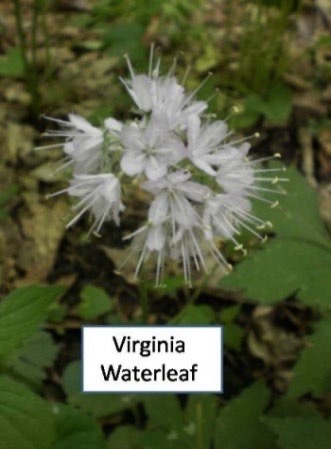
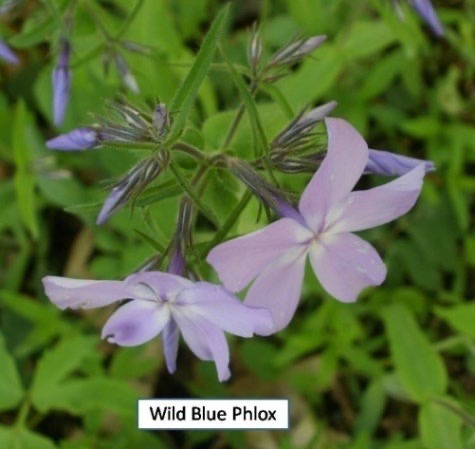
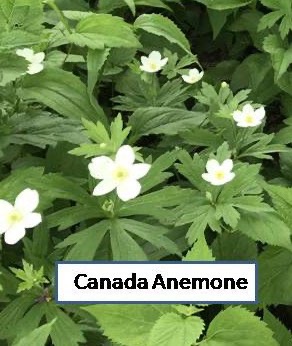
In the woods look for Canada Anemones, Wild Geranium, Virginia Waterleaf, and Wild Blue Phlox.
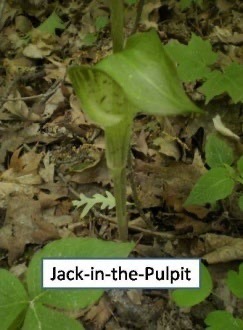
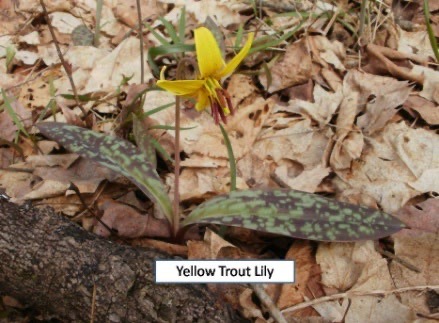
You may still see Yellow Trout Lily, Jack-in-the-Pulpit, and both Downy Yellow Violets and purple Wild Violets.
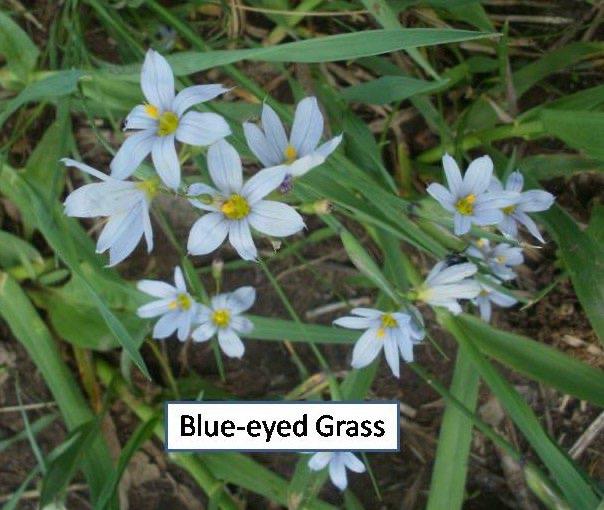
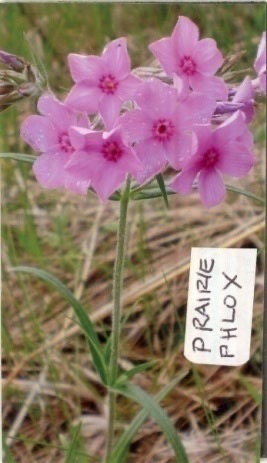
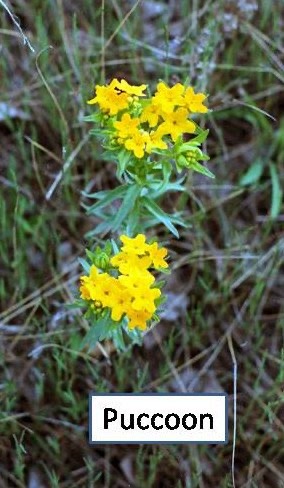
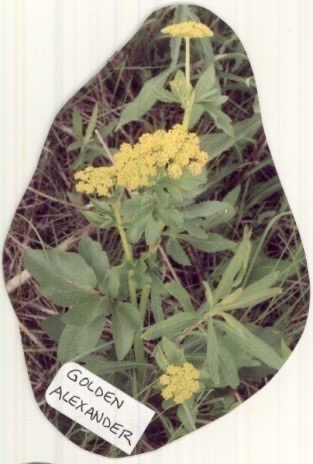
On the prairie you might see Prairie Phlox, Golden Alexanders, Blue-eyed Grass, and Puccoons. Blue-eyed grass is not really a grass, but is a member of the Iris family.
Trees
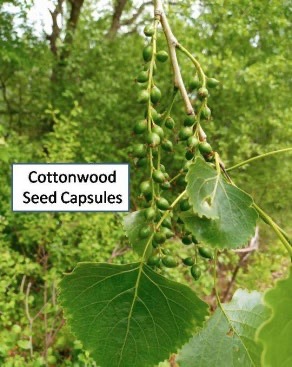
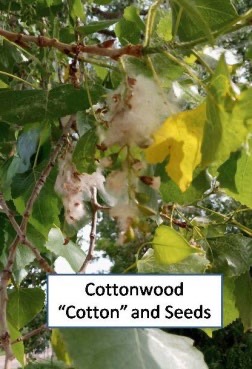
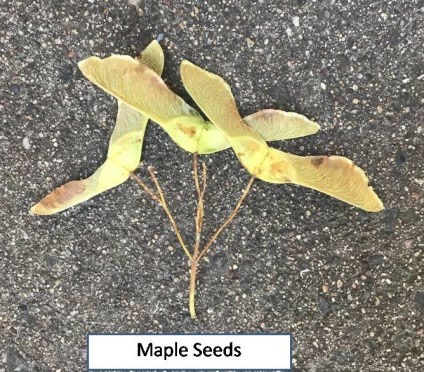
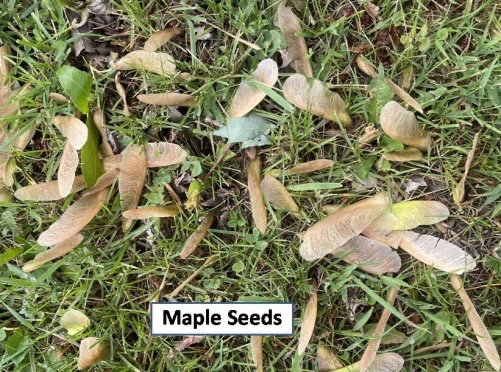
At this time of year the seed capsules on female Eastern Cottonwood trees open. The seeds are covered with fluffy fibers resembling cotton. Thanks to the cotton the seeds float away in the breeze, often landing far from the mother tree. You may also see Maple seeds spinning to the ground like the propellers on helicopters. This shape of seed is called a “samara”.
Weather observations
Here are some weather observations from past years.
Friday, May 15
2024: sun to start the day, then overcast, with rain after 9:00 p.m.; 2017: thunder in the afternoon; 2001: record high of 94°
Saturday, May 16
2024: clouds and cool through mid-afternoon, then sunny and into 70s; 2023: sunny, in low 80s; 2021: fog and clouds early, then sunny with a high in the 70s
Sunday, May 17
2024: hot with a thunderstorm in the evening; 2023: haze from Canadian wildfires; 2020: rain through the day, for a record of 2.47 inches
Monday, May 18
2024: sunny and near 80°; 2018: earliest day to reach 100° in the Twin Cities; 2013: rain and thunder in the morning; 2012: record high of 93°
Tuesday, May 19
2024: mostly cloudy, 70s; 2022: Hailstorm in late afternoon; 2015: 30s in the morning, rising into the 50s; 2014: record rainfall of 2.25 inches; 2009: record high of 97°
Wednesday, May 20
2025: rain through day, 40s; 2024: partly sunny, high 70s; 2023: beautiful sunny day in the 70s; 2021: rain off and on through day; 2017: record rainfall of 1.47 inches; 2009: record high of 94°
Thursday, May 21
2025: light rain continues in morning, still in 40s; 2024: dark clouds and thunderstorm late afternoon; 2021: one inch of rain; 2013: rain and temperatures in the 50s
Photo/image credits:
All photos and images used by permission.
Copyright Nina Manzi, except:
Jamie Olson Kinne: Eastern Comma
Dean Lokken: Eastern Kingbird, Great Spangled Fritillary, Kildeer, Scarlet Tanager, Turkey Vulture
Paul Ludden: Bobolink
Gary Sater: American Redstart, Baltimore Oriole, Eastern Bluebird, Eastern Meadowlark, Indigo Bunting, Orchard Oriole
John Schultz: Rufuous-sided Towhee
Zosh Tanner, Friends of the Mississippi River: Regal Fritillary
Whoops! There was an error and we couldn't process your subscription. Please reload the page and try again.
By clicking subscribe, you agree to share your email address with St. Croix 360 and Mailchimp to receive emails from St. Croix 360. We will never share your information with anyone else.