Editor’s note: James Olmsted is a community historian who mostly writes about place-based histories and landscapes. He previously wrote a history of the Gibson Cabin on the upper St. Croix River that was published on St. Croix 360 in 2025.
Olmsted is currently pursuing a PhD in history from the University of Wisconsin-Milwaukee, studying the logistics and infrastructure of consumerism, tourism, and vacation that served the Twin Ports and Twin Cities wealthy elite in early 20th-century northwestern Wisconsin. He lives near Madison, Wis. and has been recreating in Douglas County for almost 40 years. He is retired from the nursery and landscaping business.
Olmsted is a 2024 Wisconsin Humanities Fellow and is writing a book on the Gibson Cabin. His research is supported by his family, the Gibson family, the University of Wisconsin-Milwaukee, the Gordon-Wascott Historical Society, and the National Park Service. Thank you to James and all his supporters for preserving and sharing these stories.
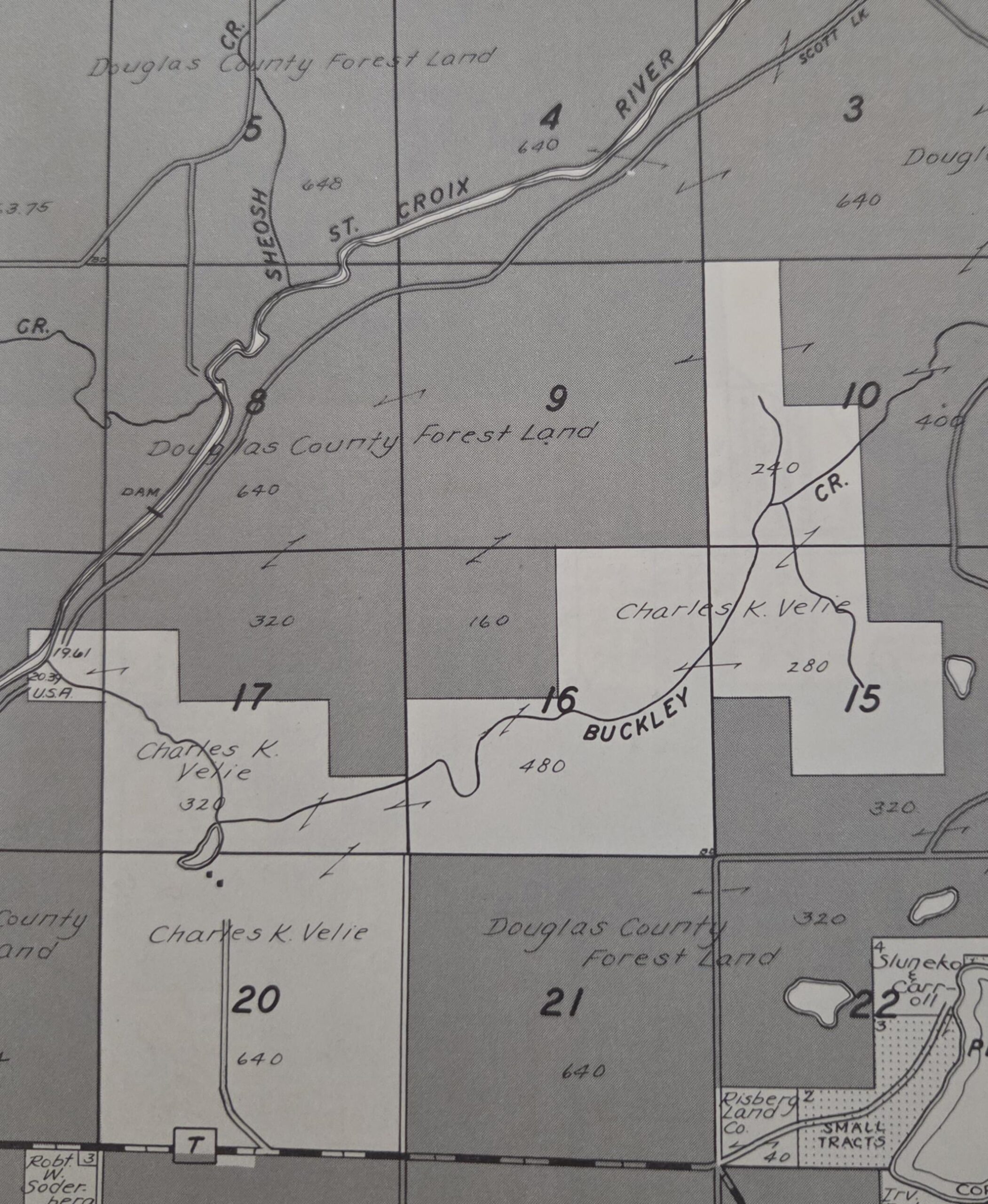
The fabulous Mishe Mokwa lodge was part of a vast estate near the St. Croix River and Buckley Creek, 7 miles southwest of Mail Road at Scott’s Bridge over the St. Croix River near Gordon, Wisconsin. Much of the property acreage remains intact today, except for a piece along the St. Croix River that became part of the St. Croix National Scenic Riverway. The lodge was built in 1887, rebuilt in 1920, and dismantled in 2013.
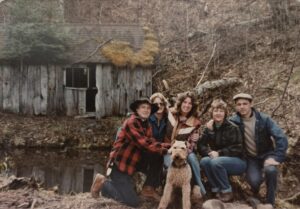
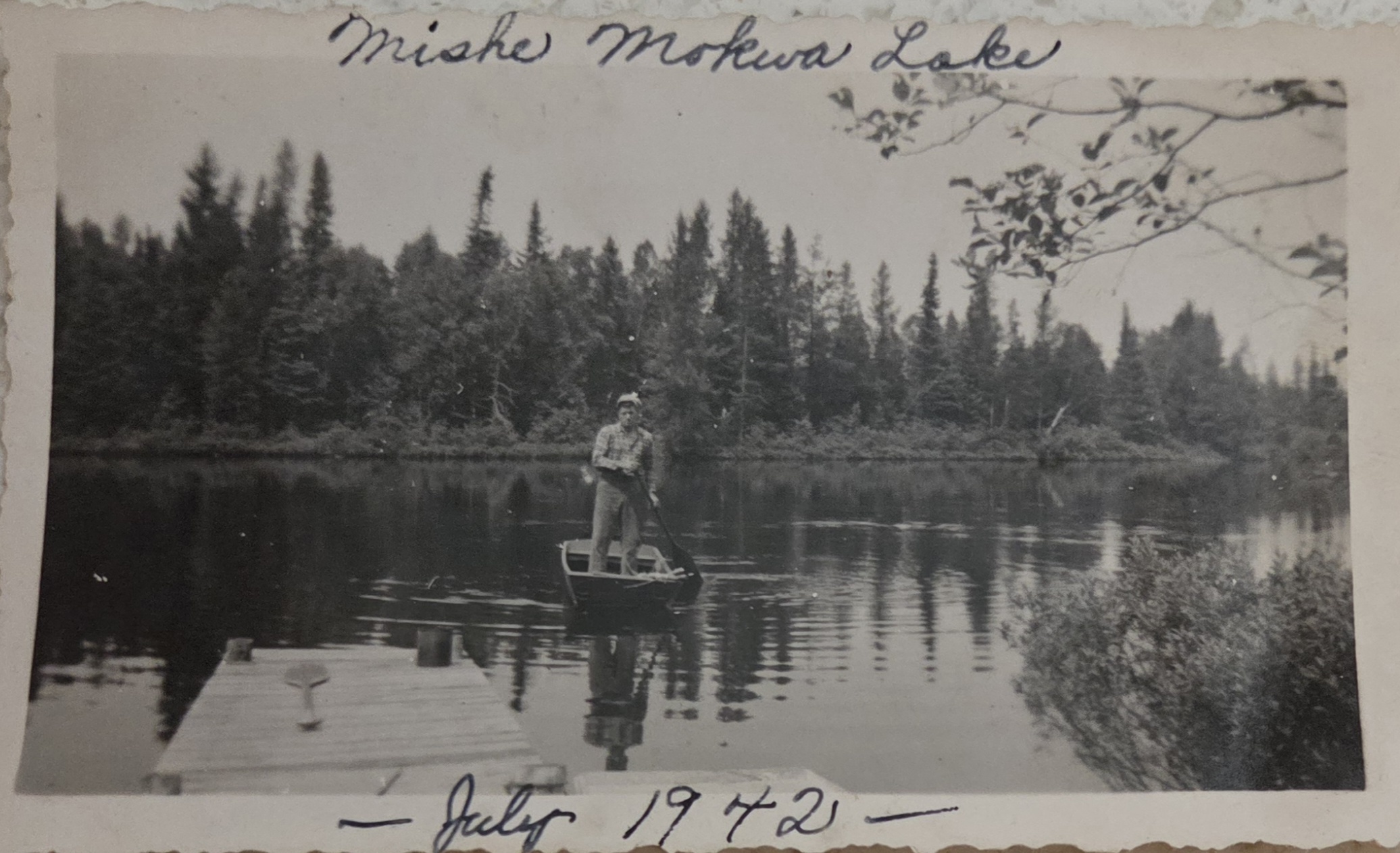
Mishe Mokwa was located less than a mile from the St. Croix River with water frontage. The main lodge or clubhouse was built on a hill overlooking Mishe Mokwa Lake, a large trout pond that feeds Buckley Creek. You could follow Buckley Creek through the property for about a mile to the St. Croix River. At Mishe Mokwa Lake, there was a dock and boathouse, visible in the Lambert family photo.
Tim Lambert, Nat, Marietta Iordachesu, Carol Lambert and Jim Lambert, and Spunky at the boat house by the trout pond, 1980s.
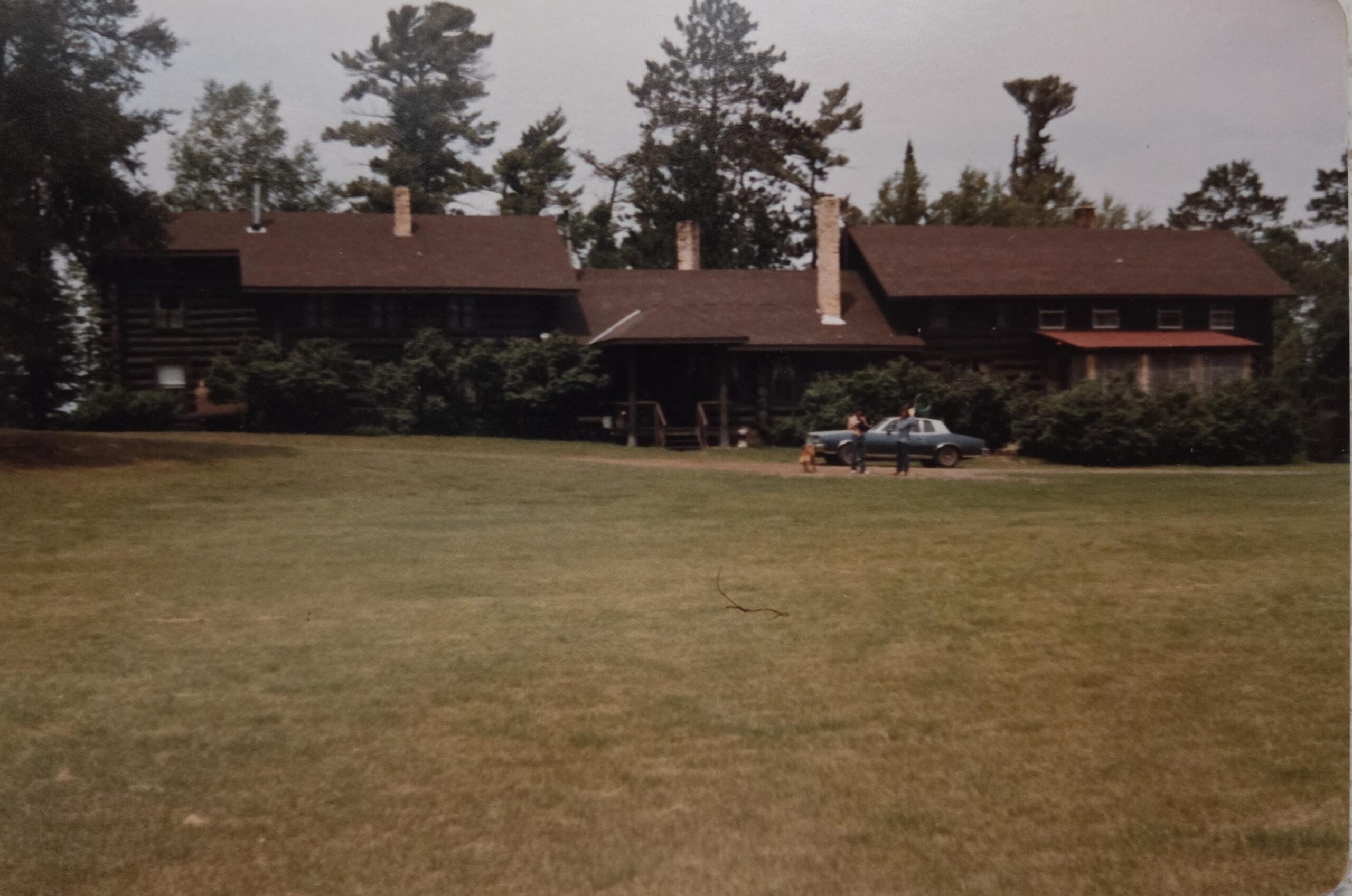
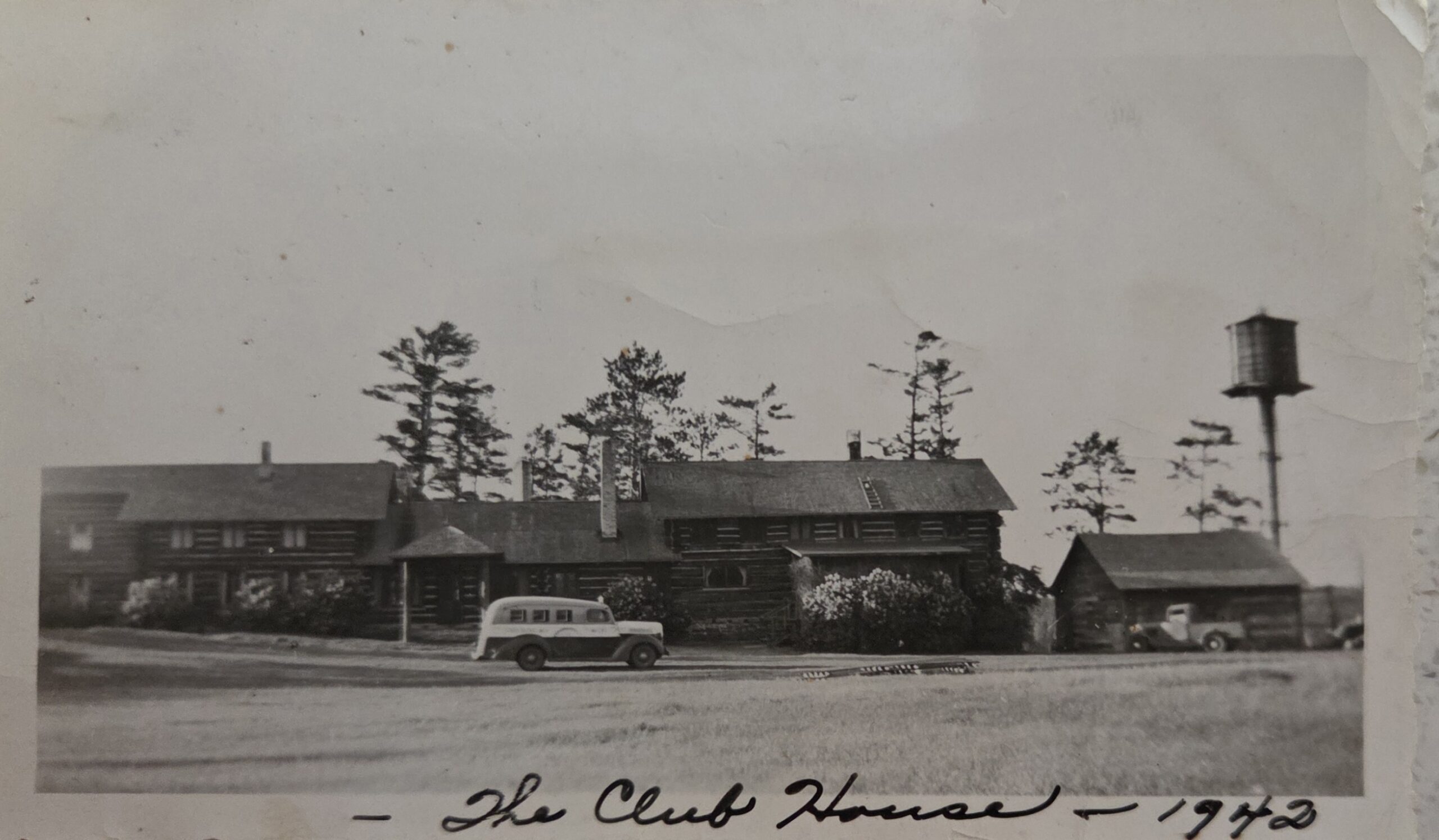
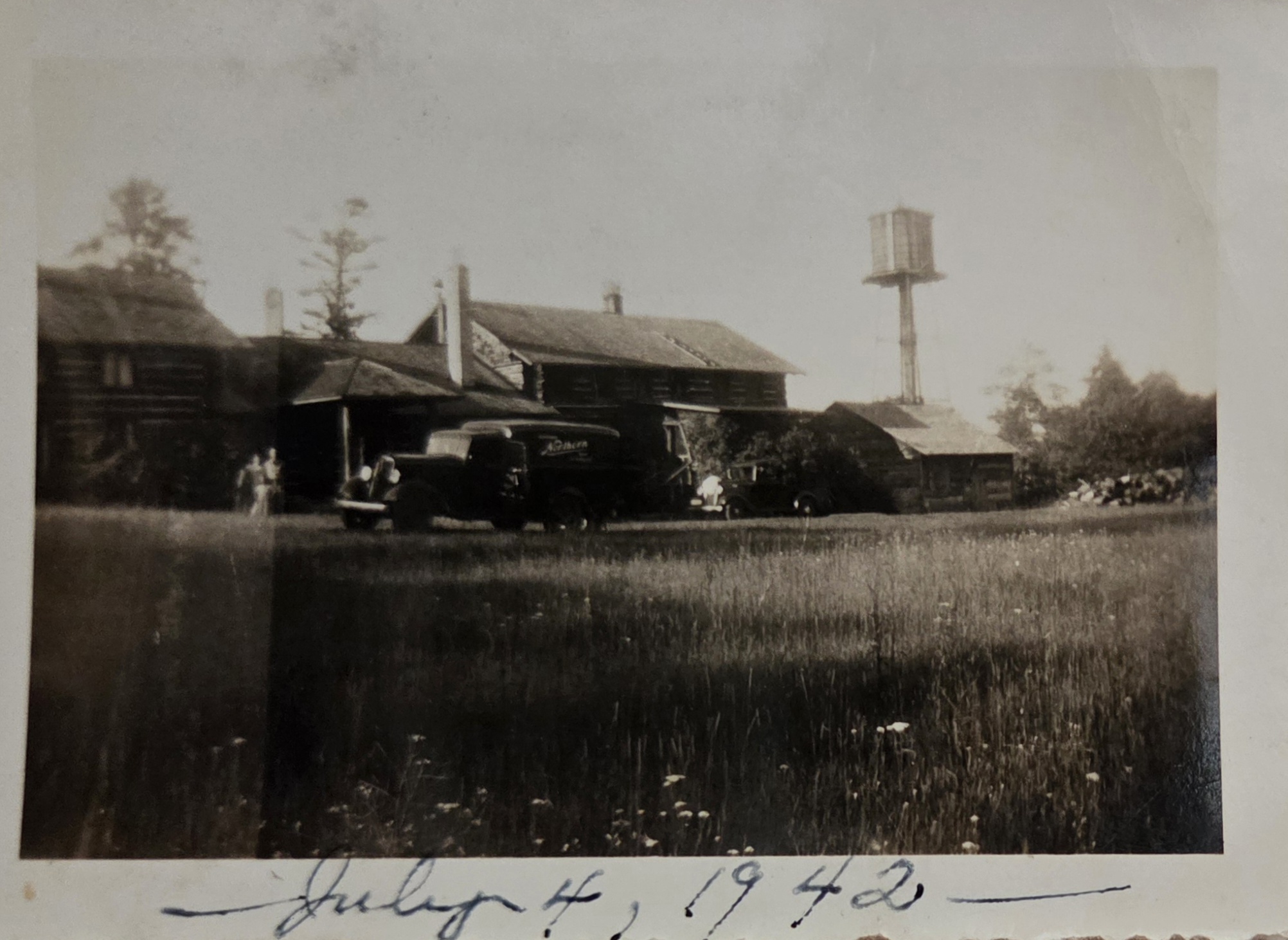
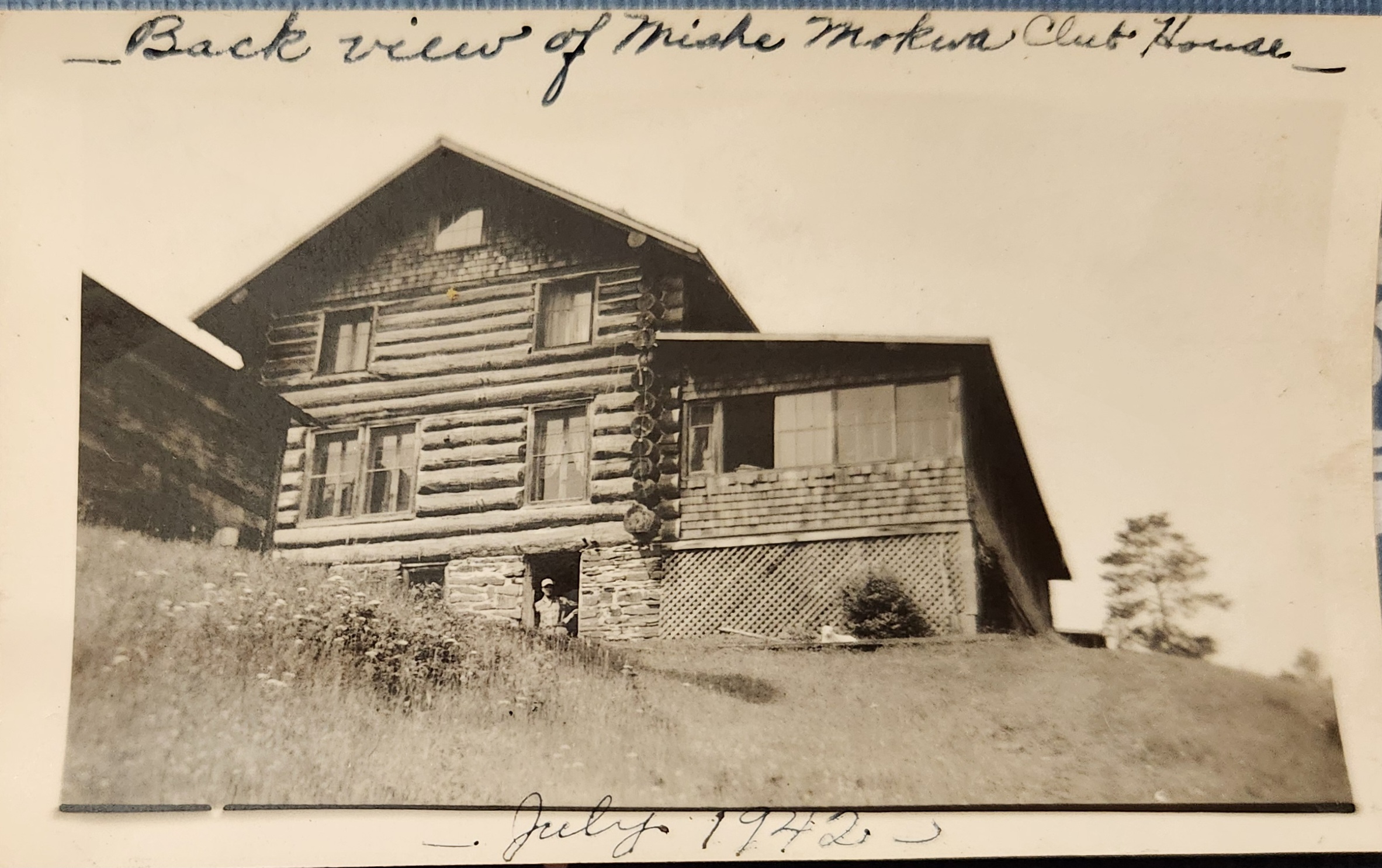
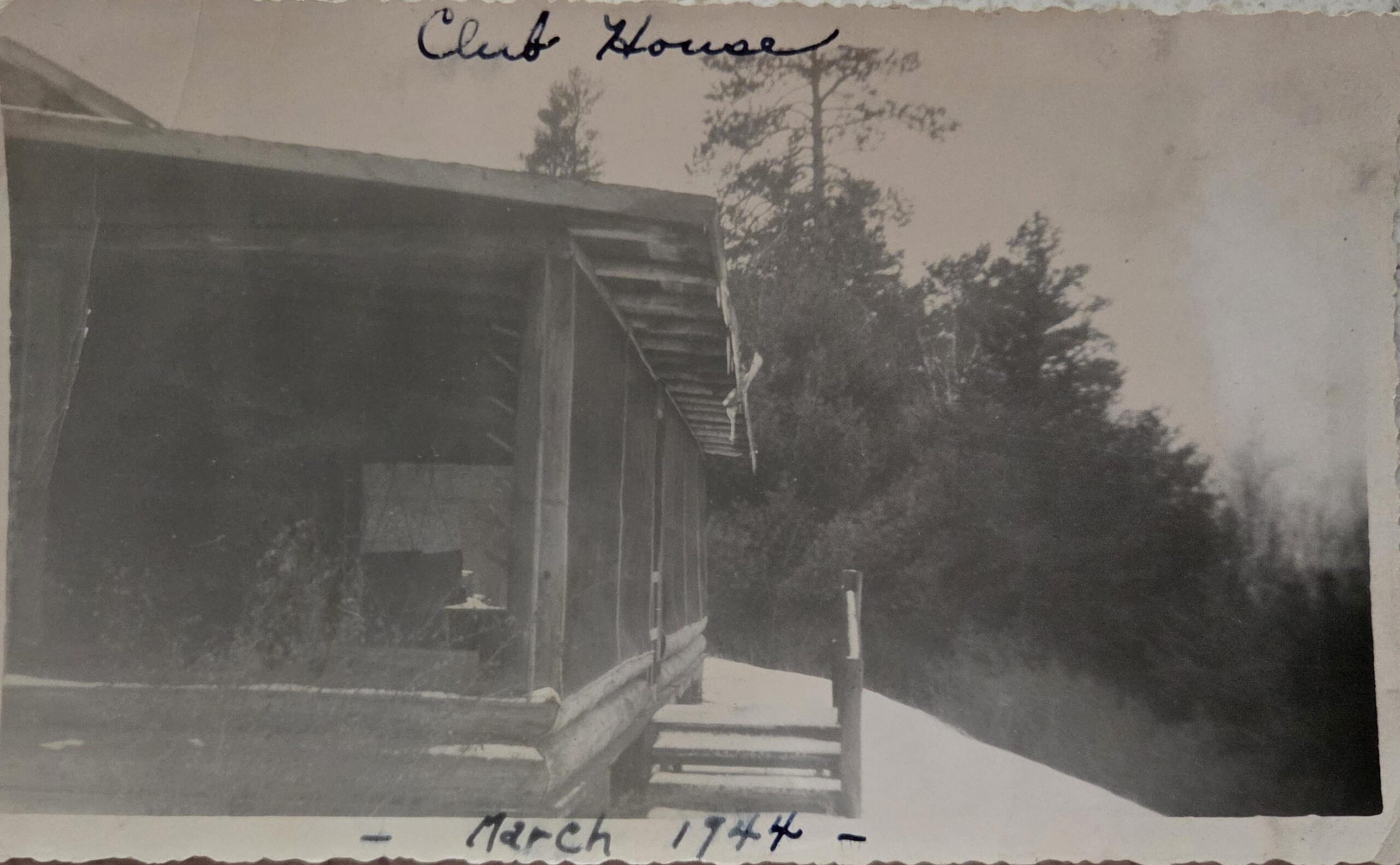
The clubhouse was a massive log lodge with a caretaker’s quarters and kitchen connected to the main living and dining rooms, and a separate wing just for bedrooms. Steve Iordachescu, who visited the lodge dozens of times in the 1980s, described the property as follows. The lodge had two halves, a caretaker’s half and the guests’ half. The lodge was built from old-growth pines, and the logs in the walls were of huge diameter. The upstairs was one large room that was difficult to heat.
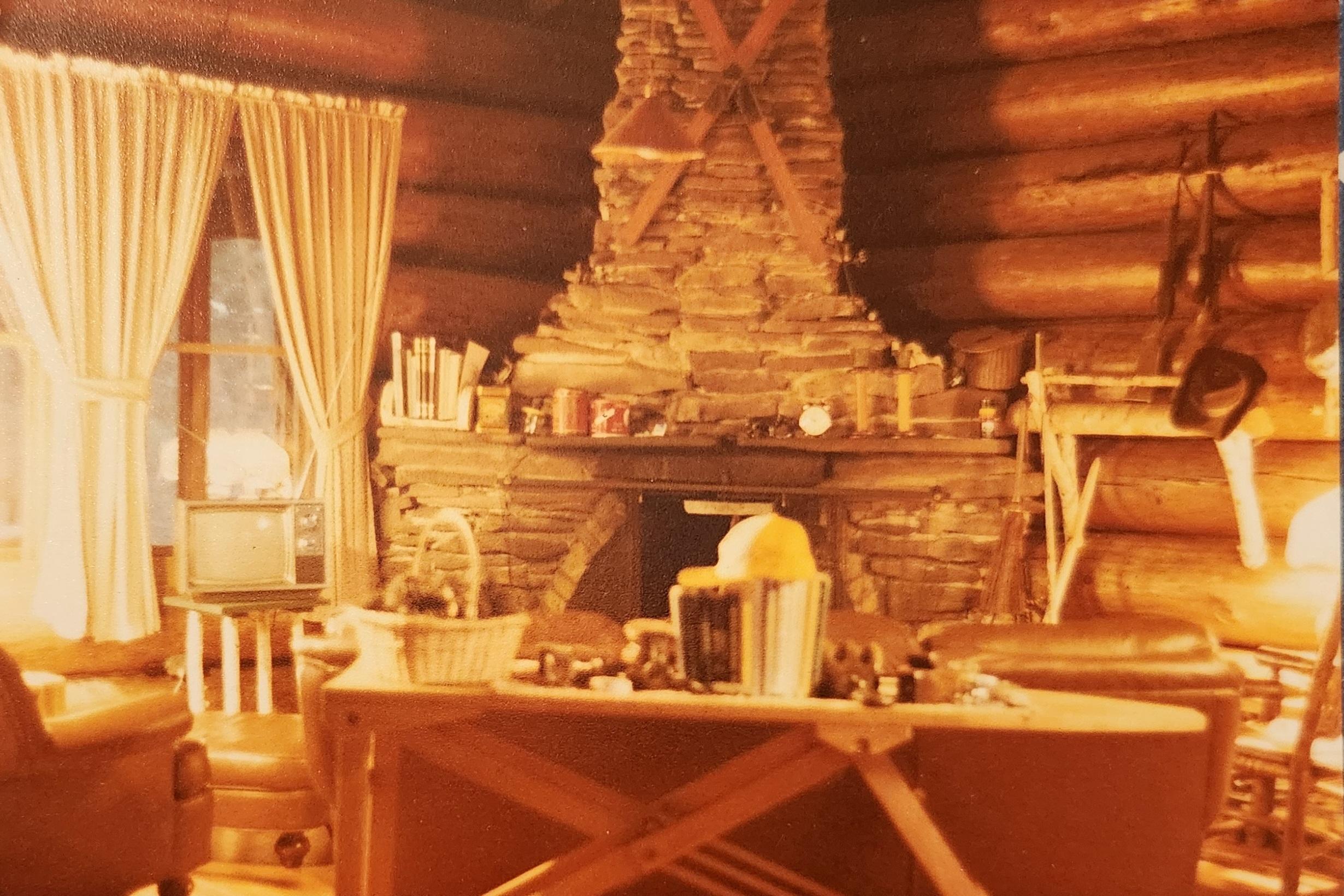
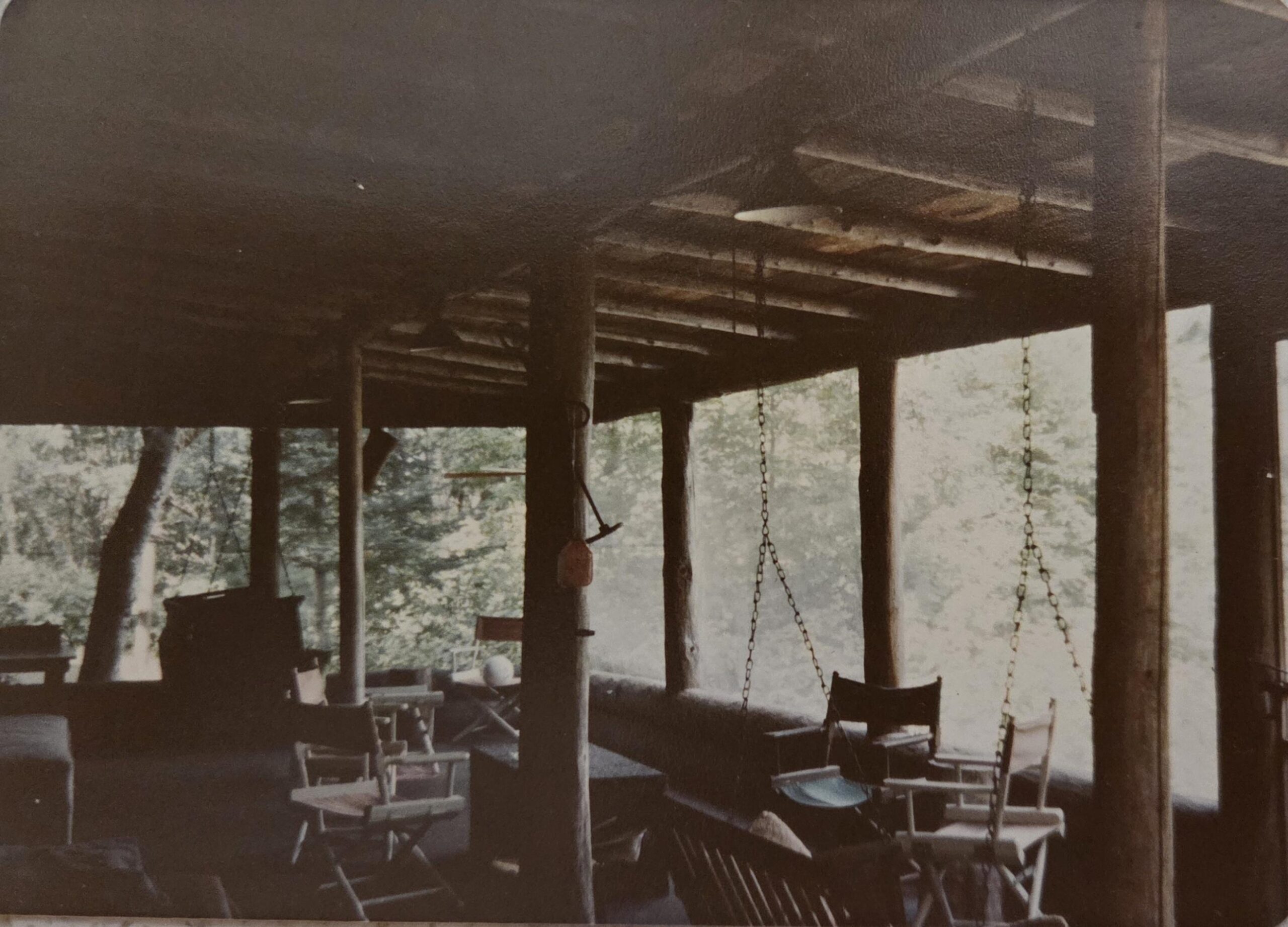
The inside of the lodge smelled like evergreens from the pine logs and the fir flooring. There was electricity, running water, and a septic system, and the bathrooms had log walls, including the showers. The lodge had an enormous back screen porch with a swinging bed that hung from the rafters, which Steve used to sleep on, even in the winter. There were multiple outbuildings, including a large garage next to the clubhouse, with the remains of an old water tower behind it.
Importance of fishing
The history of the Mishe Mokwa lodge illuminates several histories. One history the Mishe Mokwa lodge tells is the importance of trout fishing as a sport for wealthy elites in the late nineteenth and early twentieth centuries, which was a primary reason they built rustic lodges on or near the St. Croix River. Trout liked the cold, clear streams of Douglas County that flowed through marshes and lowlands where it was easy to build spring-fed trout and breeding ponds that fed into existing waterways. Trout fishing is a main reason why many of these magnificent rustic lodges were built in the middle of swamps and marshes, or along rivers, rather than on the region’s many premier recreational lakes.
Evidence that trout fishing was important dates to as early as 1868, when Antoine Gordon led a group of Minnesota businessmen in canoes from Gordon, through Upper St. Croix Lake, and into the Brule River to fish for trout. The Arnold Lodge was built on the Moose River in 1902 for trout fishing, as was the Gordon Dam Fishing Club, created in 1905. The A.D. Thomson lodge was built in 1906 near the St. Croix River and Ox Creek specifically for trout fishing; the Gibson cabin (1915) and the Ken Scott cabin (1925) were built on the St. Croix River near Arnold Creek and the Moose River for trout fishing. Tales of trout fishing from the grand old lodges demonstrate the sport’s importance as a way for wealthy men to bond in masculinity and as business partners.
Rustic architecture
The Mishe Mokwa lodge was an example of Rustic architecture, which was a vernacular style used as a symbol of Gilded Age wealth. “Rustic-style” architecture was invented in the Adirondacks for New York’s wealthy elite between 1870 and 1890. Rustic style generally used native materials, and the structures had large three-season porches, great rooms, and exaggerated, oversized fireplaces.
Wealthy people often built private rustic lodge compounds in remote, hard-to-access locations, or sometimes a group of businessmen built a lodge and then formed a club. The lodges were symbols of wealth because they were far more expensive to build and maintain than stick-frame homes.
American Plan resorts vs. private resorts
Another history the Mishe Mokwa lodge reveals is the private lodge vacation experience versus American Plan vacation. American Plan resorts were popular all-inclusive vacations open to the public, and provided meals, laundry services, guides, boats, and transportation to and from the railroad depots. American Plan resorts also capitalized on the popularity of rustic architecture, which glorified the log cabin myth.
As early as the 1880s, wealthy midwestern urbanites were coming to northern Wisconsin in search of “wilderness.” Elaborate Rustic resorts soon followed. The typical turn-of-the-twentieth-century resort consisted of a two-story main lodge built of local timber and fieldstone in a distinct Northwoods vernacular style along with, typically, five to ten cabins. Guests would often stay for a month or more. Almost all resorts at this time operated on the American Plan.1
Conversely, by the 1890s, the ultra-rich were building private resorts for themselves. Many of the wealthiest elites from the Midwest shifted from the American Plan resort vacation to the more exclusive private lodge experience, where owners could control membership. Mishe Mokwa was an example of the exclusive private lodges used as an alternative to vacationing at American Plan resorts. The private lodge experience was also all-inclusive, but it didn’t include the public.
Transitions in ownership: Isaac Staples
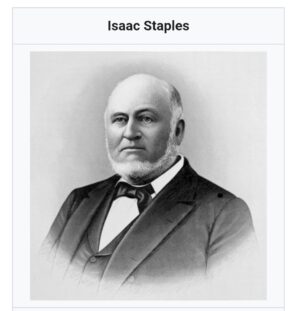
The parcel for the Mishe Mokwa Lodge was platted in 1877 by the famous lumber baron Isaac Staples (1816-1898). Staples was one of the most powerful lumbermen in the St. Croix Valley for over 40 years until late in his life, when he sold his empire to Frederick Weyerhaeuser.2
While Staples usually bought enormous tracts of land in Minnesota and Wisconsin for clear-cutting, he bought only 40 acres on Buckley Creek, demonstrating that it was purchased specifically for trout fishing. The Mishe Mokwa Fishing Club bought Staples’ 40 acres, ultimately acquiring over 2,000 acres, including most of the Buckley Creek watershed, and 20 acres along the St. Croix River, which were later purchased by the National Park Service and became part of the St. Croix National Scenic Riverway.
Nathaniel French
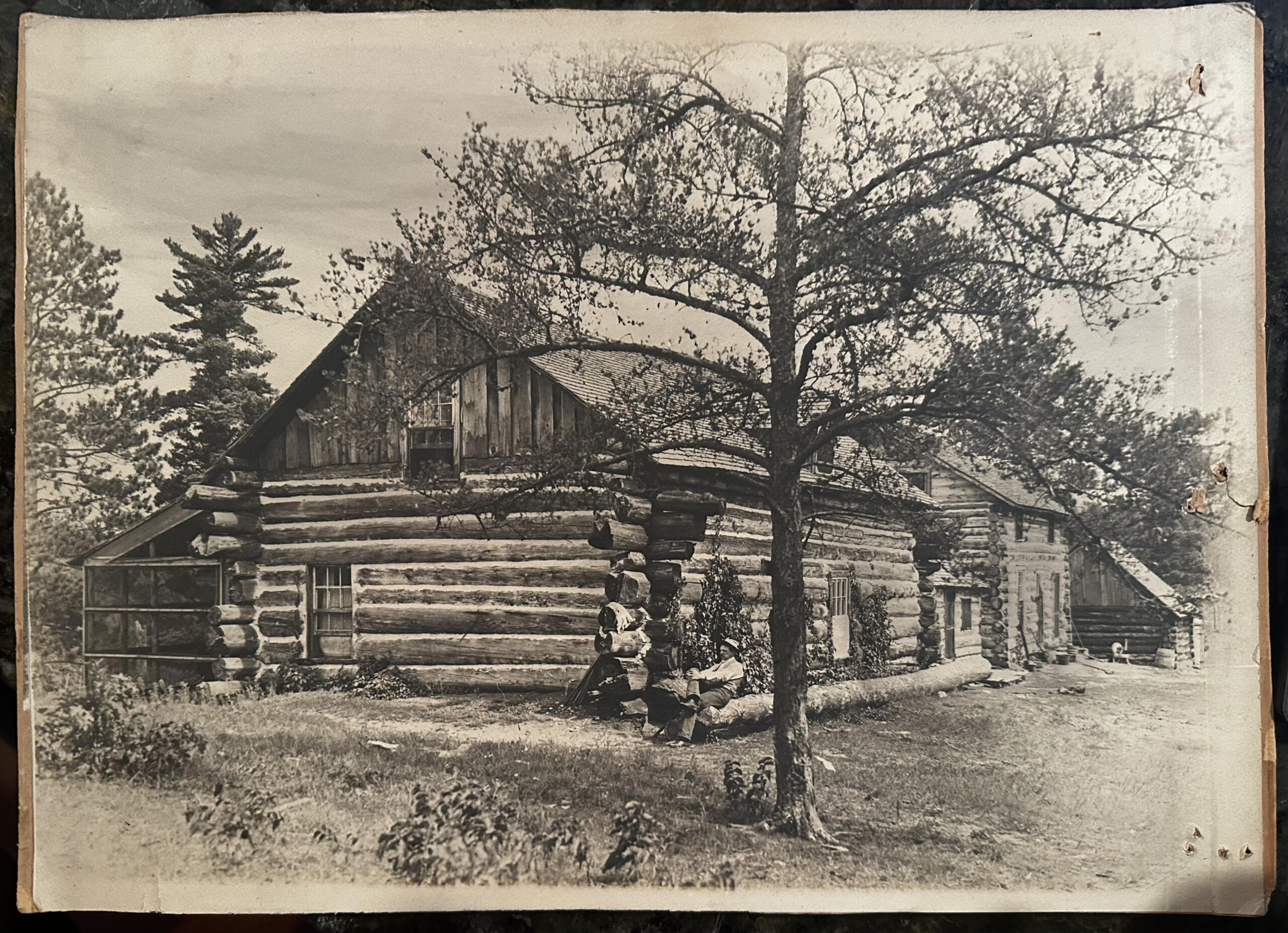
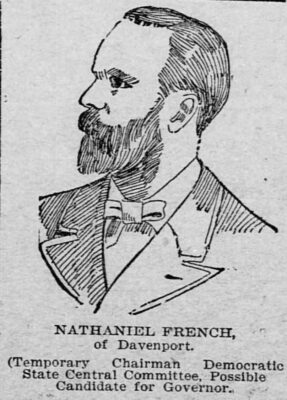
Nathaniel French and E.W. Durant were among the owners of the Mishe Mokwa Club. French was a judge from Davenport, Iowa, who had property in Iowa, Minnesota, and Wisconsin. In 1904, Nathaniel French and his son, Francis, and Joseph Hecht formed the French and Hecht/ Davenport Wagon Wheel Co. The company was a major fabricator of manufactured metal wheels for agricultural implements, wagons, and tractors for the John Deere Company, and also sold industrial metal wheels for road machinery. Joe Hecht is sitting on a log in the foreground of the 1887 photo of Staples cabin, demonstrating the connection between French, Hecht, and the John Deere Company was early in the lodge’s history.
E.W. Durant
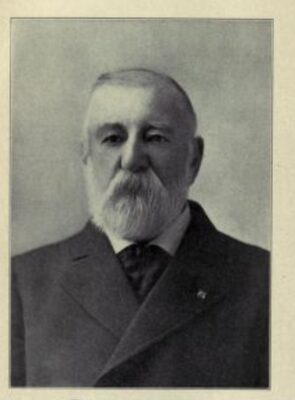
E.W. Durant (1829-1918) was a prominent Stillwater, Minnesota lumberman who had worked under Isaac Staples. Durant was a major figure in regional lumber and real estate speculation, which was a natural outgrowth of owning thousands of acres of clear-cut land. Additionally, Durant was a politician, serving as Stillwater’s mayor throughout the 1860s, and then serving in the state legislature. The Durant family was only a part-owner of the Mishe Mokwa Club, but after 1891, the lodge was often referred to as the Durant Clubhouse.
The Mishe Mokwa Fishing Club
In 1891, Nathaniel French, E.W. Durant, and thirteen other businessmen formed the Mishe Mokwa Fishing Club of St. Paul. The Club was incorporated for “the cultivation of the science and art of fishing, the cultivating and preserving of trout, etc., and to establish fishing points and hatcheries.”3 The club included an elite group of fifteen prominent, mostly Minnesota businessmen, who incorporated to buy property and build cabins near trout. The Mishe Mokwa group owned land in Minnesota, Iowa, and Wisconsin, and built another clubhouse in Douglas County in 1903 on 160 acres on Ox Lake northeast of Gordon, and called it the Minne Wawa Club. An editor in a St. Paul newspaper sarcastically summarized the goal of the Mishe Mokwa Fishing Club as follows:
To cultivate the science and the art of fishing with a rod. Such is the declared object of a new incorporation. The ethics of the rod with a speckled trout as the active illustration must be a fascinating study, but, shades of Izaak Walton, where will this modern esthetic craze end? The project was evolved by several of St. Paul and Stillwater scientists, and it is to be an exceedingly exclusive institution. The class is to be limited to fifteen…4
The newspaper article concluded that the new “school” will call itself “the romantic and euphonious ‘Mishe-Mokwa Club’.” Mishe Mokwa means Great Bear in Ojibwe, used in the Song of Hiawatha by Henry Wadsworth Longfellow. The poem was set near Lake Superior and published in 1855, so everyone in the late 19th century would have understood the reference. The original lodge was torn down in 1920, expanded, and then rebuilt longer and wider using some of the original structures’ materials.
Over several decades, the Superior Evening Telegram referred to the lodge as the Durant Clubhouse, the Black Bear Clubhouse, and the Buckley Clubhouse. Buckley Clubhouse was probably what locals called it since the Buckleys were nearby homesteaders, and it is doubtful the owners would name the lodge after the caretakers. Buckley was a lumberman under Isaac Staples who was there from the beginning, and the Buckleys were also early important guides at Mishe Mokwa Lodge. Buckley Creek was originally called Spring Brook in the 19th century and documented as Black Bear Creek on a 1914 map, but was eventually renamed Buckley Creek for the family’s significance, and for many years there used to be a Buckley Creek Barrens State Natural Area nearby, defunct today.
The Mishe Mokwa clubhouse was first referenced in the St. Paul Globe on August 20th, 1893.
Mr. and Mrs. Durant, E.W. Durant Jr., ex-Mayor Smith and Mr. Cary of St. Paul: Mr. Kent of Chicago, and John Crosby, of Minneapolis, left yesterday for Gordon, Wisconsin, to spend a few days at the Durant club house. On the first Friday in September Mrs. Durant will give a dinner at the club, and the menu cards now being prepared are of birch bark, on which the names of the eatables are written in Chippewa.5
The newspaper article illustrated several fads. It was a common practice at that time for wealthy people to romanticize the names of their vacation retreats with real or made-up Native American words. The Brule River elite cabins had names like Winneboujou, Wendigo Lodge, and Opechee, and the Brule River landowners’ associations were called the Winneboujou Club and the Gitchi Gummi Club.6
According to the article “Bois Brule River Cabin District” about the Brule River lodges, “The Brulelites used Henry Wadsworth Longfellow’s ‘The Song of Hiawatha as a guide. Today, linguists agree that he pretty much butchered the Ojibwe language in his epic poem.” This fad of using the Ojibwe language also explains why Mrs. Durant had her menu cards written on birch bark and gave the meals “Chippewa” names.
The John Deere and Velie family connection
The John Deere family was part of the Mishe Mokwa Club history dating back to the nineteenth century. The Club membership included relatives and descendants of John Deere who were intertwined through marriage with the Butterworth and Velie families.
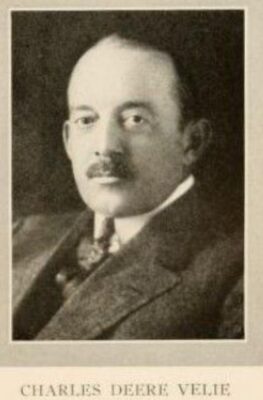
John Deere’s grandson, Charles Deere Velie, was either an original Mishe Mokwa Club member or began visiting the lodge in the 1890s. Stephen Velie married John Deere’s daughter, Emma Deere, in 1860, and they had Charles Deere Velie in 1861, who climbed the ranks at Deere and Company to territorial manager and ultimately to the board of directors until his death in 1929.
The Velie family
Charles Deere Velie’s son, Charles Koon Velie (1901-1982) bought the Mishe Mokwa property on July 14, 1934.7 The Velie family became the sole owners in 1934 and used the lodge until 1978, when they sold it to the Lamberts.
During an oral history interview in March 2025, Claudia Postl discussed what it was like being a teenager working as domestic help at the Mishe Mokwa lodge for the Velie family in 1958 and 1959. She said the lodge’s head caretaker, Mrs. Steinhilpert, hired several girls in Gordon in the summer and took them out to the Velie lodge, where they stayed for six days at a time. The girls got one day off per week, went home for a night, then returned to the lodge for six days, repeated throughout the summer. Claudia said it was a really big house, and they had their own bedrooms on the caretaker side of the lodge. They did housekeeping, cleaning, and serving. There was a staff chef, and the girls served high-end meals “like you see in the movies.”8 The head caretaker, Mrs. Steinhilpert, was very strict, and there were severe reprimands if the silverware was not properly soaked in cold water or if the guests’ beds weren’t made perfectly. Steinhilpert checked the beds by running a yardstick over the bedspread and measuring the bedspread edges from the floor.
Mishe Mokwa could have been a National Park Service lodge
In 1968, as part of the new St. Croix National Scenic Riverway, the National Park Service (NPS) acquired 20 acres along the river from the Velie property, plus an additional 42 acres were protected by a conservation easement, with the intention of buying or getting easements for most of the property. In 1978, Velie sold the property to a private developer, who sold 600 acres of the 2,000-acre estate to a logging company. In 1979, the NPS began the process to purchase the remaining 1,400-acre property, including the lodge and all outbuildings. The U.S. Congress passed Public Law 96-580 on December 23rd, 1980, which authorized the purchase of the Velie estate. However, before NPS could finalize the deal, the developer sold the property to the Lambert family. The park service could have kept the building, renovated it, and used the grounds for a national park campground or other publicly accessible purpose. They may also have dismantled the building and returned the area to a natural state, but either way, selling the property to the Lambert family sealed the lodge’s fate.
The Lamberts
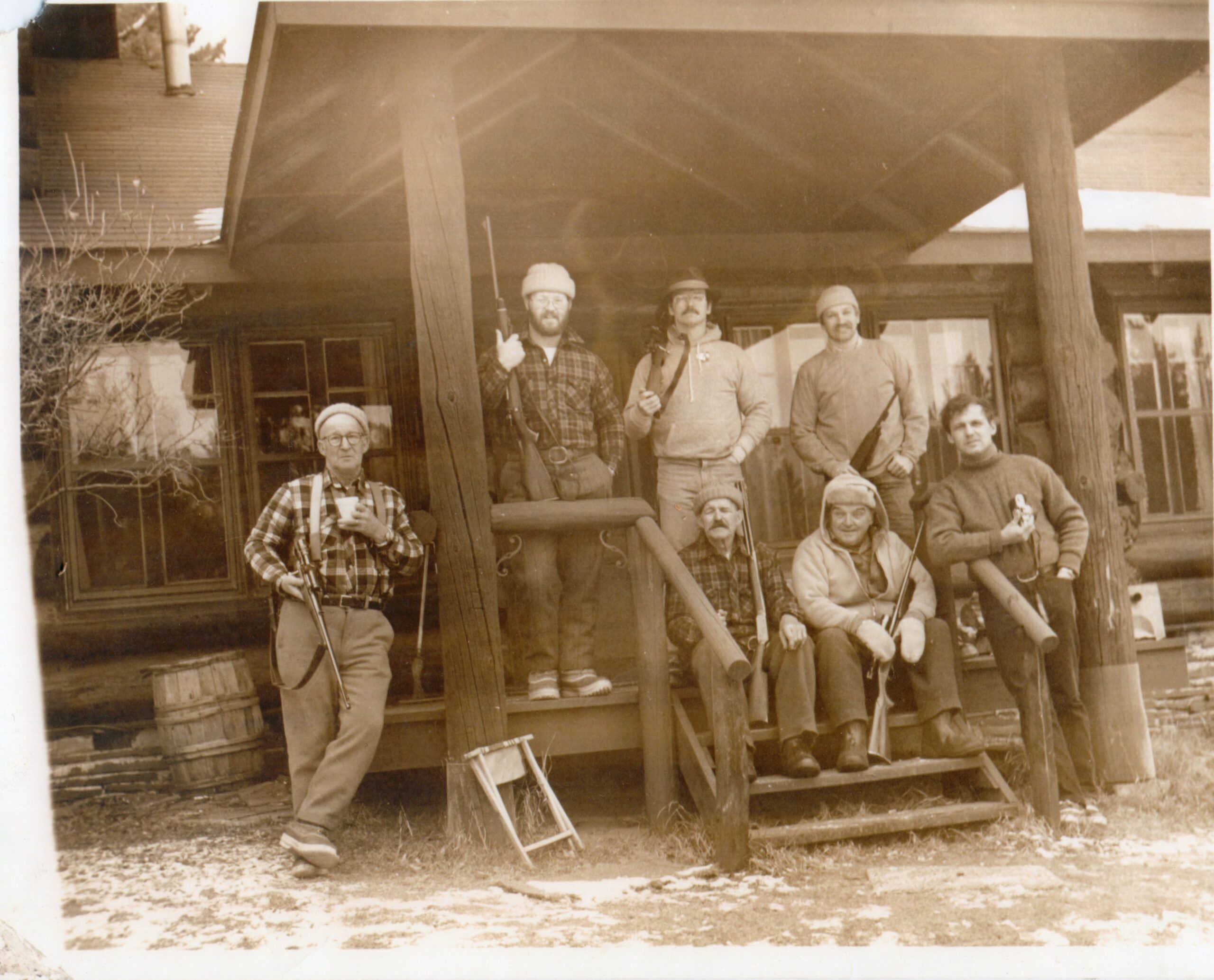
1990 deer hunt.
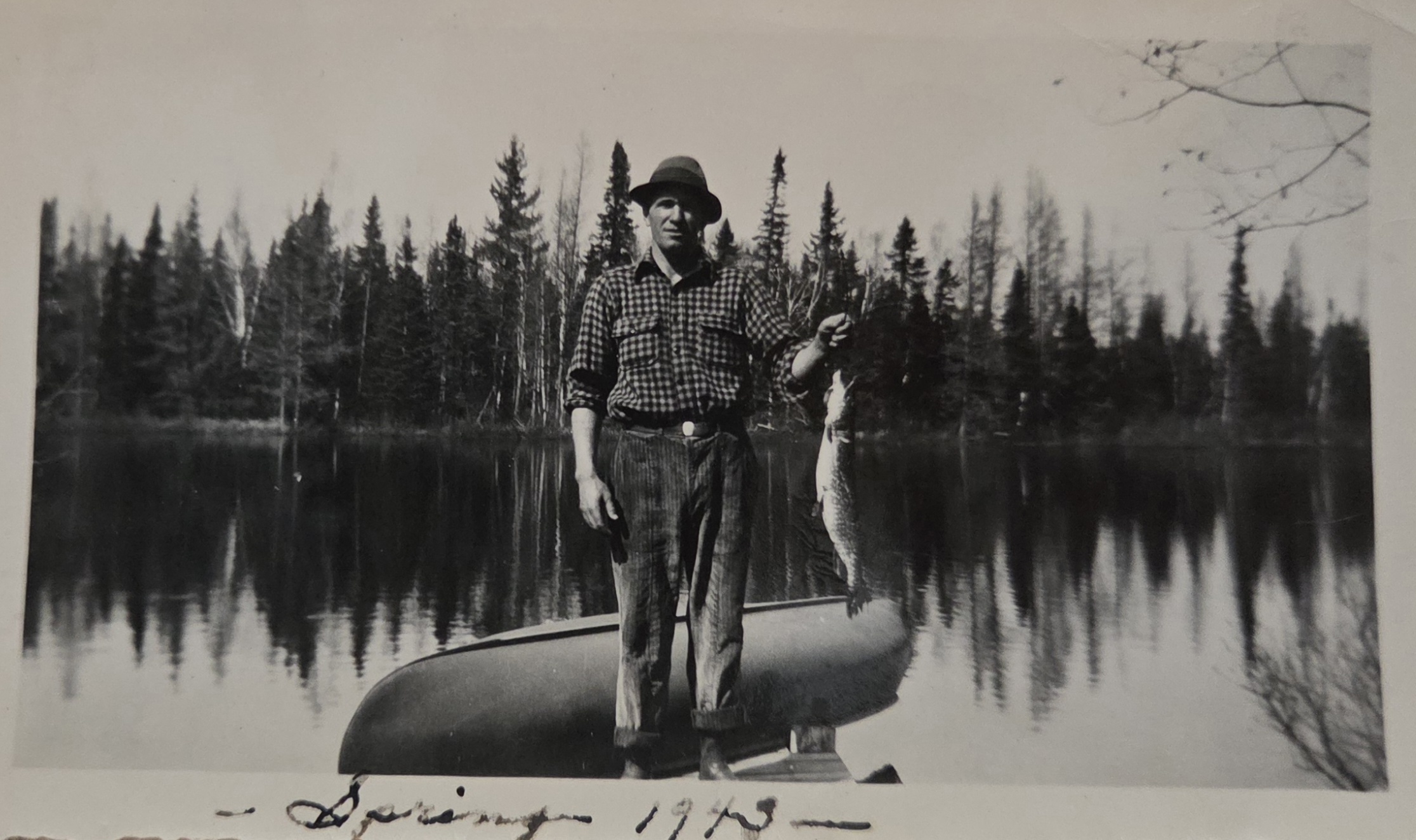
The Lamberts owned the property from 1980 to 1994. Jim Lambert was a commodities broker out of the Twin Cities with family connections in Superior. Jim, Carol, and their son, Tim, liked to hunt and fish, spending significant time there in the fall and early winter, including Thanksgiving and Christmas. The Lamberts continued the tradition of having a year-round caretaker live at Mishe Mokwa to do maintenance, keep the lodge ready for guests, and heat the cabin to keep the pipes from freezing in the winter.
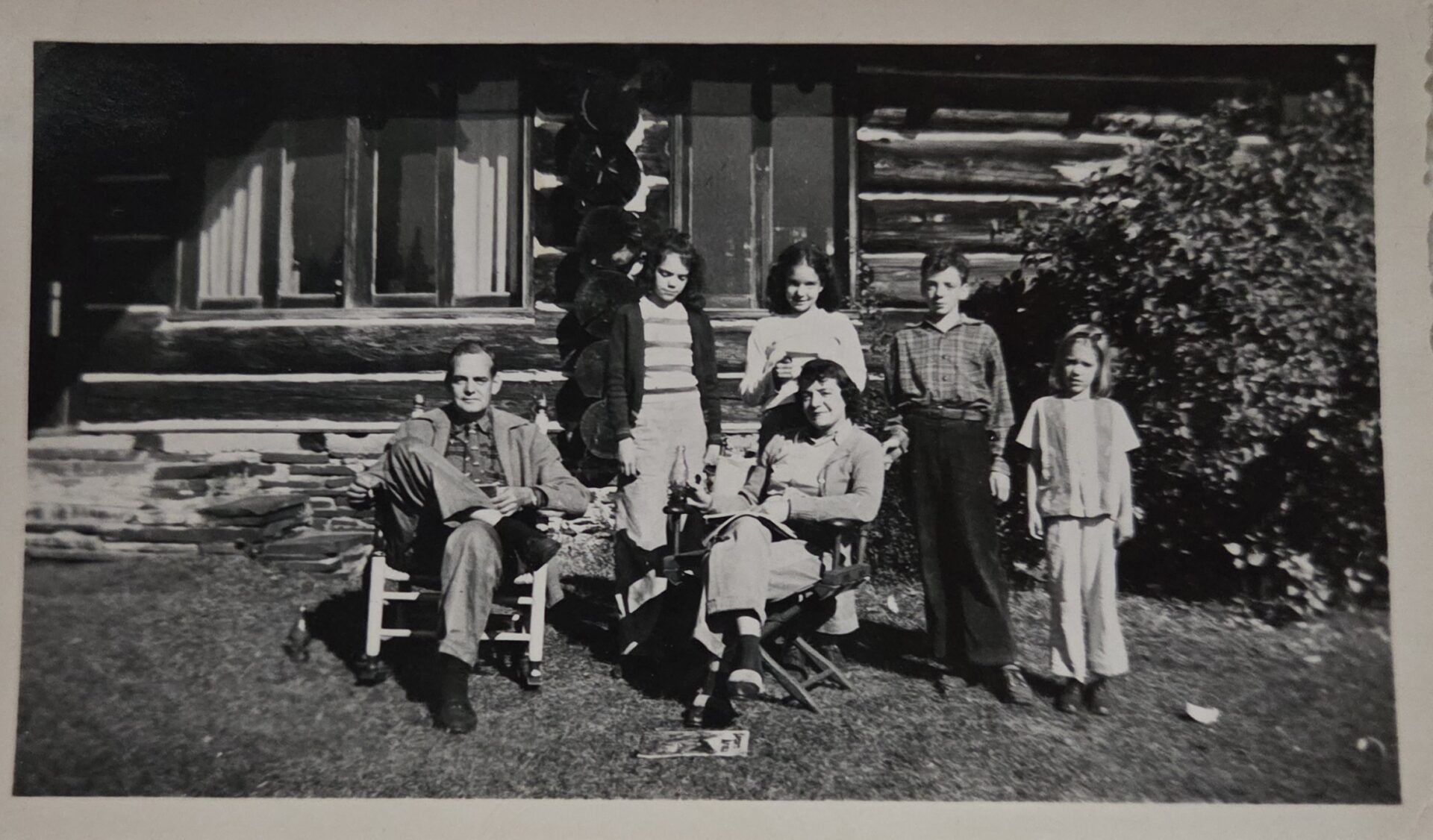
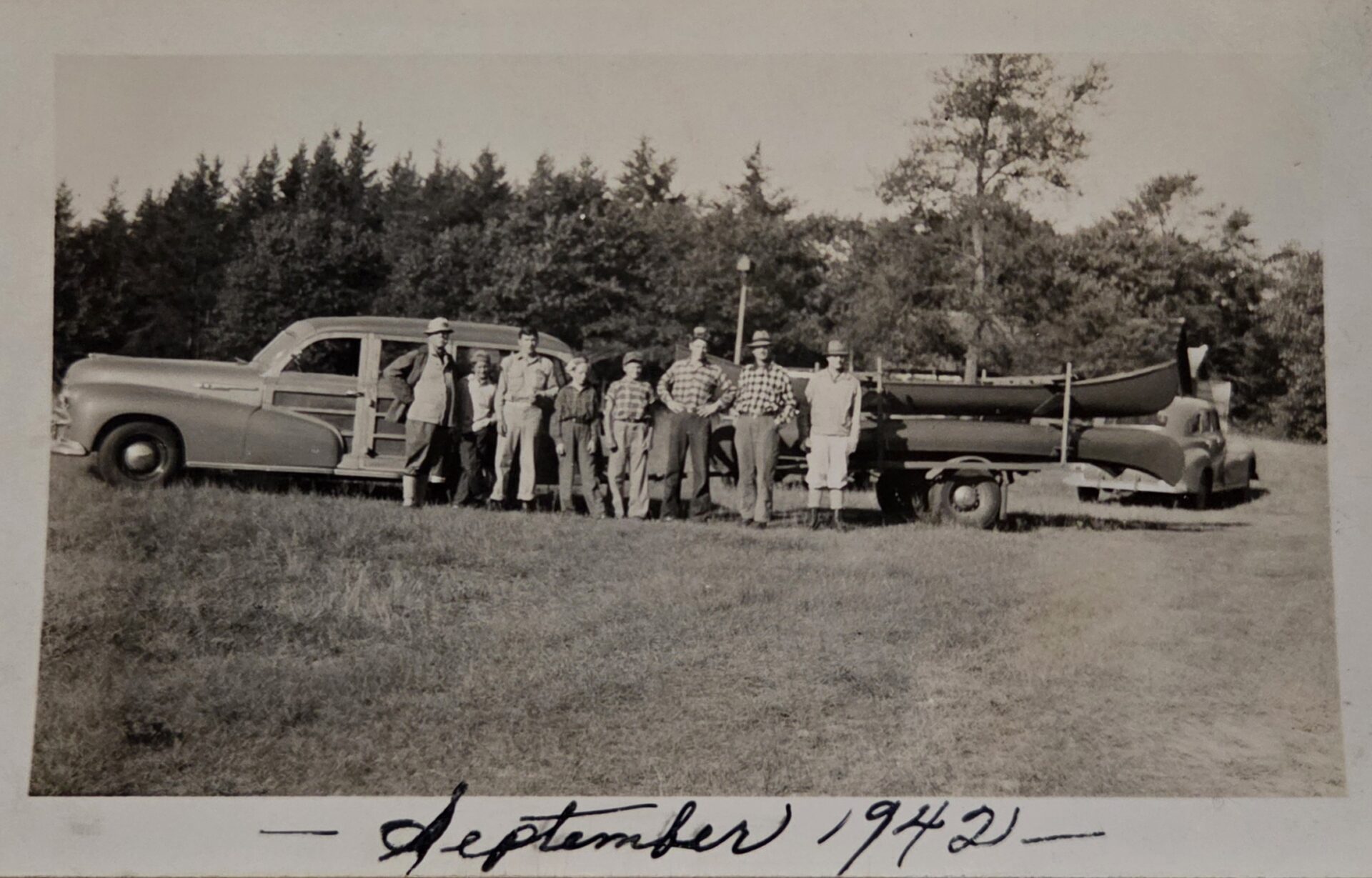
While Claudia Postl was a caretaker at Mishe Mokwa for the Velies in the 1950s, Marietta Iordachescu was a caretaker there for the Lamberts in the 1980s. On April 4th, 2025, in an interview with Steve Iordachescu (Marietta’s brother), Steve provided family memories of her time working at the Mishe Mokwa lodge. Marietta was the last caretaker at the lodge, where she and her boyfriend, Nat Simonson, lived in the caretaker’s half of the lodge for over 6 years, from 1983 to 1989. During the interview, Steve opened an envelope Marietta had mailed him specifically for the interview, which had an incredible set of photos. Included were at least a dozen photos of the Velie family from the 1940s that the family left at the lodge when they sold it in 1978. The envelope also included numerous 1980s photos of the lodge, photos of Steve and Marietta at the lodge, and the Lambert family. Copies of the photos were generously donated to the Gordon-Wascott Historical Society (GWHS), where they are available to view on the GWHS website, along with the audio of Steve’s interview.
Steve reminisced that he, his brother Nick, sister Leia, Marietta, and her boyfriend Nat had a really good time over the six years Marietta lived at the lodge. He recalled the beauty of the lodge, the land, the night skies, the whippoorwills, foraging, cutting Christmas trees, collecting balsam boughs, and the giant old-growth white pines near the lodge, which had lightning rods for protection. Steve was a teenager through his early 20s when Marietta lived at the lodge. He maximized his time there hunting, fishing, partying with the locals, and “banging around” in 4x4s on the sand roads on and near the property.
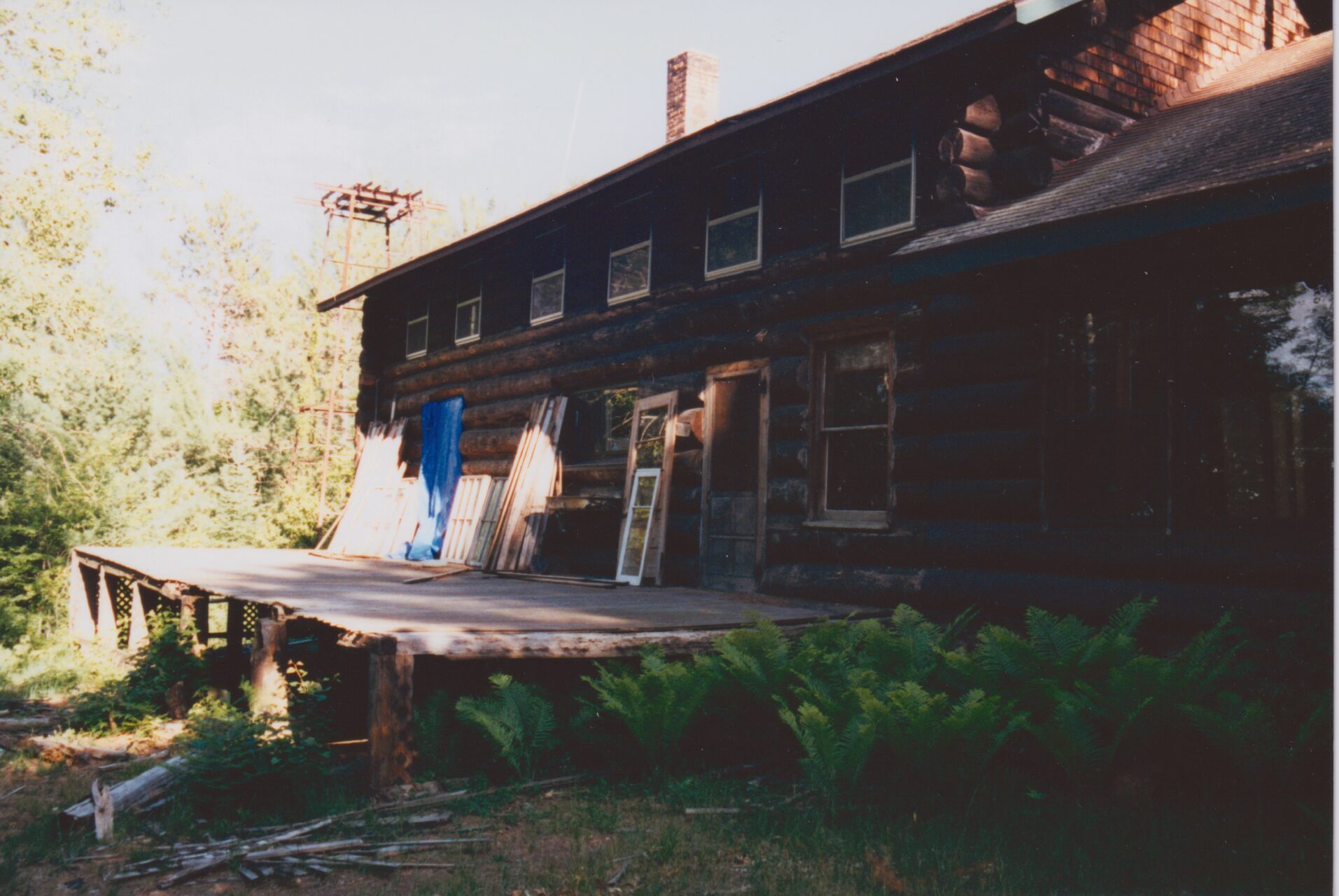
In 1994, the Lamberts relinquished the property to the bank, and the Schipper family bought it, but then sold it in 1998 to a family from the Twin Cities. After years of sitting empty and exposed to the elements, the lodge had deteriorated significantly and was no longer habitable. Restoring the aging structure would have required an extensive, costly renovation, and ultimately, the decision was made to dismantle the lodge in 2013.
Conclusion
The porch being dismantled.
The Mishe Mokwa lodge was built by late nineteenth-century Gilded Age elites as a high-society retreat, and its rustic vernacular architectural style was a fashionable symbol of wealth. The lodge’s history represents the importance that trout fishing played in the development of Douglas County and stood as a symbol of a bygone era of prosperity when private resorts were built around trout fishing and socializing, while tourism replaced extractive industries in the north woods. Unfortunately, almost all of the rustic lodges of the Upper St. Croix are gone, and all we have left is their memory of this era in the St. Croix River Valley.
References
Marsha Weisiger et al, “Bois Brule River Cabins District,” SAH Archipedia, University of Virginia Press, 2013-2025 Society of Architectural Historians, 2017. https://sah-archipedia.org/buildings/WI-01-DG8 Also from Book, Buildings of Wisconsin, 2017.
Karamanski, “Corporate Control of the River,” subchapter in “River of Pine,” great bit about Staples, Sauntry, and Weyerhaueser, p. 111-114 Staples Cabin.
Mishe Mokwa Incorporation, 1891 St. Paul Globe.
“Mishe Mokwa Club,” St. Paul Globe, 1891
St. Paul Globe, August 20, 1893.
Marsha Weisiger et al, “Bois Brule River Cabins District,” SAH Archipedia, University of Virginia Press, 2013-2025 Society of Architectural Historians, 2017. https://sah-archipedia.org/buildings/WI-01-DG8
State of Wisconsin, No. 329119, Sheriff’s Deeds, vol. “D” Douglas, County, July 31, 1934. Sheriff of Douglas County to Charles Koon Velie.
Oral history interview with Claudia Postl on March 18, 2025, Jim Olmsted.
St. Croix 360 offers commenting to support productive discussion. We don’t allow name-calling, personal attacks, or misinformation. This discussion may be heavily moderated and we reserve the right to block nonconstructive comments. Please: Be kind, give others the benefit of the doubt, read the article closely, check your assumptions, and stay curious. Thank you!
“Opinion is really the lowest form of human knowledge. It requires no accountability, no understanding.” – Bill Bullard
Whoops! There was an error and we couldn't process your subscription. Please reload the page and try again.
By clicking subscribe, you agree to share your email address with St. Croix 360 and Mailchimp to receive emails from St. Croix 360. We will never share your information with anyone else.





Comment