Shanai Matteson’s family has lived in rural Aitkin County for six generations, counting her own children she is now raising there. Matteson moved back to her hometown in 2020 and got involved with resistance to Enbridge’s Line 3 oil pipeline proposal, which passes near the site of the proposed Talon nickel mine. While the pipeline was approved, the mine is still in the early stages of environmental review.
Matteson is deeply involved in efforts to educate and organize to protect the area’s water. As an artist and an activist, Matteson has explored creative methods of advocacy.
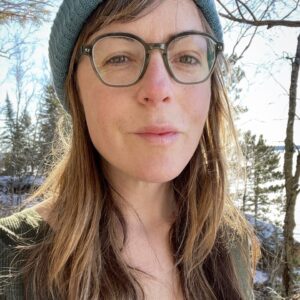
Shanai Matteson (Courtesy Shanai Matteson)
Because the Talon mine is proposed in an area without famous natural resources and outdoor recreation like other places in Minnesota threatened by mine pollution, the Boundary Waters Canoe Area Wilderness and Lake Superior, Matteson believes it hasn’t received the same public pushback. But the area downstream of Talon is important to Matteson, Indigenous people, anglers, wild rice harvesters, and many others.
“As I’m out talking to people about the dangers of sulfide mining, most have heard about threats to the Boundary Waters, but far fewer people know about this project or what is at risk here, including the Mississippi River and the St. Croix,” she says. “Most of my education and advocacy has been focused on making sure that people don’t forget about this area when they are advocating for clean water and environmental justice.”
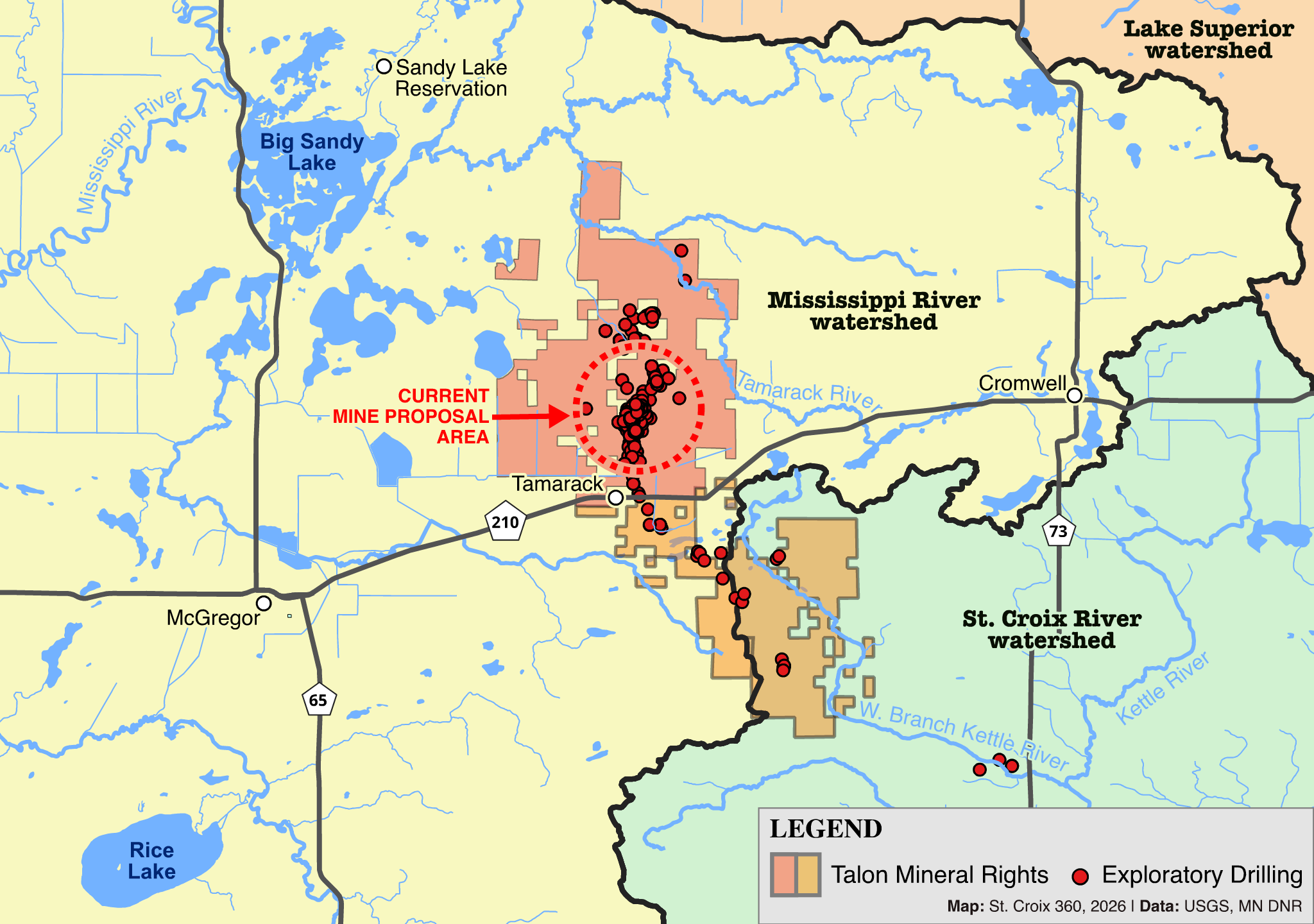
The current Talon mine proposal is located outside the St. Croix River watershed, instead draining toward the upper Mississippi River. But the ore that interests the company extends to the upper reaches of the Kettle River—a state-designated Wild and Scenic River and a tributary of the St. Croix—and Talon controls much of the deposit through state mineral leases.
While the larger ore body is not included in the proposal currently open for public comment, Talon has conducted exploratory drilling in the Kettle River headwaters.
Thanks to Shanai for agreeing to answer a few questions from her perspective as a local artist and activist.
What should people know about the Talon proposal from your perspective?
First of all, Talon Metals is a front for Rio Tinto-Kennecott. Talon hires locals to market the project to our state agencies and other government groups, and to investors who are looking at whether this proposal is viable, but the leases are controlled by Rio Tinto-Kennecott. Talon Metals is an offshore company based in the British Virgin Islands, which is a notorious tax shelter.
Both Rio Tinto and the investment group behind Talon Metals, Tau Capital, have a documented track record of corruption, and Rio Tinto has knowingly destroyed Indigenous sacred sites and sparked political violence and conflict in other countries, and here in the United States, too.
Our area is home to some of the most abundant wild rice anywhere in the world, and is such a special place to Anishinaabeg because of this fact, as well as it being the site of the Sandy Lake Tragedy. We also are part of the Mississippi and St. Croix headwaters here, with so many wetlands and globally rare peat bogs. Locals tend to take it for granted, because we are surrounded by water all the time here, so a lot of my advocacy is helping locals understand what we have to lose if a polluting mine opens in our area.
What are the main things you have been doing to organize, educate, and advocate regarding the Talon mine proposal?
I was part of the group that founded Tamarack Water Alliance and for the past few years I’ve stayed engaged in research and encouraging others to get organized around this proposal.
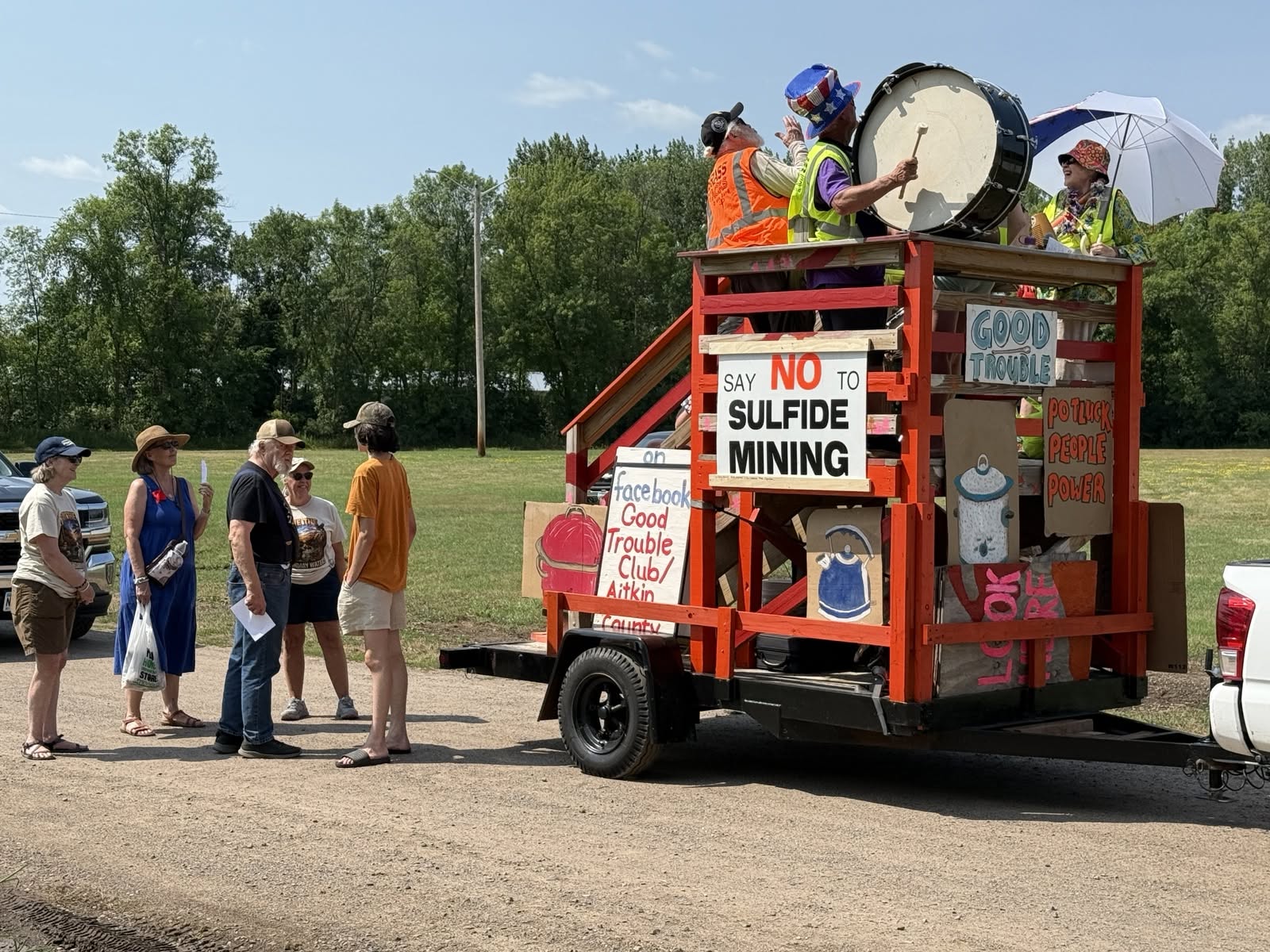
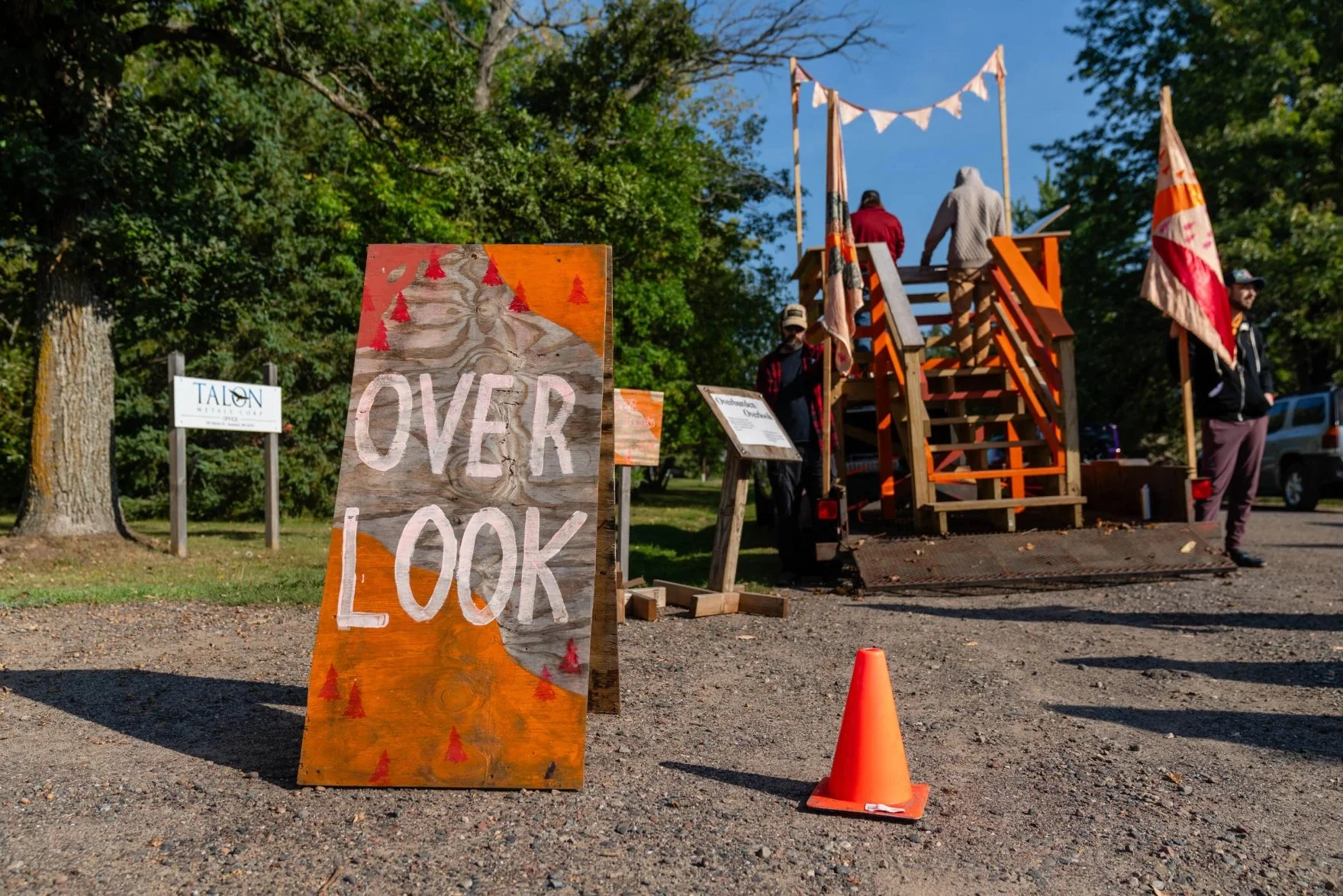
I’ve also done a lot of writing and public education tours around the mine with groups who come to visit us here, or by visiting other groups, primarily through my arts project Talon Mine Tours.
When Talon hosts public open house events, we show up to document and to ask questions, encouraging others to get more engaged.
More recently, I’ve been helping other groups to organize around the public comment period, helping with local outreach and education, and offering support to people who want help navigating the public comment process—which is really inaccessible and intimidating.
What is your biggest concern about the mine proposal?
I’m concerned that the Minnesota DNR is allowing Talon to move forward with an incomplete proposal. They are working pretty hard to hide just how massive this deposit is, and how much they intend to exploit this region if they get their foot in the door. It’s a “bait and switch”—they say it’s going to be small, and they will ship waste to another state—but all of their drilling and their marketing in recent years make it clear that they know it is not a small project, it’s massive. They use the Eagle Mine as a “model mine”—and Eagle did this very same “bait and switch” when they proposed a small mine that would only operate for 10 years, and it is still expanding, now with Talon Metals claiming they might ship ore from here to the Humboldt Mill (in Michigan) for processing.
So my biggest concern is that we will not have a comprehensive EIS because they are not telling the truth about the scope. There needs to be much more rigorous study of groundwater and surface water in our region, and the cascading impacts even slight increases in sulfide would have on lakes and wetlands and drinking water wells too.
What do you love about living in the Tamarack area?
I was just out on Sandy Lake the other day with my teenage son, we were helping a friend with some research she’s leading here about wild rice abundance, and we stopped into the local Dairy Queen afterwards to get a treat. There were several cars parked outside with canoes and push poles. They’d been out harvesting, and because we all had our old aluminum canoes up on our cars, we started chatting about the area. I learned one couple had driven from Northern Wisconsin, almost all the way over by the U.P. just to harvest here!
It’s an amazingly abundant ecology, so much water and wildlife, and all these little towns where people live pretty close to the land and water, even if they disagree about the mine and whether it’s worth the risk. I love those times of year—like rice harvest time, or during the winter when folks are out fishing on the ice, when locals understand that water is what connects us and what makes this place so special.
Why are artists important in environmental issues like this?
I always say, we live inside of stories. Stories about our relationships to place, to each other, to what happens here. Artists and storytellers help us to recognize those relationships, and they also help us to imagine new or deeper ones. There’s a theater artist who spent some time here, then wrote a screenplay about some of the “characters” that are developing and opposing the Talon Mine, and when I read it, even I thought differently about our stake in this issue.
Others have taken photographs that have helped people to see this place in new ways, others have written or re-written folks songs about protecting our waters. I have a sculpture that I use to give artist-led tours of the mine site. People are used to having groups including our DNR tell them “information” about the environmental impacts, but sometimes you need an artist to be moved to act.
Why do you believe the supposed benefits of the mine won’t outweigh the potential negative effects?
The benefits of mining are almost always overstated, and they are temporary benefits that don’t apply to everyone. The harms last for generations, and we also risk getting stuck in a boom-and-bust extractive economy, like the Iron Range—where companies continue to exploit resources and labor, and leave behind pollution and massive clean-up bills that end up being paid by taxpayers, or worse—they take a toll on human and ecosystem health that can’t ever be quantified or repaid.
I do know that in order to keep living this high-tech consumer-driven lifestyle that’s also being foisted upon our rural communities by Data Center companies like Google and Amazon, it will take massive amounts of metal, energy, water … We need to be willing to stand up to the companies at every step of the process, to say we will not become a sacrifice zone, and that we will not allow our government to sacrifice others in our name. Metals recycling, tech refurbishment instead of buying new, and saying no to a throwaway lifestyle is all part of saying no to these mines and data centers. That will take leadership and a different kind of coalition work, but I believe it is possible.
What advice do you have for other people who want to speak up about the mine?
Please make a public comment to the MN DNR if you have not already! And come to visit when you can! Spend some time here in the region learning about what makes it so special, then advocate for protecting ALL of Minnesota’s waters and lands from exploitative copper-nickel mining companies that profit by putting people at risk, and by pitting us against one another. Look to the Tribes and to local grassroots organizers for information and invitations. Most of our political leaders here are bought and paid for by the mining lobby, so take what they say with a grain of salt.
Water Over Nickel, Tamarack Water Alliance, and WaterLegacy are all doing important work – and so are many folks working in their communities. We set-up the Talon Mine Tours project (website and facebook) to be a kind of portal to that work, so others can learn and join in, but I also invite anyone whose interested to reach out if you happen to be in the area and want a tour with some locals.
Speak up
The comment period for the Tamarack Mine’s scoping phase is open July 14, 2026, through Sept. 14, 2026. Comments must be received by 4:30 p.m., Monday, Sept. 14, 2026. Links to the documents are available on the DNR website. Tamarack Water Alliance’s resources for commenting are available here.
Tamarack EAW Project Manager Environmental Review Unit Ecological and Water Resources Division, DNR 500 Lafayette Rd. Saint Paul, Minnesota, 55155-4025
St. Croix 360 offers commenting to support productive discussion. We don’t allow name-calling, personal attacks, or misinformation. This discussion may be heavily moderated and we reserve the right to block nonconstructive comments. Please: Be kind, give others the benefit of the doubt, read the article closely, check your assumptions, and stay curious. Thank you!
“Opinion is really the lowest form of human knowledge. It requires no accountability, no understanding.” – Bill Bullard
Whoops! There was an error and we couldn't process your subscription. Please reload the page and try again.
By clicking subscribe, you agree to share your email address with St. Croix 360 and Mailchimp to receive emails from St. Croix 360. We will never share your information with anyone else.
Comment