
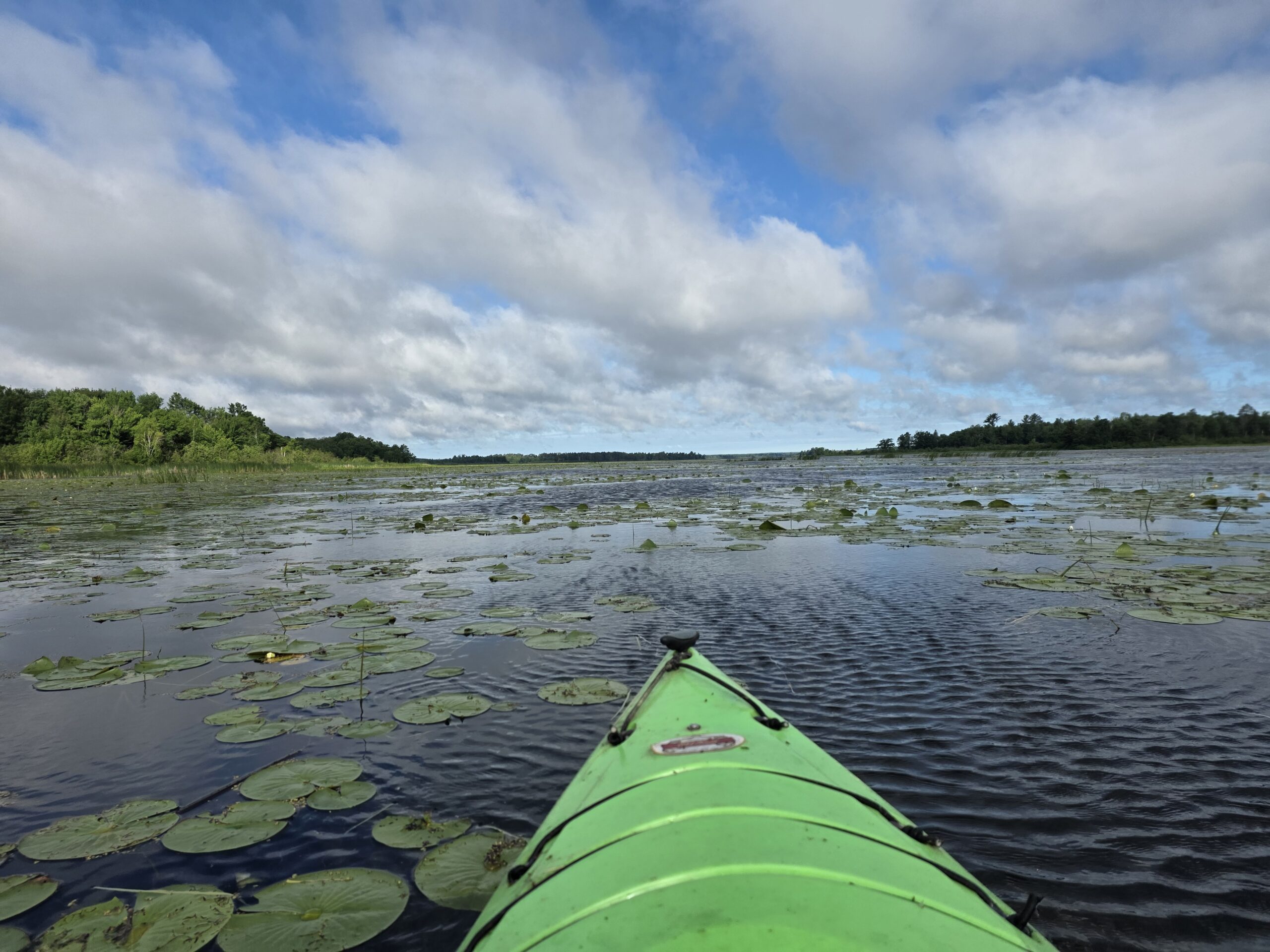
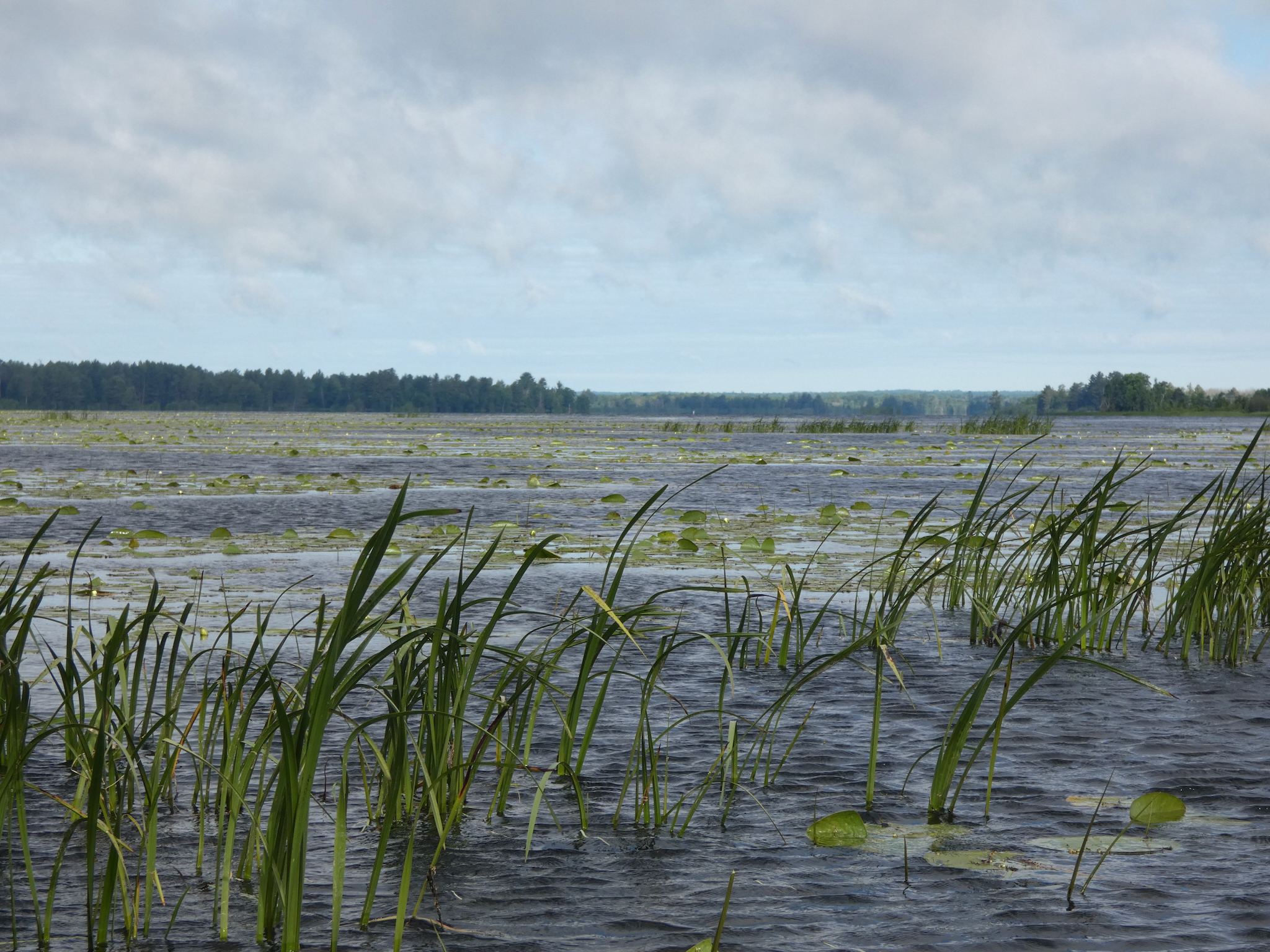
I first paddle toward the rising sun, the morning light bouncing off the water, with a breeze at my back. I can’t see much because, compared to the sun, everything else is dark, but my ears absorb the morning music of several kinds of birds. From the marsh grasses come the ceaseless calls of red-winged blackbirds. From the brushy banks, the insistent song of common yellowthroat warblers is joined by the sweet whistles of yellow warblers.
Every so often, another whistle drifts across the water from the east, that of trains crossing the St. Croix a little ways upstream on the old Milwaukee Road. Part of the Canadian National rail system now, it’s a busy corridor crossing Wisconsin at a diagonal from the Twin Ports to Stevens Point. The trains make long blasts of their whistle as they approach the river crossing.
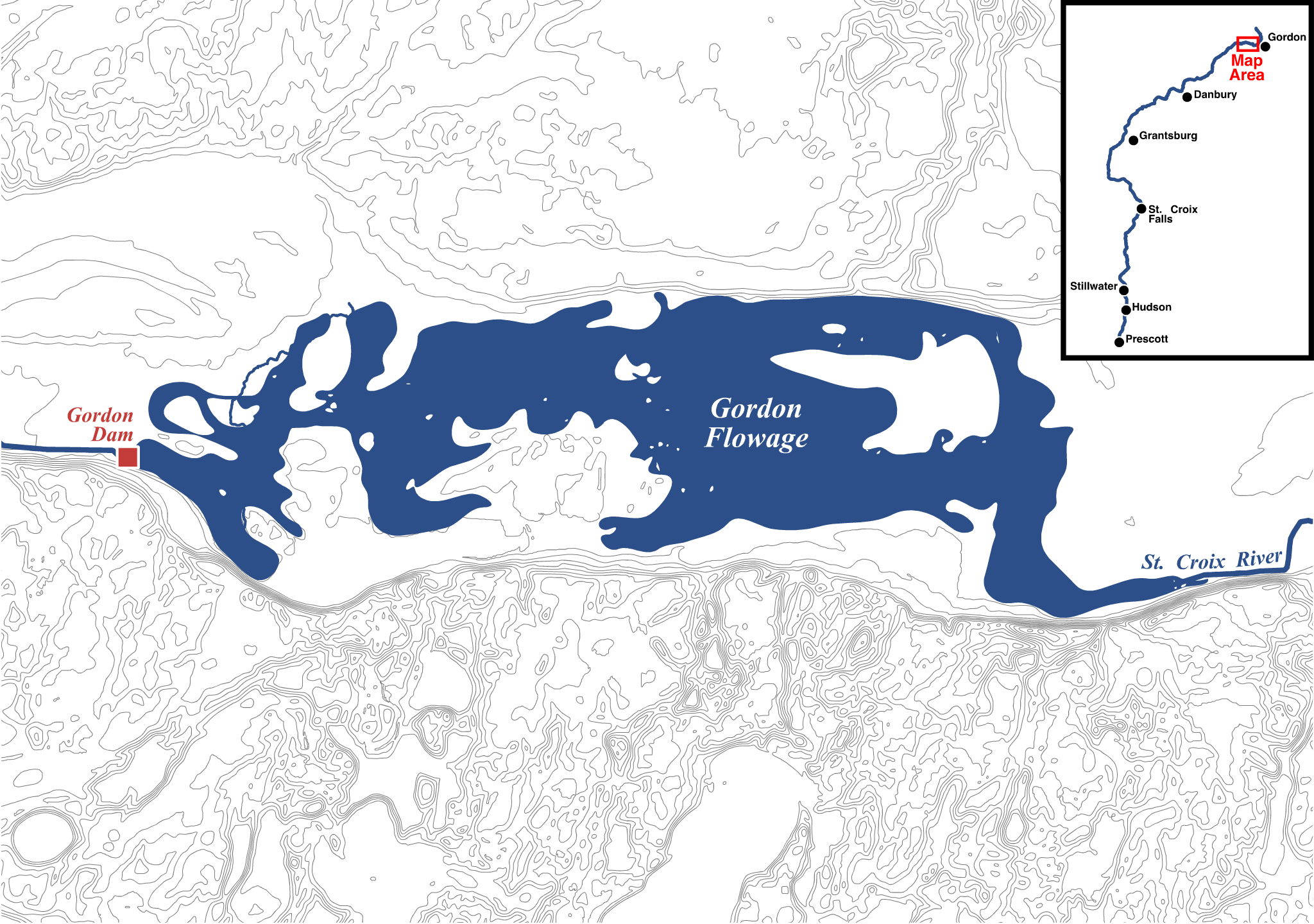
I’ve spent a lot of days on the lower St. Croix River, and not nearly enough time on the upper reaches. I’m grateful to St. Croix 360 readers Dick and Kathleen Wolleat for giving me a good chance to explore some of the Gordon Flowage, a 2,200-acre lake near the river’s headwaters. I also want to thank Gordon native Brian Finstad for all his help showing me around the area recently.
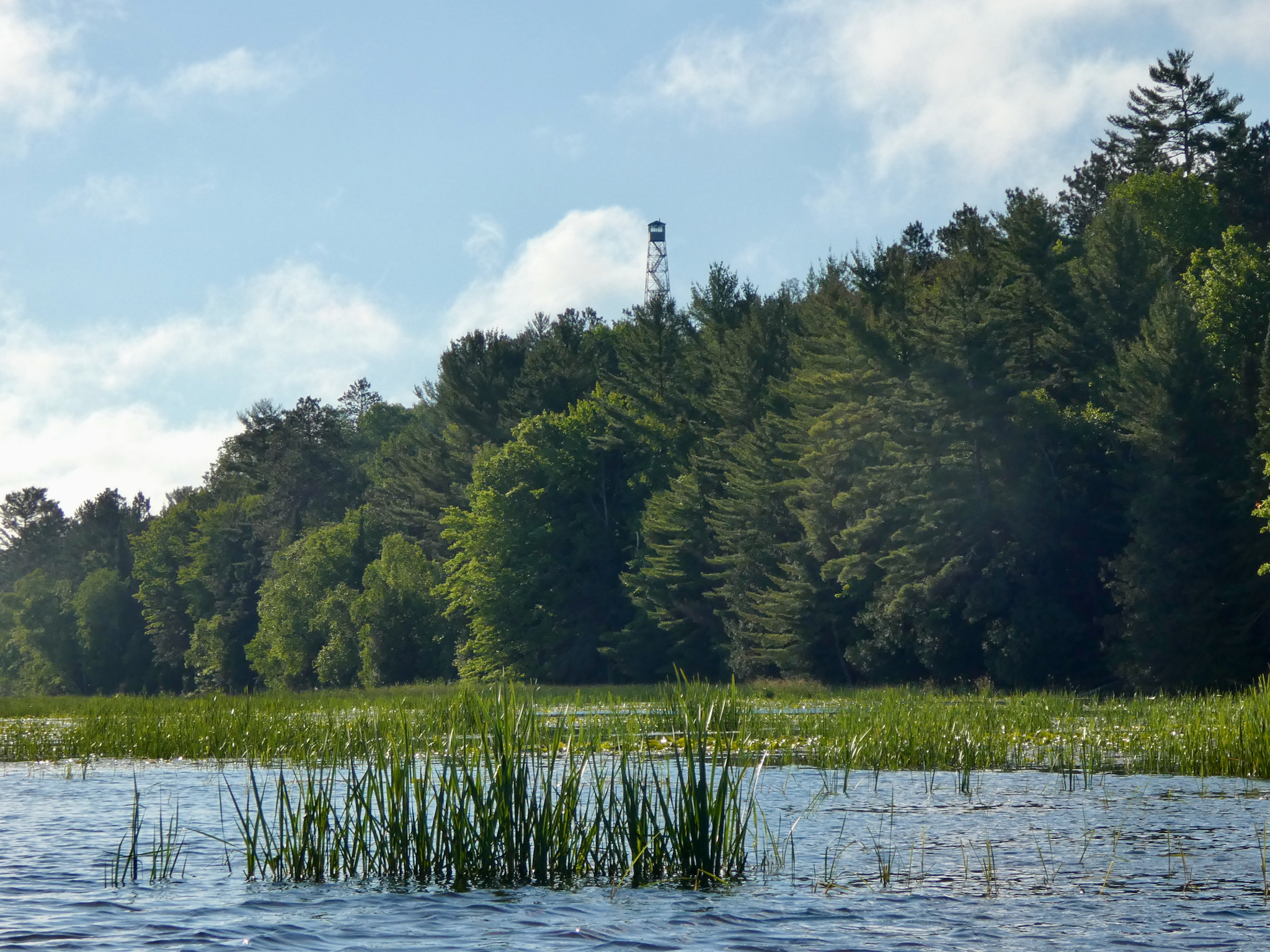
I make it far enough east that I can see the Gordon Fire Tower jutting above the treetops. Just a couple days earlier, I had climbed the steps I can now see zig-zagging up the tower and looked down on the river. At this point, I turn around and head back the way I came, now with the sun at my back and the breeze in my face.
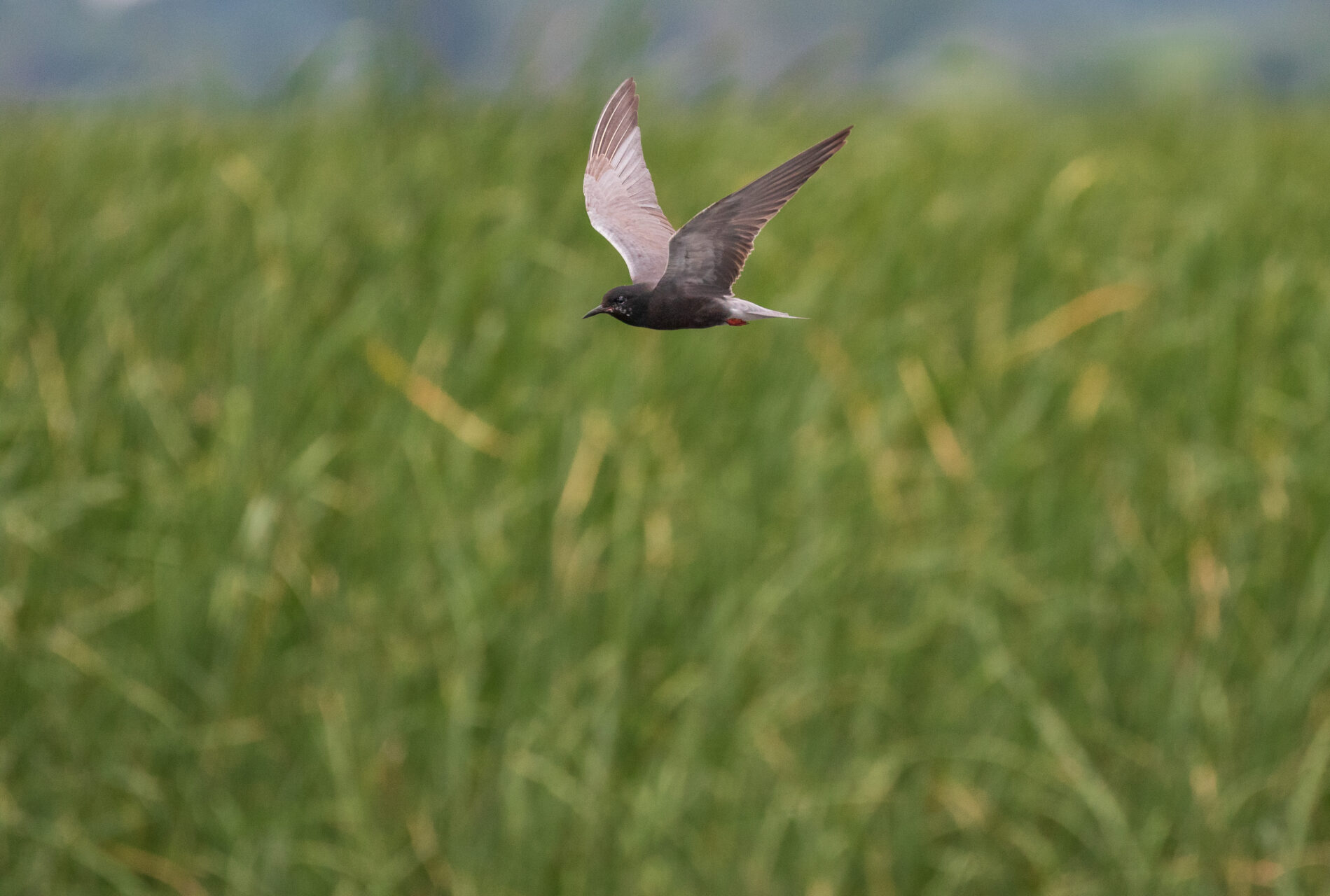
Now that I can see the world around me better, I notice dark-colored birds swooping over the marsh. They dive and climb at steep angles, dropping to the water’s surface at times and flying 30 feet above at others. I don’t know what they are but later learn that they are black terns, an endangered bird species in Wisconsin. They are in constant motion, their movements erratic, changing course constantly. It makes them a delight to watch but nearly impossible to photograph. I paddle on, delighting in their acrobatics.
“The black tern is a restless waif of the air, flitting about hither and thither with a wayward, desultory flight, light and buoyant as a butterfly. Its darting zigzag flight as it mounts into the air to chase a fluttering moth is suggestion of a flycatcher or a nighthawk; as it skims swiftly over the surface of the water it reminds me of a swallow; and its true relationship to the terns is shown as it hovers along over the billowy tops of a great sea of tall waving grass, dipping down occasionally to snatch an insect from the slender, swaying tops.”
– Arthur Cleveland Bent, Life Histories of North American Gulls and Terns, 1921
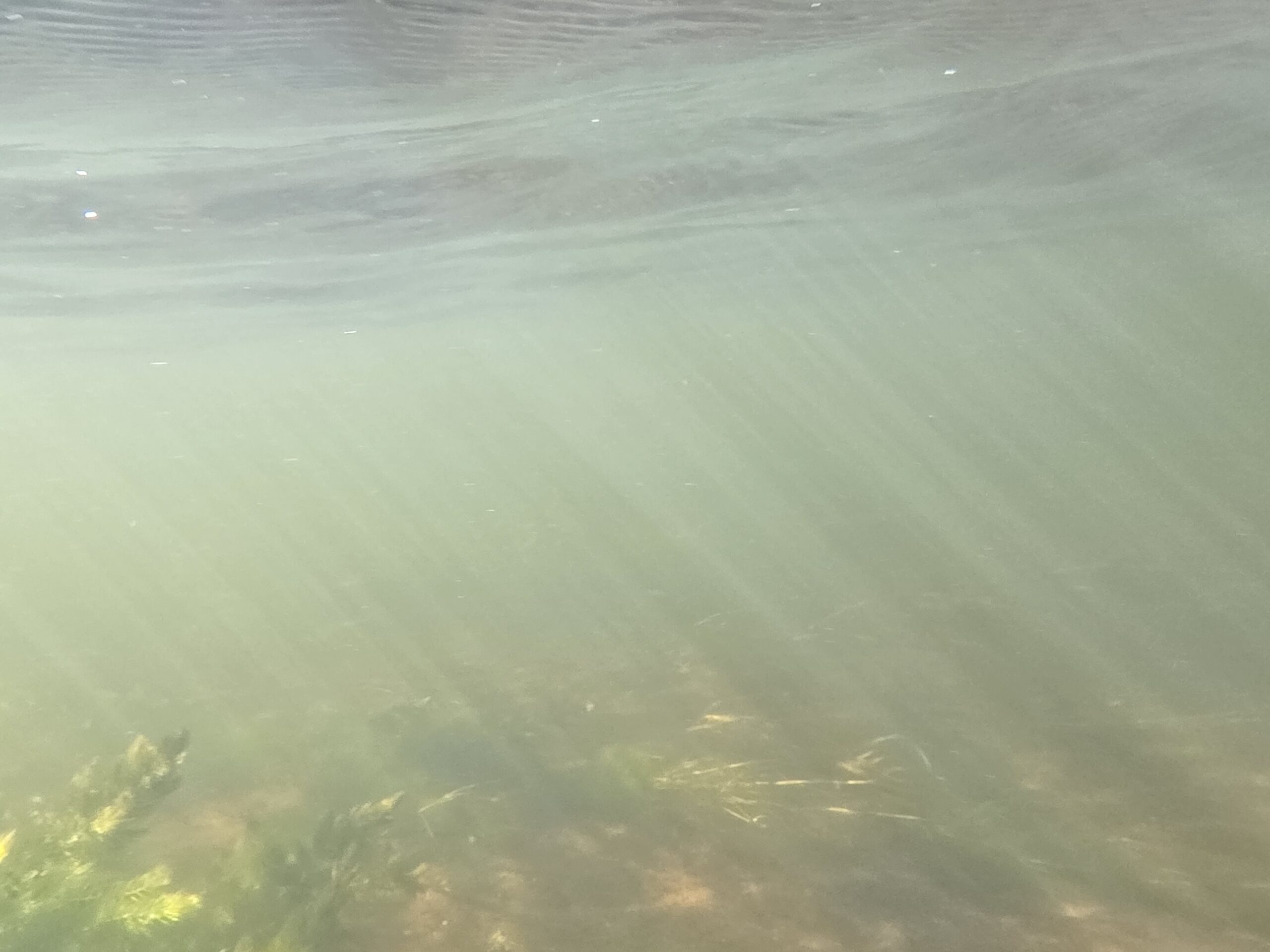
It’s hard to get very far with all the distractions, but I slowly paddle on. The water is clear and I can see the bottom in most places. I hear the muted calls of trumpeter swans ahead and then a pair whoosh over me, their necks rusty-colored from a season spent dunking themselves in tannin-stained water. I’m near where the St. Croix River enters the flowage, and it creates a delta of water and vegetation, a maze of channels that I poke my way around.
This part of the year is prime time for bird babies. As I come around corners in the marsh maze, I surprise mother ducks and mergansers that frantically chase and lead their chicks away from me. If I get too close to the tall reeds, territorial red-winged blackbirds chastise me loudly. It truly gives the feeling of being an intruder in their world.
As I near the main part of the lake, I decide I have gone about far enough. The wind is blowing stiffly from the west, though I am sheltered here behind a wooded point. I don’t care to head out into the open water. I’m drifting along near some lily pads when I see movement across the channel, and look over to spot at least three river otters, who are in turn looking at me. The curious creatures swim effortlessly, peering my way and occasionally making chirping, chuffing, grunting sounds. Sometimes they stop and push their heads higher above the water to get a better view. Once again, I feel out of place, my status as a visitor in someone else’s home reinforced.
After the otters have satisfied their curiosity, but before I have satisfied mine, they disappear underwater, a minute later resurfacing farther away among lily pads, and then go out of sight.
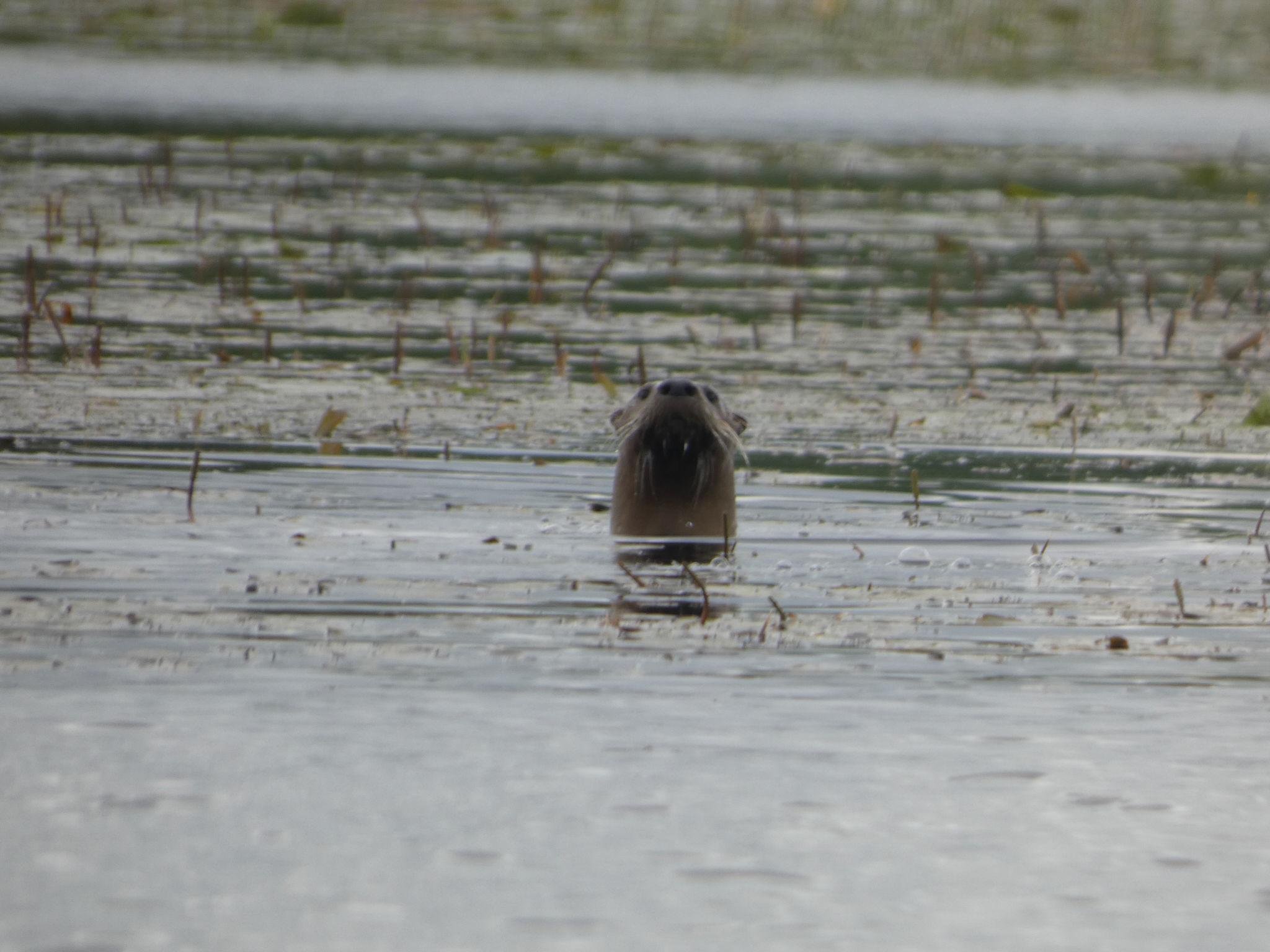
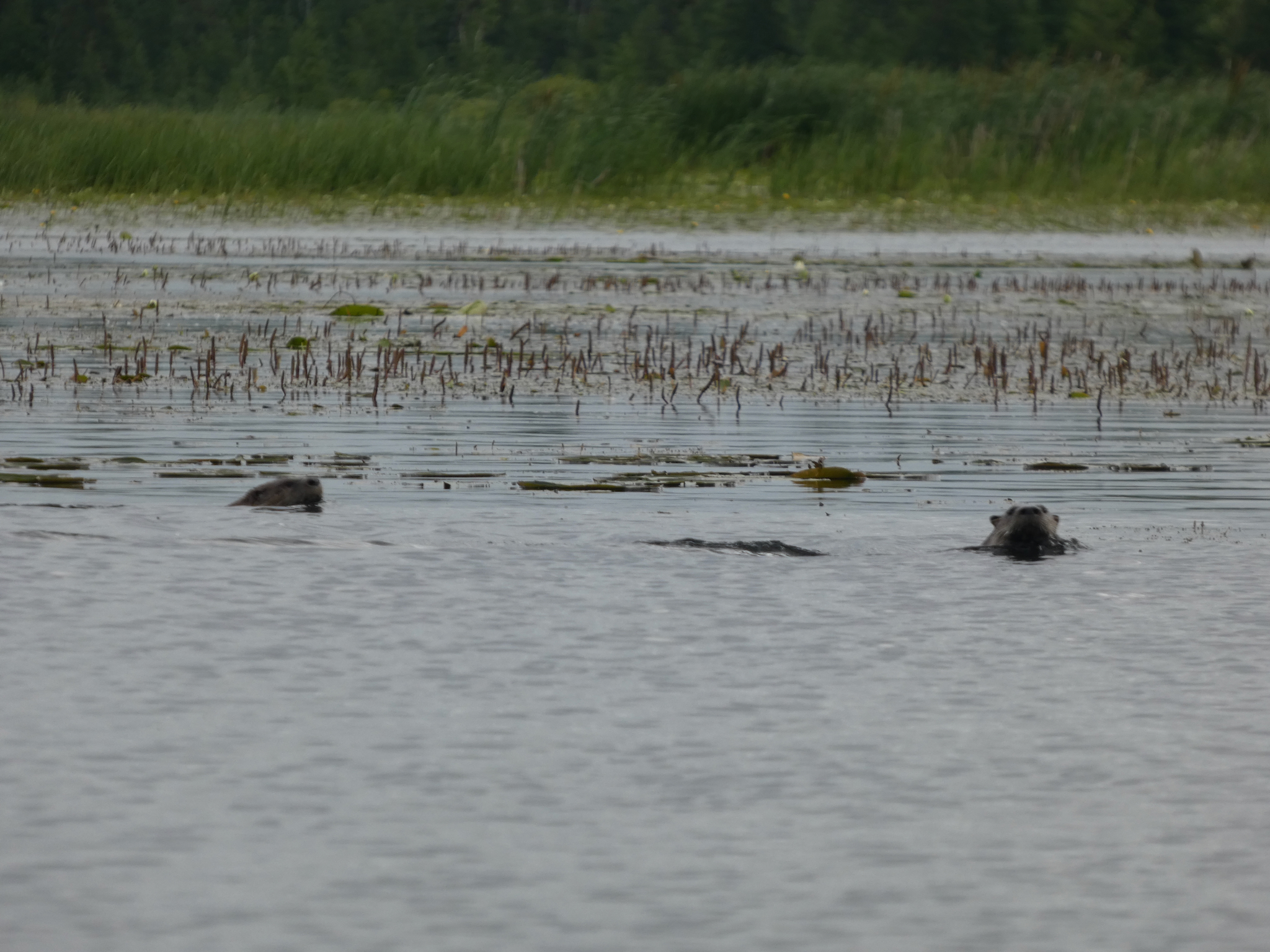
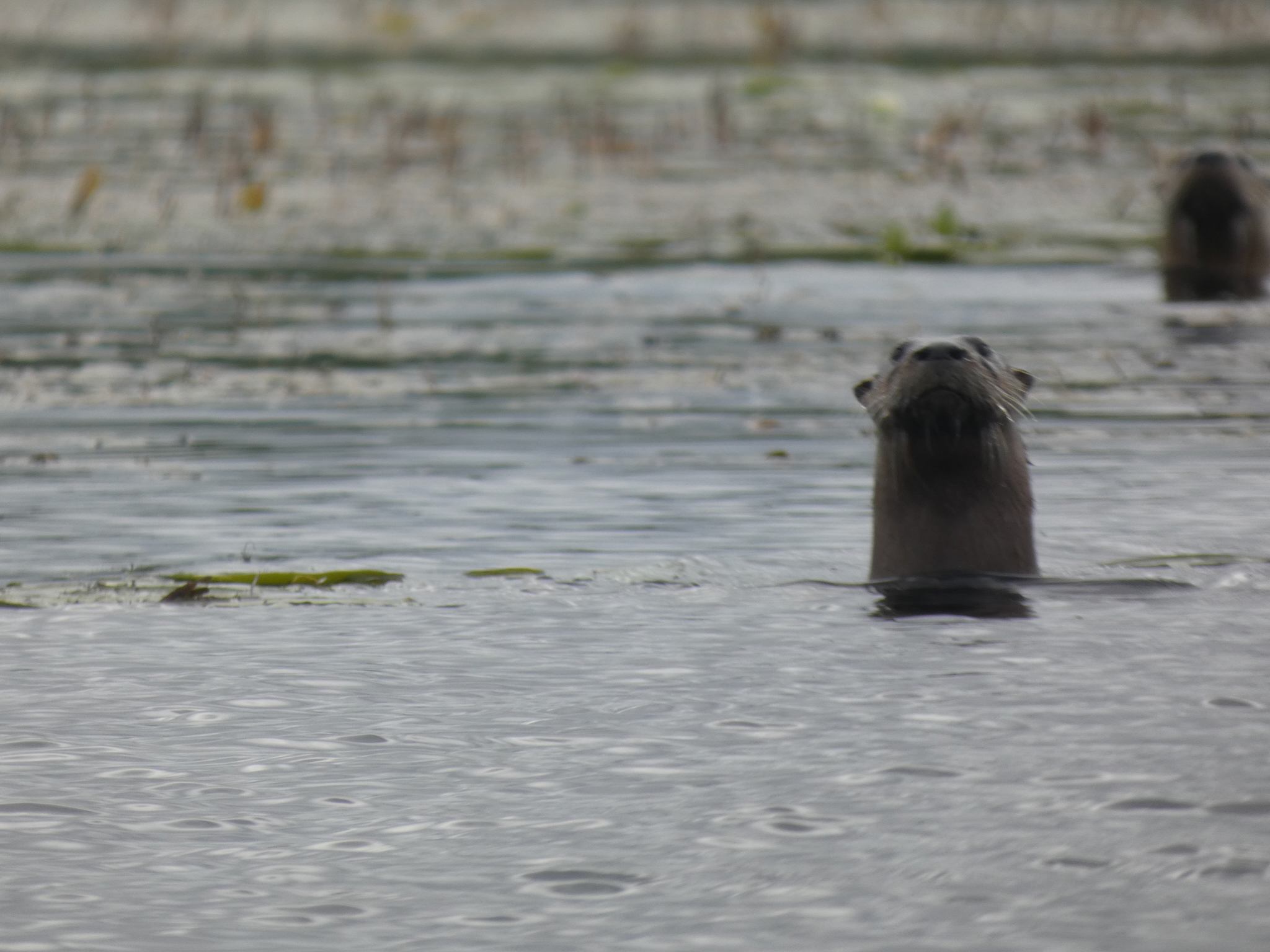
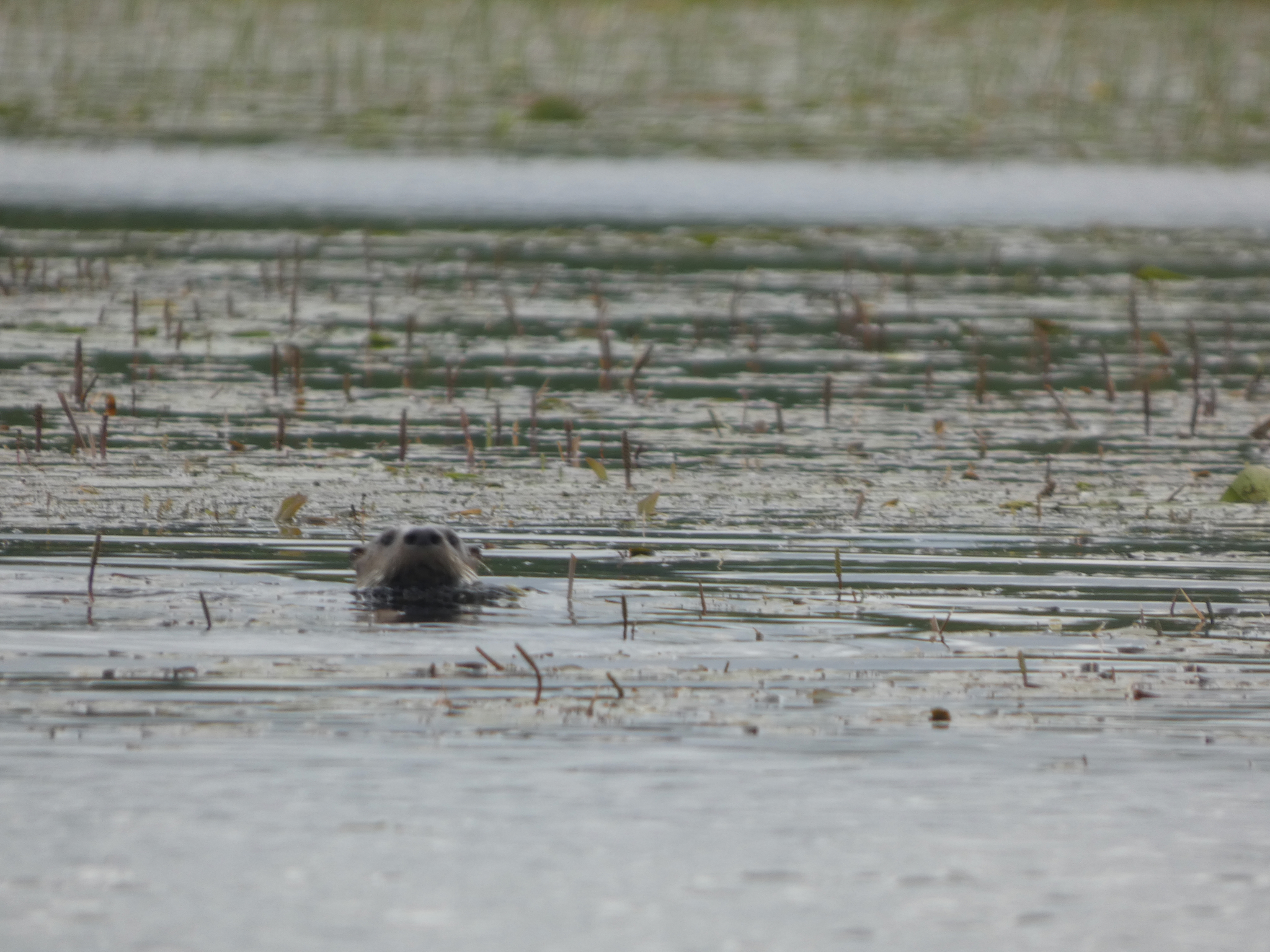
River otters. (Greg Seitz/St. Croix 360)
The wind is blowing the lily pads so the leaves often flip over and flap in the wind. For the rest of my time on the water, I see them as otters.
I’m hardly the first person to paddle these waters (though it is my first time). This body of water was long home to the Dakota and Ojibwe. An Ojibwe village under the leadership of Chief Kabemabe (Gaa-bimabi) was once located farther west on the lake. Kabemabe was a respected leader who was one of the signers of the 1825 and 1837 treaties that were so significant for the St. Croix River.
The American cartographer and ethnologist Henry Rowe Schoolcraft visited Kabemabe’s village in 1832, the same year Schoolcraft visited the headwaters of the Mississippi River. He sang the praises of both Kabemabe and his village.
“The village is situated on a part of the river called Namai Kowagon, or Sturgeon Dam. It occupies an eligible prairie bank, and exhibits in the style of the lodges and gardens, considerable industry and regard to comfort. It would seem to be no difficult effort to induce Indians, who had proceeded thus far in fixed industry, to labor on their lands more extensively and effectually. The lodges represent, on the ground plan, oblongs enclosed with strong elm bark, sustained on a frame work of saplings, tied on posts firmly set in the ground. They have a moveable piece or door, at each end, and an opening in the centre of the lodge, in the place of a chimney. Corn and potatoe fields, covered the surrounding grounds.”
– Henry Rowe Schoolcraft, 1834
Before Kabemabe and his kin came thousands of years of other travelers, whose names I do not know. In 1679, Daniel Greysolon was the first known European to descend the St. Croix, passing through these waters as well.
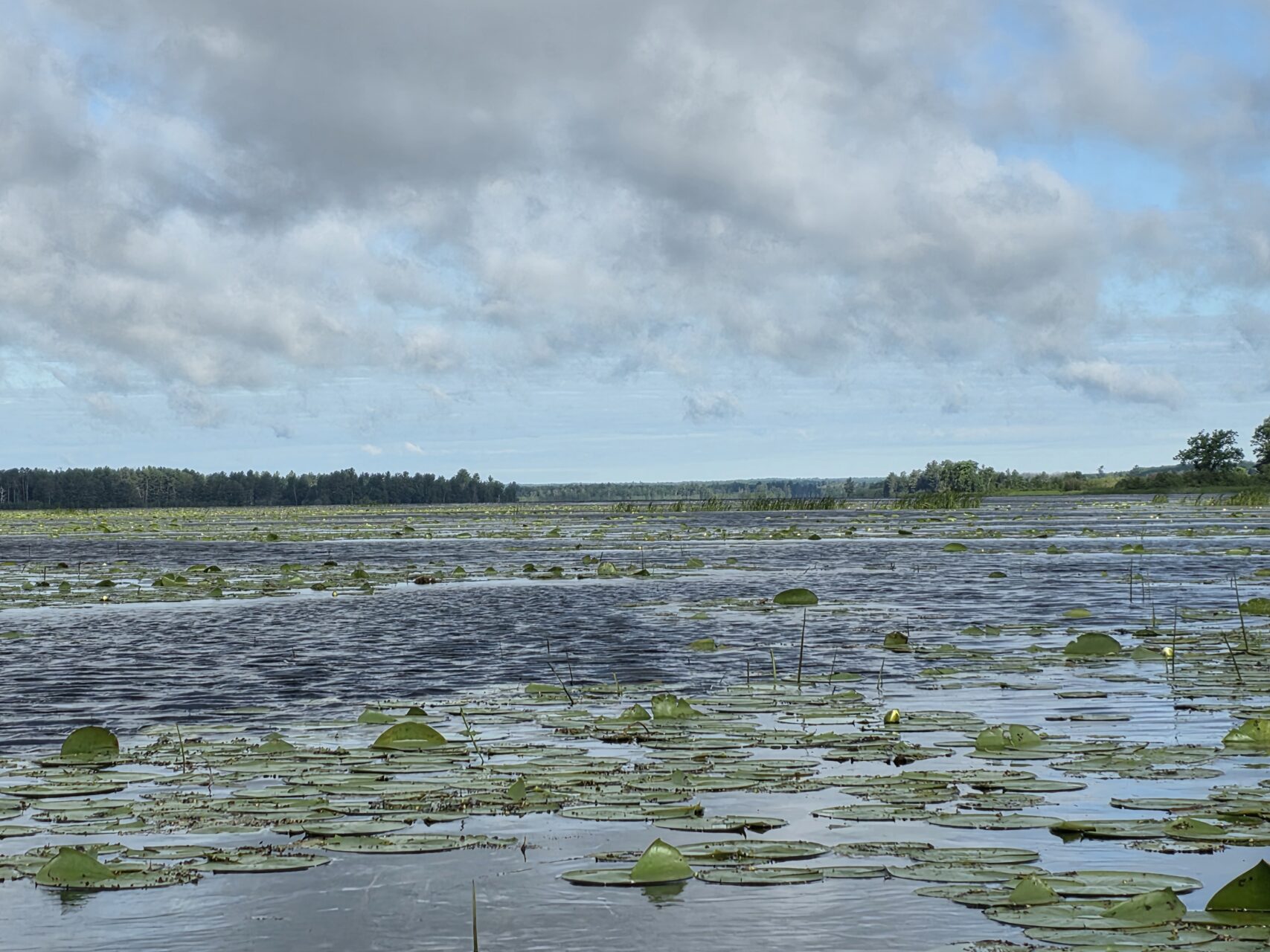
On my return (re-tern?) trip, the wind is at my back, the sun has risen higher and been partially obscured by clouds, and the birds remain busy. The black terns continue swooping over the marsh. The terns nest in loose colonies in shallow freshwater marshes, especially in places where open water is found nearby. The St. Croix Flowage exactly meets that criteria. They feed on minnows and insects, and at one point I am able to watch as one hovers low over the water, reaches down with its beak, and grabs something.
Large shallow marshes with nearby open water are unfortunately dwindling, and so are populations of black terns in the region. Their population has declined by about 70 percent since 1980. I knew nothing about these birds before finding them by surprise here, and it’s another reminder that the St. Croix never ceases to surprise. It’s also reinforces the fact that the work of protecting wildlife, water, and ecosystems is never over.
I arrive back at my starting point after a couple hours on the water. My brief visit to the water world has come to an end. I climb out of the kayak and return to my terrestrial ways.
Comments
St. Croix 360 offers commenting to support productive discussion. We don’t allow name-calling, personal attacks, or misinformation. This discussion may be heavily moderated and we reserve the right to block nonconstructive comments. Please: Be kind, give others the benefit of the doubt, read the article closely, check your assumptions, and stay curious. Thank you!
“Opinion is really the lowest form of human knowledge. It requires no accountability, no understanding.” – Bill Bullard
6 responses to “No tern-ing back: Exploring the Gordon Flowage and visiting the creatures that call it home”
I loved this virtual journey. What a delight to see black terms! And river otters! Thanks so much for sharing your paddling adventures with us.
You make me want to visit, that’s fer sure.
thanks for keeping us connected to this Precious River
Thank you, Greg, for the beautiful description of such a precious area!
Your love for the St. Croix River is heart warming.
Dang you and your otters! I’m jealous! Sounds like a great adventure.