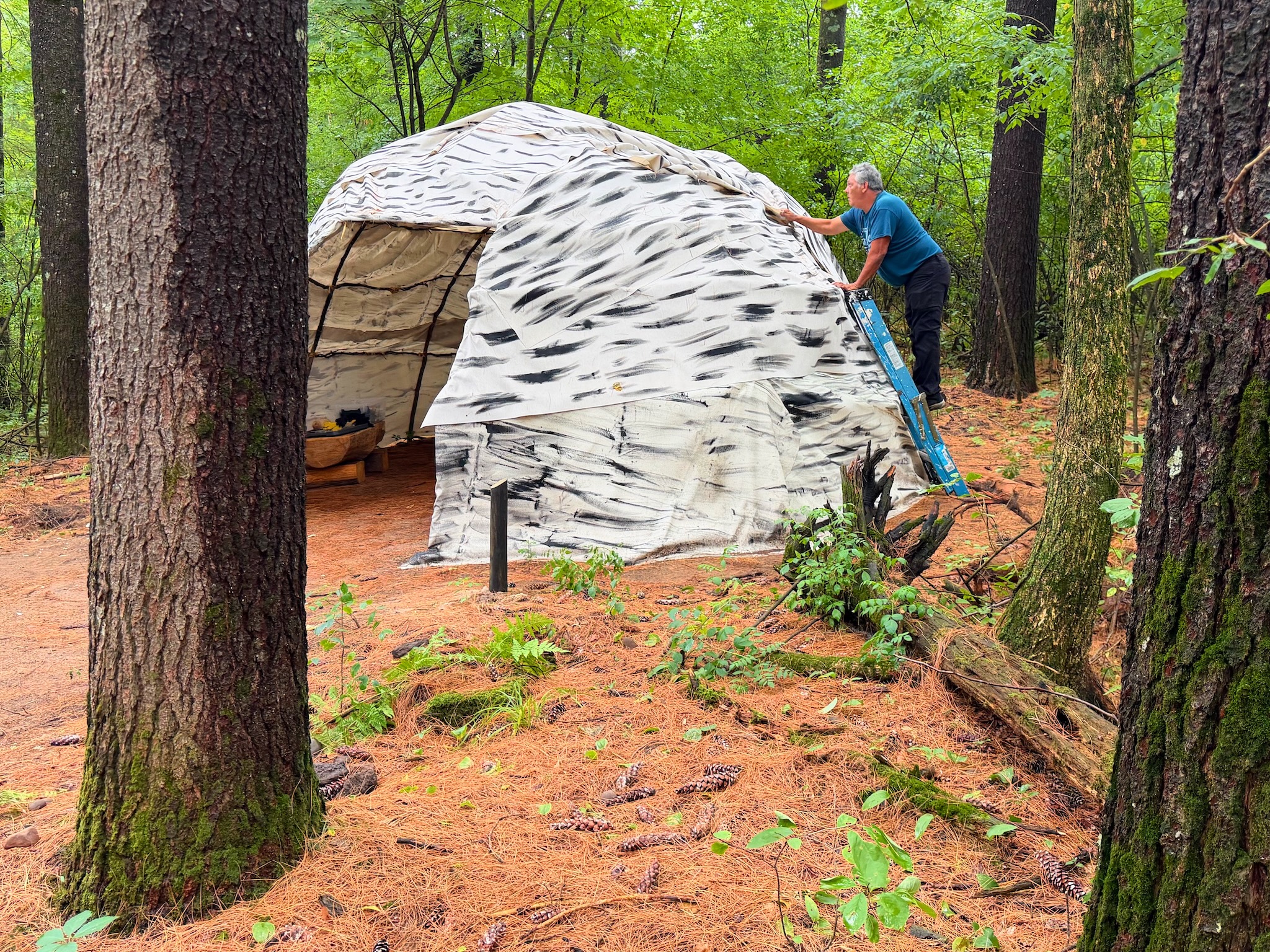
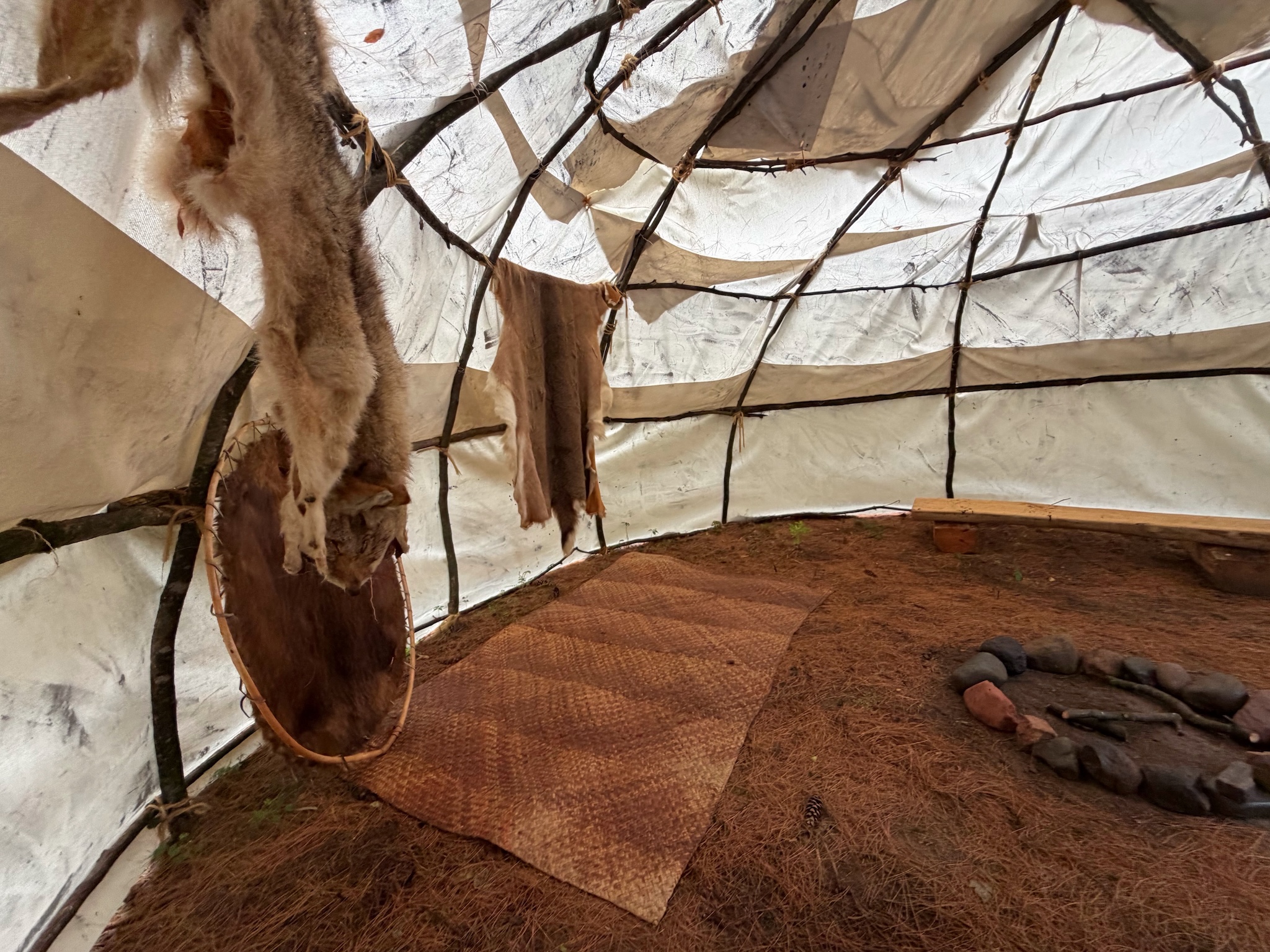
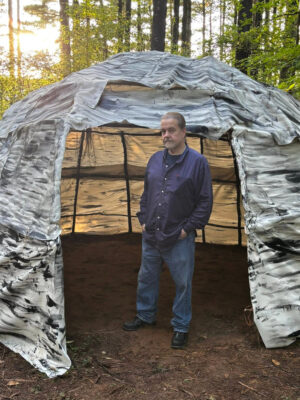
Richard Lafernier covers a wiigiwam at the Pioneer Village Museum. (Greg Seitz/St. Croix 360)
Among towering white pines in Cameron, Wisconsin, local Ojibwe people are building a village using the old ways to preserve and share their history and culture. The village is the newest part of the Barron County Historical Society’s 60-year-old Pioneer Village, adding a layer to the region’s story that has long been neglected.
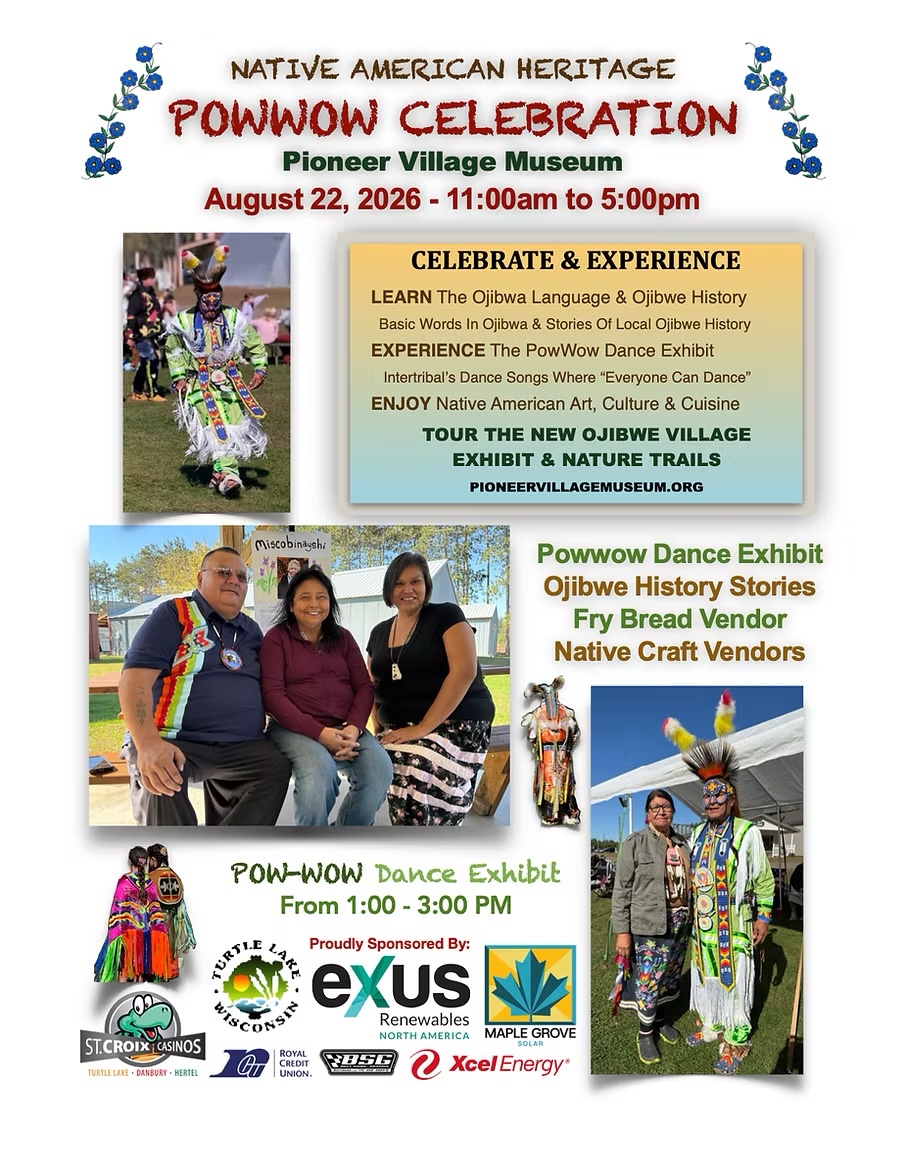
The village has taken more than a year to complete and now includes four wigwams (more accurately spelled “wiigiwaaman”) and much more. Its creators will celebrate the grand opening with special events on August 21 and 22, see bottom of article for details.
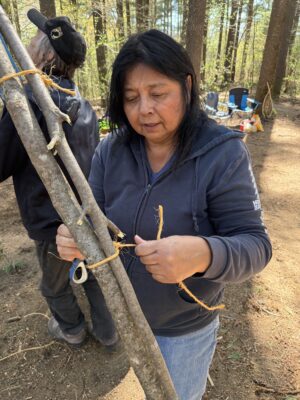
Cindy Fowler ties wigwam poles (John Mitchell)
“We just want to continue on what mom had wanted, a way to always remember, and to keep our culture alive,” said Cindy Fowler, Miscobinayshii’s daughter, who has been gently pushing the project forward.
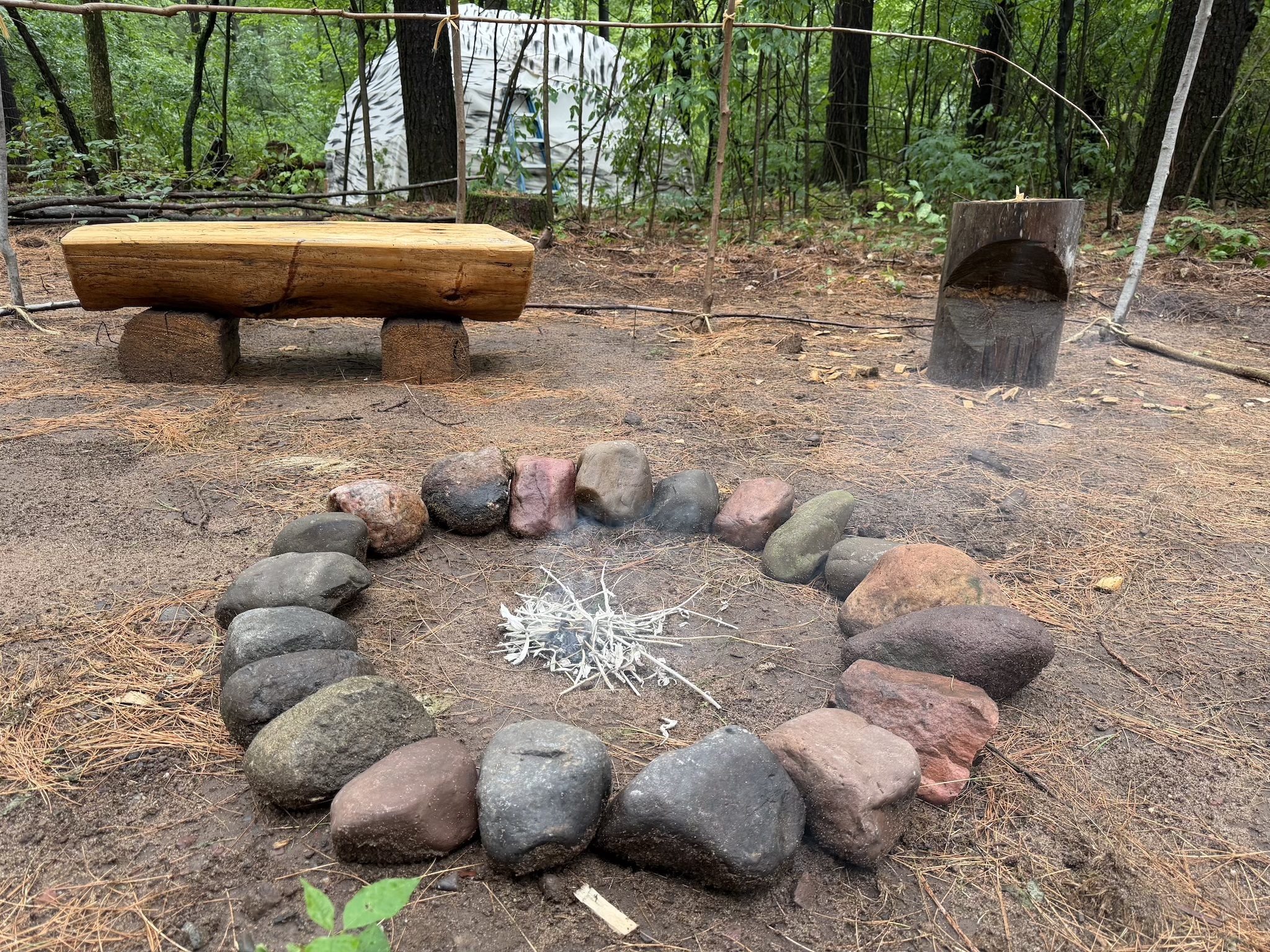
On a recent Sunday, everyone was busy putting the final touches on the wigwams. Cindy criss-crossed the site, planning the opening festivities, making sure everyone had what they needed, lighting sage in the fire pits. Its fragrant smoke wafted through the village.
Her brothers Lloyd and Richard were finishing the covering on one of the wigwams, stitching together white canvas painted with black marks to resemble traditional birch bark. Brother Steve worked on art that adorns the site and her cousin Hazel was sewing at another shelter.
Seasonal cycle
Photos by Greg Seitz/St. Croix 360
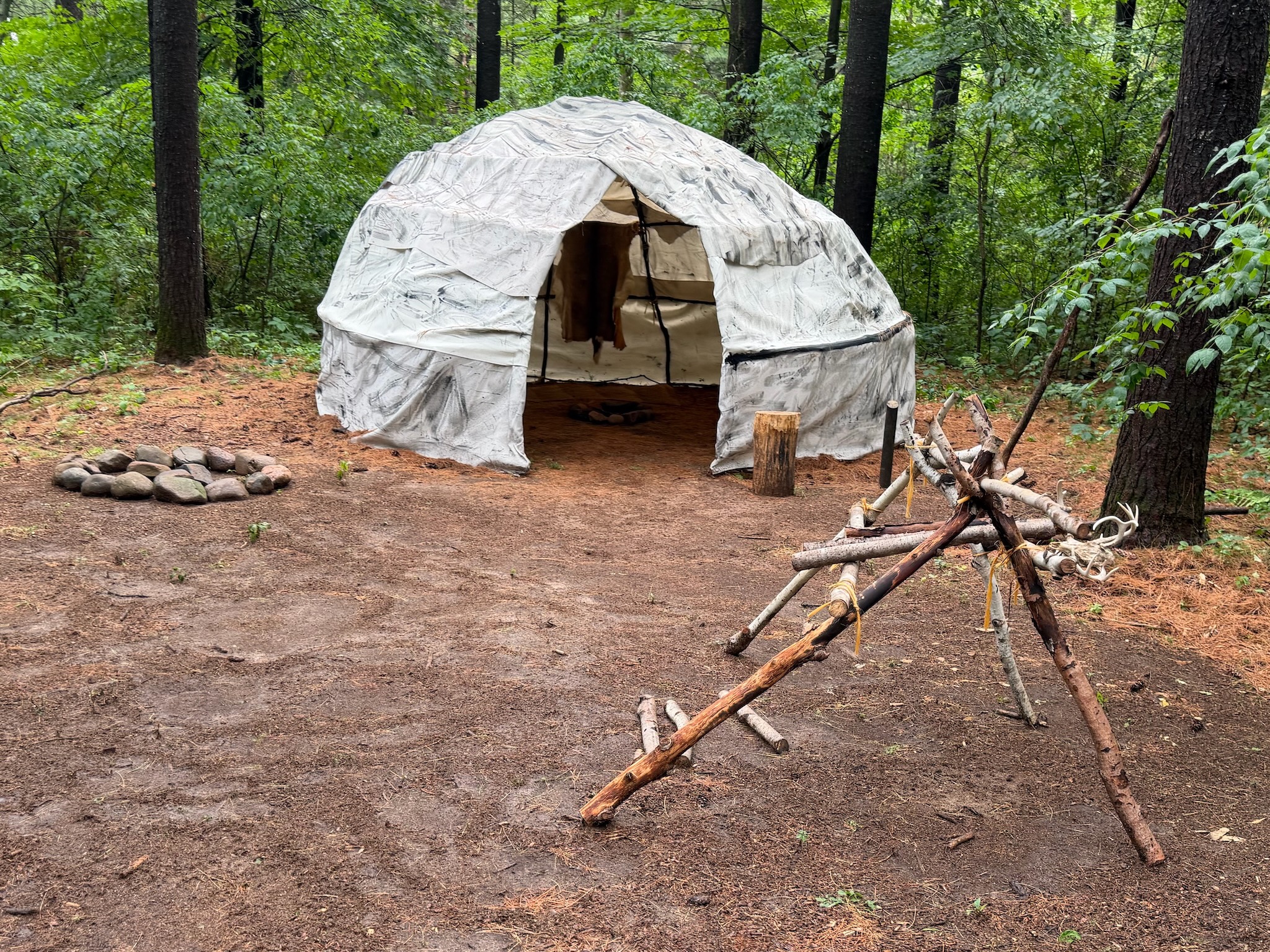
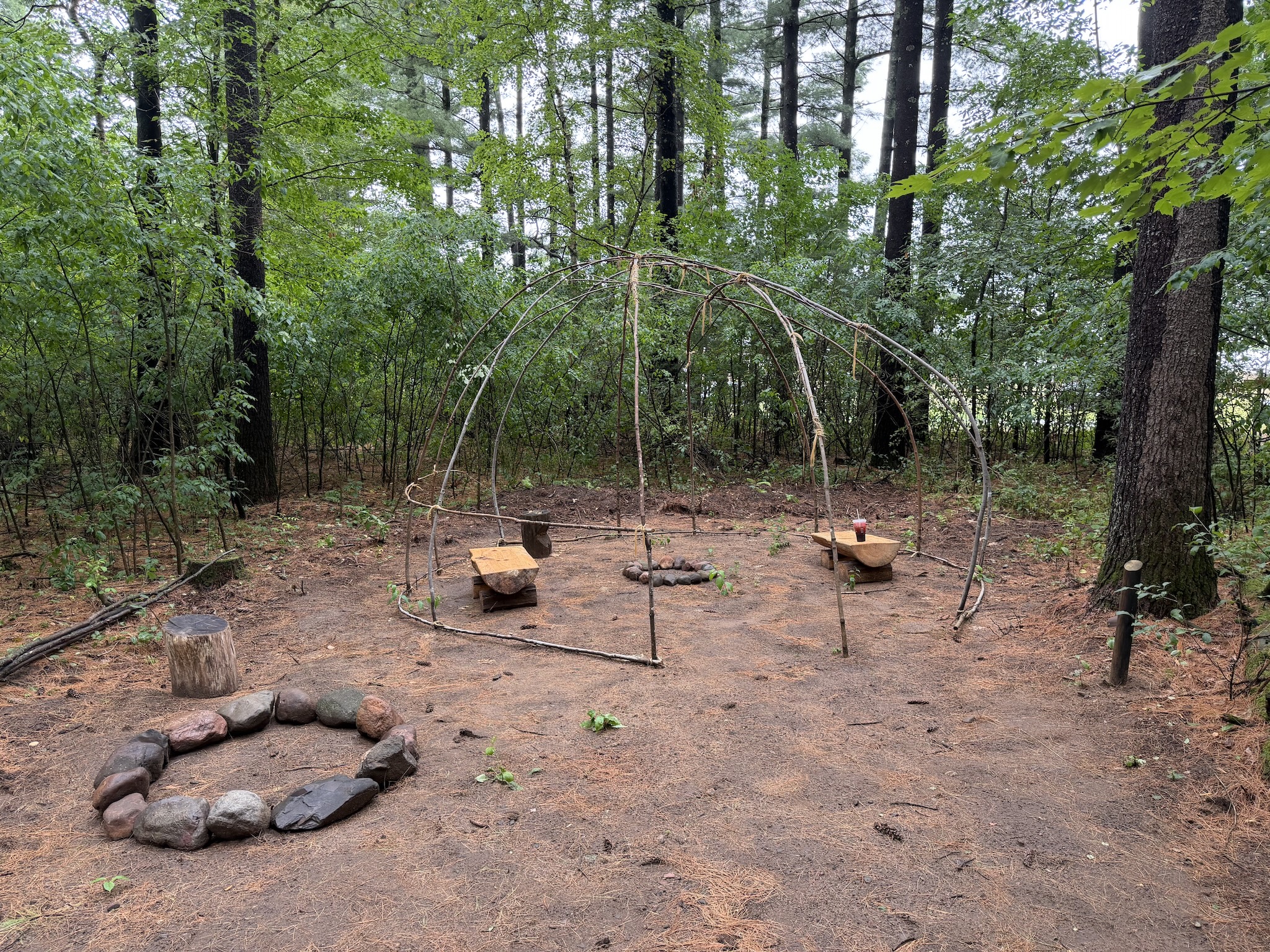
The wigwams represent the four seasons and the different camps Ojibwe people historically traveled between during an annual cycle. When visitors explore the village, the short walk between each shelter mirrors the migrations Ojibwe people made at different times of the year.
The first wigwam is set up for maple syrup season, when Ojibwe people moved to sugarbush camps in late winter to collect sap and process it into prized food and trade goods. The next wigwam is the summer camp, where hunting was based and hides were tanned, berries were gathered, fish were dried. The third shelter is the wild rice camp, a fall destination where the priceless grain was gathered and processed. The final shelter is the winter camp, where stories were told on cold, dark nights.
“She had always talked about the seasons,” Cindy says of Miscobinayshii, who was born in a wigwam in November 1932. “The changing of the seasons and moving with the seasons.”
Cindy recalls how her mom could taste maple sugar and immediately recall her childhood memories of harvesting sap in the forest. Deer hides tanned in summer provided moccasins that kept feet warm in winter. Ricing in August and September was essential to her people’s identity. And winter’s storytelling was essential education.
The village project has already forged connections across cultures and countries. This summer, exchange students from Japan and the Czech Republic visited the site and learned about Native American history. And Cindy recalls talking to an 89-year-old volunteer at the Pioneer Village who had grown up in the area at the same time as her mom. An old trapper himself, he spoke with admiration of the Ojibwe kids he went to school with who would expertly set traps on their walk through the woods on their way to school in the morning. They would check the traps on their way home, often providing a meal for their family that night.
History is alive
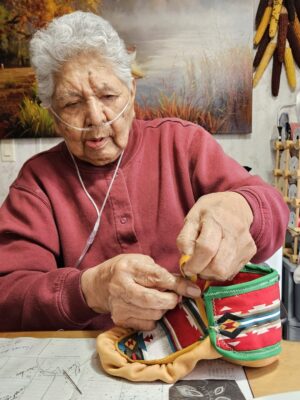
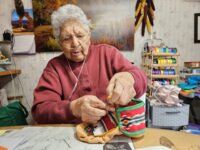
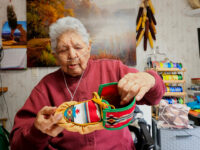
Miscobinayshii, 2024. (Greg Seitz/St. Croix 360)
Before her passing, Miscobinayshii envisioned a recreated Ojibwe village as a way to preserve and share these crucial cultural traditions. At the same time, the Barron County Historical Society was thinking about the stories it tells.
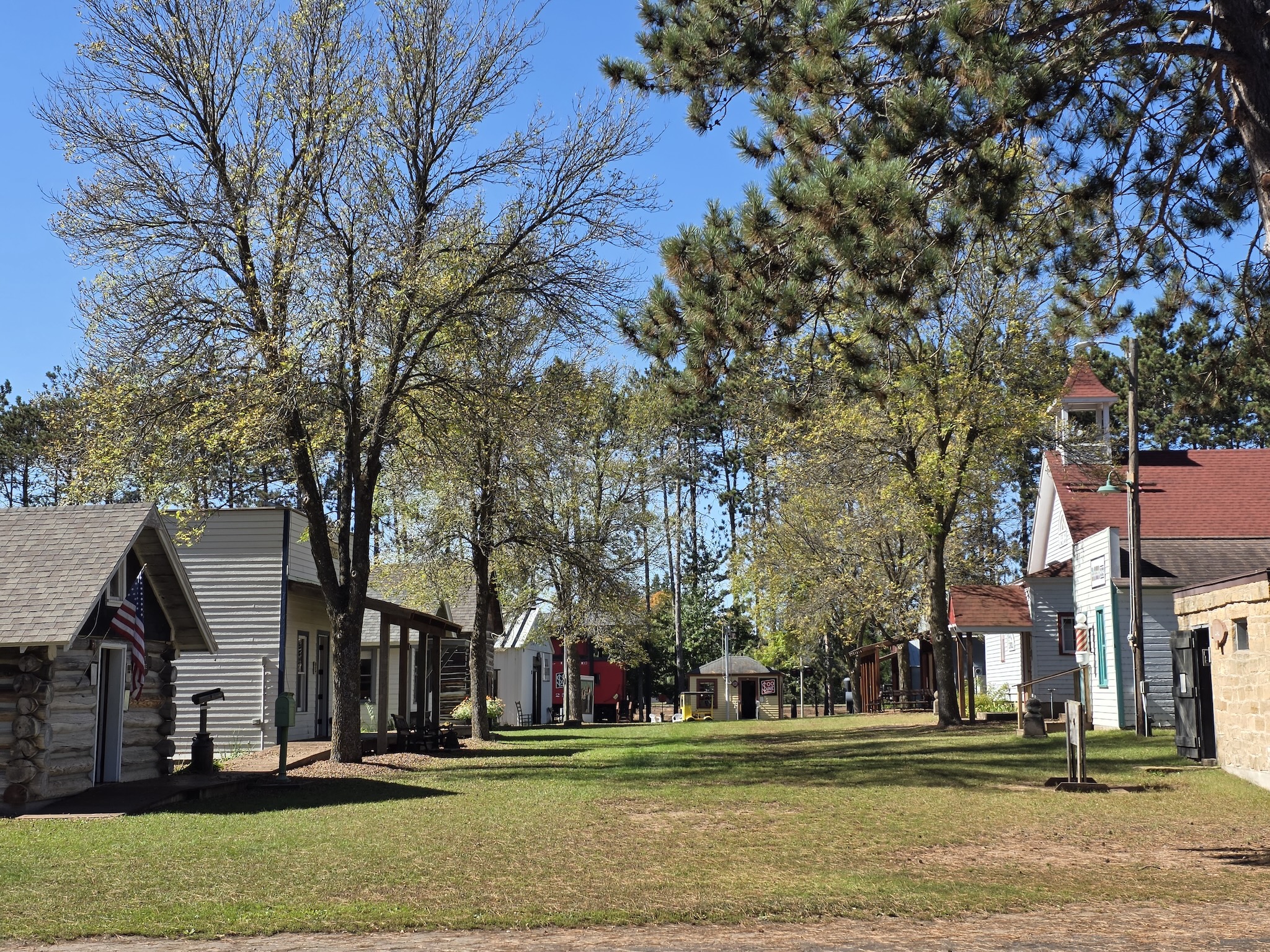
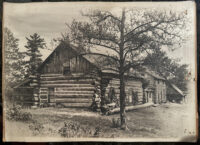
The existing Pioneer Village is made up of dozens of historic buildings that have been moved to the site from around the county, representing a relatively short period of time and one culture. There’s a nearly two-block main street lined with everything from a carpenter and blacksmith to a jail and a dentist, all typical of white settlements in the late 19th century.
Inside an exhibit hall, there are two displays featuring a wide range of local Native American artifacts, including arrowheads, bead work, and photographs. But many people involved with the museum thought its “living history” strategy was missing important stories and people.
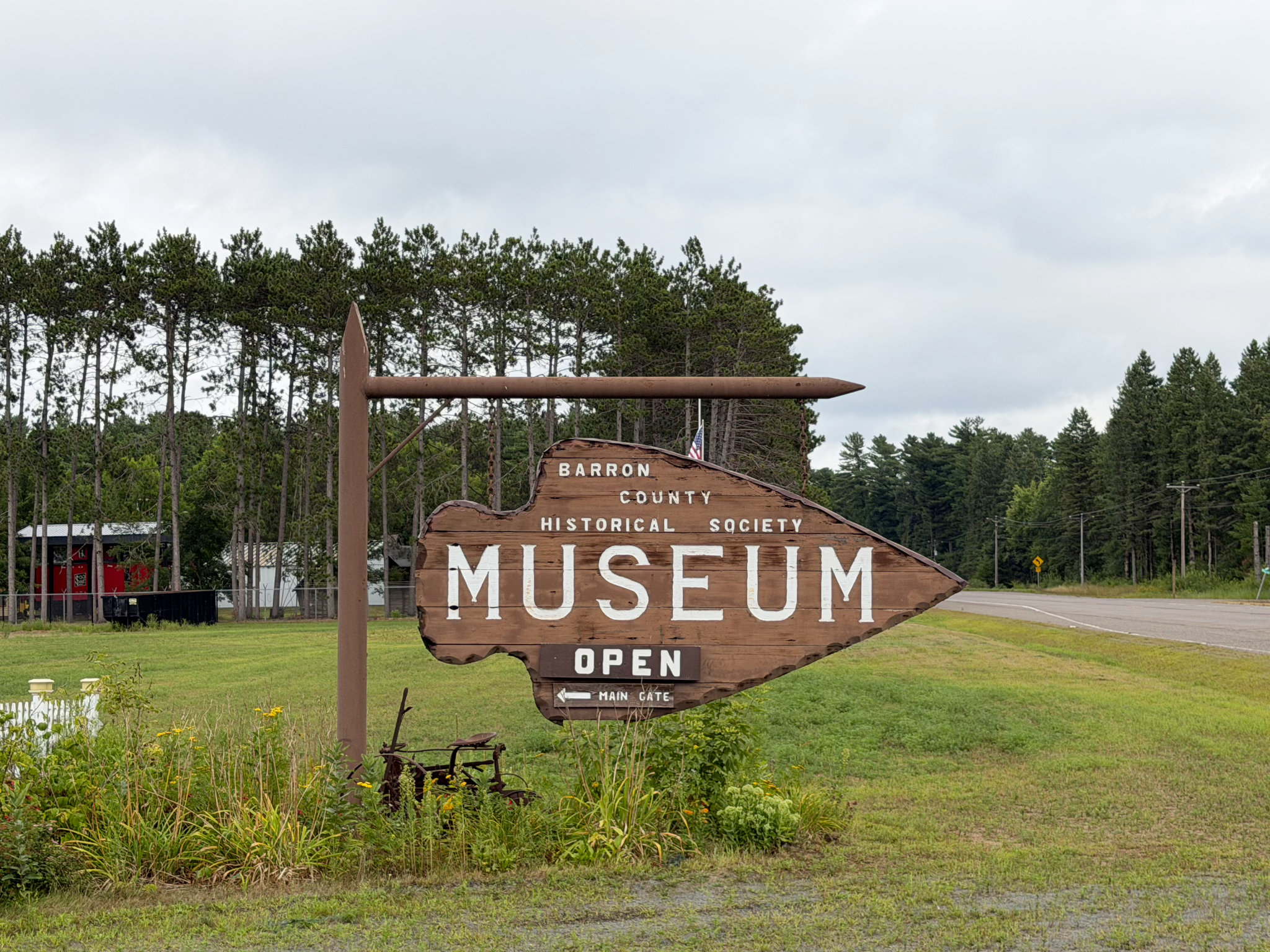
Pioneer Village Museum (Photos by Greg Seitz/St. Croix 360)
Development director John Mitchell was enthusiastic about adding an Ojibwe component, and became the museum’s project director. His grandfather had grown up on the Lac Courte Oreilles reservation near Hayward, Wisconsin, but John did not know much about this part of his ancestry.
“The overall view was to honor those who were here first,” Mitchell said. “Let’s honor the history of the northwest Wisconsin Native Americans who have been here for a lot longer [than anyone else].”
He also sees it as having two benefits, both cultural and economic.
John Mitchell (Courtesy Cindy Fowler)
“I don’t want to overshadow the cultural aspects, but tourism is important. You have to get people in. But then when they’re here, you want to tell them the truth and we don’t want them to have an inaccurate representation. So it had to be from tribal members,” he said. “The museum was very respectful of that. They didn’t want it to be a European version of an Ojibwe village.”
In addition to working with maintenance staff to map and prepare the Ojibwe village site, Mitchell helped line up numerous donations to make the project possible. Major sponsors include Exus Renewables, Johnson Financial Group, the Village of Turtle Lake, Maple Grove Solar, St. Croix Casinos, BSG, Royal Credit Union, and Xcel Energy.
Off to one side of the village, slightly separated from the wigwams, is another small clearing in the trees. Here, several benches are arranged around a fire pit, which is encircled by the soft foliage of cedars. A small wooden cardinal is tucked in a tree branch, honoring Miscobinayshii, whose name means “red bird.” Mitchell said it is his favorite part of the village.
“It’s a place you could just go and sit and enjoy and be slightly away from everything else,” he said.
Talking to Miscobinayshii’s son Steve, Mitchell learned his vision is called a “talking circle,” and that’s what it will serve as. Museum visitors from tourists to school groups will have opportunities to learn about Ojibwe people through special programming planned for the village.
The heart of home
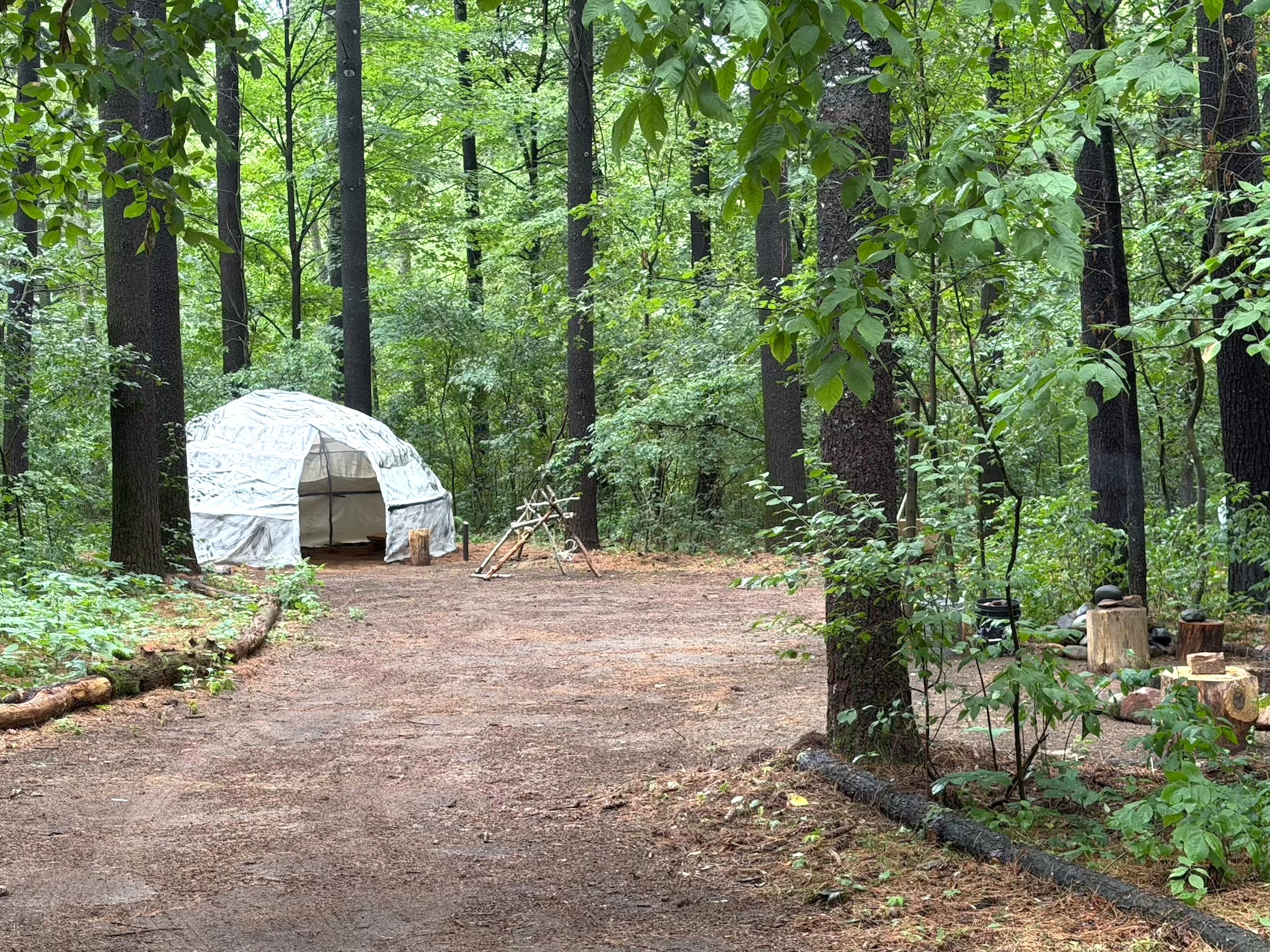
Trails and wigwam at the Ojibwe village. (Greg Seitz/St. Croix 360)
Walking the paths of the village, scattered with pine needles, lined by logs, the lush forest all around, Cindy points out how peaceful the place is. Rice Lake Regional Airport is a quarter-mile to the north, and U.S. Highway 53 is a half-mile east. But here, everything is serene. It seems silent enough to hear the voices of ancestors.
Wigwams are part of what it means to be Ojibwe. They are built of the earth, keeping occupants in close contact with their place on the planet.
For Cindy and her family, building the village has been a way of staying in touch with their beloved Miscobinayshii. Continuing her work has kept them connected, to each other and to their ancestors.
“It’s almost like she’s still here, and we heard everything that she wanted. She was afraid that our ways would be forgotten,” Cindy said. “Mom says the ancestors made sacrifices for us to be here, so we need to remember.”
Ojibwe village opening events
August 21-22, 2026 Pioneer Village Museum 1866 13 1/2 – 14th Ave. Cameron, WI 54822 More information
Note: The Pioneer Village Museum is near the Yellow Cedar River, and is outside the St. Croix River watershed. While St. Croix 360’s coverage is usually restricted to the St. Croix region, we are proud to cover this project because of its significance and its connections to Miscobinayshii and the St. Croix Tribe of Ojibwe. The village is loosely based on the village where Miscobinayshii grew up, which is on Sand Lake in the St. Croix basin.
St. Croix 360 offers commenting to support productive discussion. We don’t allow name-calling, personal attacks, or misinformation. This discussion may be heavily moderated and we reserve the right to block nonconstructive comments. Please: Be kind, give others the benefit of the doubt, read the article closely, check your assumptions, and stay curious. Thank you!
“Opinion is really the lowest form of human knowledge. It requires no accountability, no understanding.” – Bill Bullard
One response to “Wiigiwaaman and memories: Ojibwe village helps keep tribal history and culture alive”
Anne Reich
Thanks for a great article, Greg! Reading it made me recall a remarkable book, “Cecilia – The Trials of an Amazing Ojibwe Woman 1834-1892,” by Lafayette Connor, Cecilia’s grandson. “Cecilia” tells the true story of this amazing Ojibwe woman who struggled to survive and raise her family amidst the major economic and social changes occurring at this time throughout Indian communities in the St. Croix River/Fond du Lac region.
The story is told from a personal perspective, without animosity. It informs, and moves the soul to compassion. It also illuminates the realities of life along the St. Croix in that era. I’m humbled to realize that Cecilia paddled her family right by what is now known as the village of Marine on St. Croix. Marine Community Library has a copy of the book. — Anne Reich
Whoops! There was an error and we couldn't process your subscription. Please reload the page and try again.
By clicking subscribe, you agree to share your email address with St. Croix 360 and Mailchimp to receive emails from St. Croix 360. We will never share your information with anyone else.






Comment