Astronomy
Sunday, December 21st is the Winter Solstice. This is shortest day of the year, and the first day of astronomical winter. There will only be eight hours and 46 minutes of daylight. Up until the 21st, the sunrise and sunset from our vantage point will be a little bit farther south on the horizon each day, and after the 21st the sunrise and sunset will begin to creep back north along the horizon. On the short days before and after the solstice the sun will cast the longest shadows of the year.


Before dawn on Tuesday the 22nd is the time to look for the Ursid Meteor Shower. The meteors will radiate from the Little Dipper. If you find the Big Dipper, use it as a pointer to find Polaris, the North Star. Polaris is in the Little Dipper, so that is where to look for the Ursids. You may see up to 10 shooting stars per hour.
On New Year’s Eve, Wednesday the 31st, go outside after dark in the early evening and look in the east for a bright “star”. It’s not a star at all, but the planet Jupiter, and will be brighter on the 31st than it has been on any other night in 2025. Happy New Year!
Birds
Some birds, such as Eastern Bluebirds, Meadowlarks, Song Sparrows, and Turkey Vultures, are present at Afton in the summer but leave in the winter to go farther south.


Other birds, among them Dark-eyed Juncos, Tree Sparrows, and Red-breasted Nuthatches, spend the summers farther north and the winters at Afton. Still others, including Cedar Waxwings, are transient at Afton, meaning that they pass through in marauding bands at all times of year searching for berries and seeds.


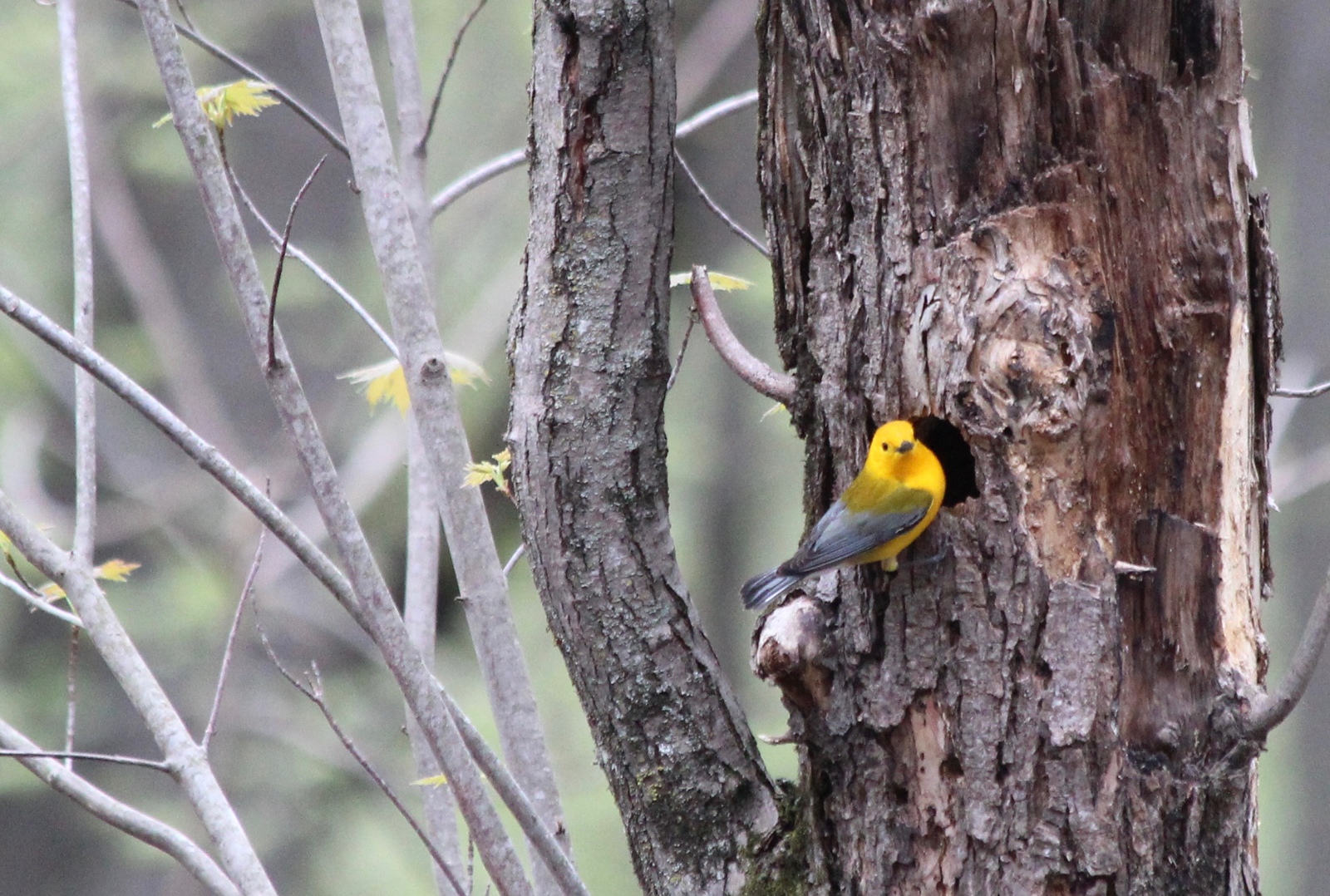
And still other birds, including Bluejays, Northern Cardinals, Hairy and Downy Woodpeckers, and White-breasted Nuthatches, are at Afton all year round. In the winter months Hairy and Downy Woodpeckers spend their nights in tree cavities.


Mammals
Winter snow cover provides a good opportunity to learn to identify tracks. Two common animals at Afton who leave tracks that are relatively easy to identify are rabbits and squirrels. Rabbits’ large hind feet leave large prints that are usually side by side. Their smaller front paws sometimes step right next to each other, so that they sometimes blur together into one track in the snow. Other times one front paw steps slightly in front of the other. The tracks from the hind feet are about three and a half inches long, and those from the front feet are about one inch long.


The tracks of red and gray squirrels are similar; the gray squirrel tracks are larger, and the stride between sets of tracks is bigger. Squirrel tracks often lead from one tree to another. In a set of four tracks the prints from the hind feet are in front, and farther apart side to side, while the prints from the front feet are closer to each other and slightly behind. Squirrels have four toes on the front feet, two pointing directly forward and one to each side. They have five toes on their hind feet, with three pointing directly forward. Like rabbits, squirrels place their front feet out ahead and then swing their back feet farther forward. Of course, both squirrels and rabbits sometimes walk in which case the tracks show up in a different pattern entirely!
Trees
The Norway Spruce is not native to the New World, but they are easy to find in the woods at Afton. The bark is reddish-gray in color. Like all spruces they have single needles attached directly to twigs. The needles of the Norway Spruce are generally less than a half- inch long. The cones are papery and break apart easily, and hang down from branches. The cones range from two to seven inches long. Red Squirrels and other animals often pick the scales off the cones to get at the seeds.


Here’s an interesting thing about spruces: the cones will open and close in response to changes in humidity. The scales on a cone are called “bracts”, and certain cells in the bracts change orientation when the humidity decreases, causing the bracts to open. This allows the seeds to drop out of the cone. What’s really amazing is that this happens even when the cones have fallen off the tree! If there is a spruce tree in your neighborhood, try bringing a cone with closed bracts into the warmth of your house and see what happens.


Eastern Cottonwoods have dropped all their leaves by now, but you may be able to identify them by their deeply furrowed gray bark and size. They grow to be 70 to 100 feet tall, often with multiple trunks, and they prefer to live in wet areas, such as along Trout Brook or the St. Croix River. And you can also look for the heart-shaped leaves on the ground near a tree you think might be an Eastern Cottonwood.


Weather observations
Here are some weather observations from the Afton State Park area from past years.
| Friday, December 19 | 1983: record low of 29 below zero |
| Saturday, December 20 | 2010: record snowfall of 4.6 inches |
| Sunday, December 21 | 2022: record snowfall of 7.4 inches |
| Monday, December 22 | 1983: record low of 20 below zero |
| Tuesday, December 23 | 2020: record snowfall of 8.7 inches |
| Wednesday, December 24 | 2023: record high of 55°; 2009: record snowfall of 5.2 inches |
| Thursday, December 25 | 2023: record high of 54°; 2018: bare ground, no snow cover |
| Friday, December 26 | 2011: record high of 52° |
| Saturday, December 27 | 1971: record snowfall of 6 inches |
| Sunday, December 28 | 2013: record high of 47° |
| Monday, December 29 | 1999: record high of 53° |
| Tuesday, December 30 | 2019: record snowfall of 4.9 inches; 2004: record high of 51° |
| Wednesday, December 31 | 2010: freezing rain and light snow |
| Thursday, January 1 | 2017: high of 32° |
Photo/Image credits
All photos copyright Nina Manzi, except:
- Travis Bonovsky, MN Conservation Volunteer: Bluejay
- Michael Furtman, MN Conservation Volunteer: Dark-eyed Junco
- Keith Henjum: Hairy Woodpecker
- Dean Lokken: Meadowlark, Turkey Vulture, White-breasted Nuthatch
- Bill Marchel, Minnesota Conservation Volunteer: Deer, Deer Track
- Gary Sater: Cedar Waxwing, Eastern Bluebird, Northern Cardinal, Song Sparrow
- Stan Tekiela, MN Conservation Volunteer: Downy Woodpecker