

Astronomy
On Saturday and Sunday, the 7th and 8th, use binoculars to look for the planet Saturn near the planet Venus low in the western sky after sunset.
And overnight on Saturday the 7th don’t forget to turn your clocks ahead one hour – it’s Daylight Savings Time!
Meteorology
Ever wonder why the sky can be pink at sunrise and sunset? When the sun is low on the horizon during sunrise or sunset, sunlight travels through more of the Earth’s atmosphere before we see it. As sunlight journeys through the atmosphere the atmosphere scatters the shorter wavelengths of sunlight (blue and violet) more effectively than the longer wavelengths (red and orange). At sunrise and sunset there is so much atmosphere to travel through that by the time the sunlight reaches us, blue violet rays has been filtered out, which leaves orange and red rays of light, giving us the pink glow to enjoy.
So why isn’t the sky always pink at sunset and sunrise? That’s because air with stuff in it scatters the blue and violet let more effectively than does clear air. So we are more likely to see pink skies when it’s cloudy, or when there is smoke from wildfires or ash from volcano eruptions, or lots of air pollution.


Birds
Many species of birds follow open water north in the springtime, including Mergansers, Herons, Egrets, Bald Eagles, and our state bird, the Common Loon. Look for all of these at Afton as the ice goes out on the St. Croix. Some may stay for the summer, while many will travel farther north.
Ever wonder how birds can handle having their feet in icy-cold water? For one thing, their feet consist mostly of bones and tendons with very little muscle tissue, so there isn’t much there to get cold. And then they do this thing called “countercurrent heat exchange”. As warm blood travels from a waterbird’s heart down toward its feet, the artery runs directly alongside the vein carrying cold blood back up to the heart. The heat transfers from the warm blood in the artery to the cold blood in the vein before it even reaches the feet! The cold blood is still able to carry oxygen into the feet. Very little heat escapes from the foot into the water, and the warmed-up blood in the veins means that the bird does not have to use extra energy to re-heat the venous blood as it returns to the heart.
And it’s around this time of year that Bald Eagles nest and lay eggs. In late February visitors to Afton saw the resident eagle pair clutching talons and mating, so the female is probably sitting on the nest now. If you see eagles on or near a nest, please observe them from a respectful distance. Eagles build big nests in tall sturdy trees, most often conifers or cottonwoods, and add to them year after year.


Before the trees leaf out is a good time to listen and look for woodpeckers. There are at least four species at Afton. From smallest to largest: Downy Woodpeckers, Hairy Woodpeckers, Red-bellied Woodpeckers, and Pileated Woodpeckers. There may also be transient Yellow- bellied Sapsuckers and Red-headed Woodpeckers. The Red-headed Woodpeckers are in serious decline across their historic range. They are omnivores, eating acorns, fruits, and insects. Red-heads are the only woodpecker in Minnesota that hunts by flycatching, and many have been killed by passing cars when they leave a perch near a road to dart out to catch an insect. Their preferred habitat is the oak savanna, which is one of the ecosystems at Afton. If you see one, let us know!
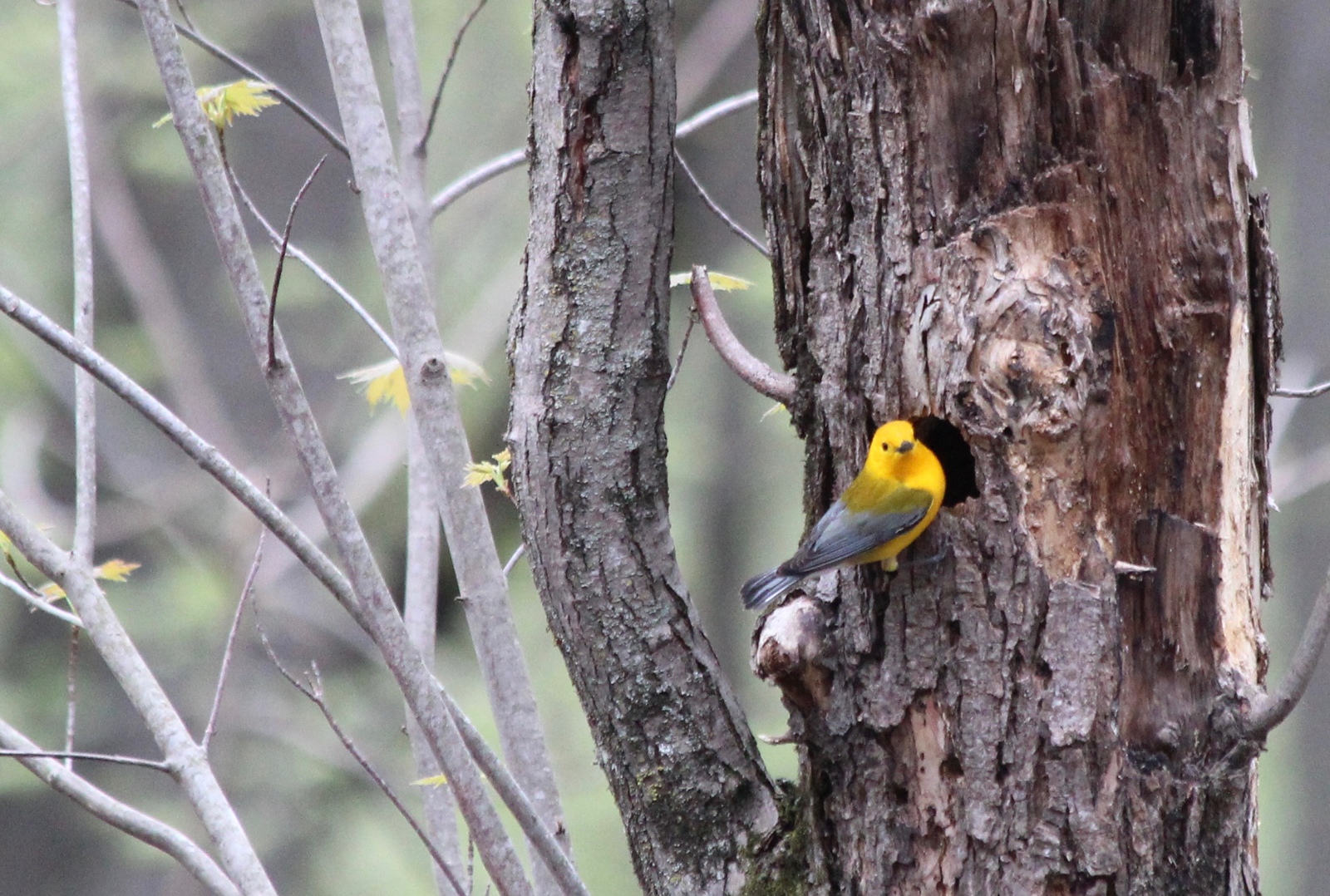
Starting in mid-February all woodpeckers begin looking for dead trees in which to hollow out nesting cavities. You may see one at work when you hike at Afton. Most woodpeckers make new nest holes each year, but red-headed woodpeckers re-use holes from one year to the next. Abandoned woodpecker nest holes provide living quarters for lots of other birds and also mammals.


Mammals
Many species of mammals call Afton home. You might visit the park many times without seeing some of them, like Badgers and Fishers. Among the mammals you are most likely to see when visiting the park are Chipmunks, Red Squirrels, Rabbits, and White-tailed Deer. Chipmunks come out of their burrows around this time of year. They are not true hibernators and wake up every few days in winter to eat. Each fall they store a large supply of seeds in their burrows so they don’t have to go out to search for food. Deer have dropped their antlers and have shed much of their winter gray fur in favor of summer red. The red provides better camouflage in spring and summer, while the gray is better in fall and winter.


Insects
The Monarch butterflies who flew south from Minnesota to the oyamel pine forests of Mexico last fall have begun the return journey. These individuals won’t make it all the way to Minnesota. They will pause along the way to mate and lay eggs, and it will be their grandchildren or great-grandchildren who fly into Afton in May and June. While we’re awaiting their arrival, watch for Mourning Cloaks, Milbert’s Tortoiseshells, and Eastern Commas. These three species of butterflies overwinter in Minnesota as adults, which means they are usually the first butterflies we see on sunny March days.


Trees
Look for buds on aspen trees, and for fuzzy catkins hanging down from twigs. Aspen trees are dioecious, which means that some trees are male and others female. Both males and females produce catkins, which are a sort of specialized stem covered with tiny flowers. The flowers on the male catkins bloom first, and blow on the wind to pollinate the later- opening flowers on the female catkins. The catkins from the male trees fall to the ground after releasing their pollen. The catkins on female trees remain on the trees longer, in order to develop seed capsules in cottony down that will blow in the wind and maybe sprout into new aspen trees. So if it seems like there are two waves of aspen catkins on the ground in spring, it’s because there are!
Most aspens reproduce not through seeds, but by suckering, or sending out horizontal roots that send up shoots that develop into trees. Often what looks like a stand of aspens is all one organism connected by the roots.
Aspen trees drop their leaves in the fall, but you may find some on the ground near the trees. The bark of aspen trees is smooth and whitish in color, though on older trees the bark near the base of the tree may be gray and fissured.


Birch and Alders are two other trees at Afton that have catkins, but they are monoecious, which means that each tree has both male and female catkins. As with aspens, the catkins form in the summer and fall, and open in the early spring.


Weather observations
Here are some weather observations from the Afton State Park area from past years.
| Friday, March 6 | 2025: sunny, near 40°, lots of snow melt; 2022: 3” of snow overnight; 2017: 50s with drizzle; 2000: record high of 69° |
| Saturday, March 7 | 2021: breezy with clouds and temperature in the 50s; 2015: high in 30s; 2000: tied record high of 73° |
| Sunday, March 8 | 2025: sunny, high near 50°; 2020: sunny and in the 60s; 2016: record high of 70°; 1999: record snowfall of 12.5” |
| Monday, March 9 | 2025: high of 60°; 2023: light snow and rain throughout day; 2021: record high of 62°; 2014: breezy and in the low 40s; 2003: record low of minus 10°; |
| Tuesday, March 10 | 2023: 2” wet snow overnight; 2021: record rainfall of 0.69”; 2012 and 2015: record high of 66°; 2009: foggy and misty through day; 2001: St. Croix River frozen over |
| Wednesday, March 11 | 2024: record high of 68°; 2023: snow off and on through day, maybe 3” in all; 2013: dusting of snow overnight; 2002: St. Croix River frozen over |
| Thursday, March 12 | 2023: 4” snow overnight; 2020: Drizzly day in high 30s; 2016: record high of 70°; 2000: open water on St. Croix River |
Photo/image credits
All photos and images used by permission.
Copyright Nina Manzi, except:
- Keith Henjum: Hairy Woodpecker
- Jamie Olson Kinne: Eastern Comma
- Dean Lokken: Chipmunk, Rabbit, White-tailed Deer
- Gary Sater: Common Loon, Bald Eagle, Great Blue Heron, Red-Breasted Megansers


Comment